
Opening: A Stage Set for Spectacle
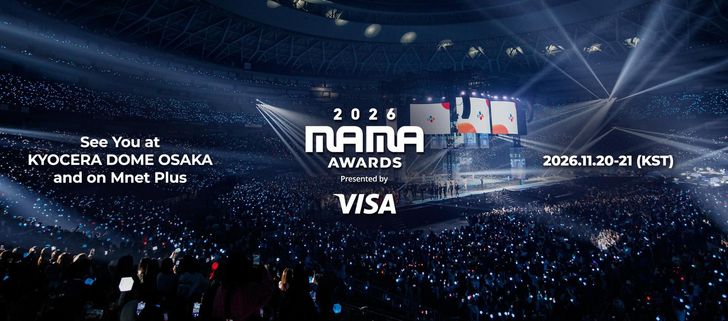
The calendar for the global K-Pop fan is marked by a few unmissable events, and today, a major date has been inked in bold. In a move that has sent ripples of anticipation through the industry, CJ ENM has officially announced that the 2026 MAMA AWARDS (Mnet Asian Music Awards) will be held on November 20 and 21, 2026, at the prestigious Kyocera Dome Osaka in Japan. This announcement, made on March 31, is far more than a simple scheduling update. It is a strategic declaration, a homecoming of sorts to a pivotal location, and a statement of intent for the award show's future direction as K-Pop's cultural and commercial influence continues its relentless global expansion.
For seasoned followers, the choice of venue is loaded with history. Kyocera Dome Osaka is hallowed ground for MAMA, having hosted the ceremony multiple times during its peak years of international touring, most recently in 2019. Its return after a seven-year hiatus—a period that saw MAMA stationed primarily in South Korea—feels symbolic. It signals a confident pivot back to large-scale, cross-border production at a time when the industry is more internationally intertwined than ever. As one industry insider we spoke to put it, "Choosing Osaka isn't just about booking a big venue. It's about re-connecting with a massive, dedicated fanbase in Japan, reasserting MAMA's legacy as a traveling spectacle, and leveraging Japan's world-class infrastructure for a show that aims to be unforgettable."
Background: The Evolution of a K-Pop Institution
To understand the weight of this announcement, one must look at the storied, and sometimes controversial, journey of the MAMA Awards itself. Launched in 1999 as the Mnet Video Music Awards, it was rebranded as MAMA in 2009 with a clear mission: to become "Asia's No.1 Music Awards." This ambition propelled it out of Seoul and onto the road. From Macau to Singapore, Hong Kong to Japan, MAMA became a traveling circus of K-Pop's biggest stars, legendary collaborations, and often, heated debates over its award distribution and "screen time" politics.
The ceremony's years in Japan, particularly at venues like the Kyocera Dome and the Saitama Super Arena, are remembered for some of its most iconic moments. It was here that legends like BIGBANG and 2NE1 delivered era-defining performances, and where rising giants like BTS and EXO solidified their continental dominance. The shift back to South Korea in the early 2020s, influenced by global circumstances, offered a different, more domestically focused energy. Yet, the call of the international stage never faded. As detailed in our analysis of fan-idol dynamics, the relationship between artists and their global fandoms has evolved into a complex, direct, and powerful force, something award shows must now navigate with care. You can explore this further in our article, Beyond the Bubble: When Idol-Fan Boundaries Blur in the DMs, the Fallout Is Swift and Severe.
MAMA's identity has always been dual: part celebration, part high-stakes industry barometer. Its decisions on Daesang (Grand Prize) winners can define an artist's year, while its stage is viewed as a career milestone. The return to a 55,000-capacity dome for two nights speaks to a confidence in both the drawing power of today's acts and the insatiable appetite of the international fandom.
The News: Deconstructing the 2026 Blueprint
CJ ENM's announcement was concise but packed with meaning. Let's break down the core components of the 2026 MAMA plan and what they potentially herald.
The Venue: Kyocera Dome Osaka
The selection of Kyocera Dome is a masterstroke in logistics and sentiment. As one of Japan's premier indoor stadiums, it offers the scale and technical capability required for a modern MAMA production. But beyond the specs, it's a location with immense cultural cachet for K-Pop. Japan represents one of the world's largest and most loyal music markets, and the K-Pop presence there is deep-rooted and multifaceted, from legendary hallyu stars to today's fourth-generation groups dominating the Oricon charts.
"MAMA in Osaka is more than a concert; it's a pilgrimage site for fans across Asia. The energy in that dome is electric because it's a confluence of Japanese fans and those who've traveled from Korea, Southeast Asia, and beyond. It creates a unique, unifying atmosphere that you can't replicate anywhere else," shared a veteran K-Pop concert producer who has worked on multiple MAMA events.
The two-night format is also critical. It allows for a more expansive lineup, reduces the crushing time constraints that often force performances to be cut short, and provides narrative space—perhaps one night focused on established legends and another spotlighting the explosive new generation. It also doubles the economic impact and media coverage, creating a weekend-long festival of K-Pop.

The Date: A Strategic Placement
Scheduling for late November is classic MAMA, positioning it as the glittering climax to the music award season, following the Korean domestic awards. This timing allows it to consider full-year data and build upon the buzz generated by other ceremonies. For artists, it becomes the final, global exclamation point on their year. For fans, it's the year-end celebration they plan for months in advance. By locking in the dates this far ahead—over two and a half years prior—CJ ENM is giving agencies, artists, and fans unprecedented lead time, suggesting plans for an exceptionally elaborate and coordinated event.
The Unspoken Lineup: Early Speculation Begins
While no artists are ever confirmed this early, the announcement instantly ignites the rumor mill. The industry is already abuzz with questions: Will the current "it" groups like NewJeans, IVE, and LE SSERAFIM - PUREFLOW pt.1: What Just Landed" rel="internal">LE SSERAFIM, who are colossal in Japan, headline one night? Could this be the stage for a long-awaited reunion from a second-generation legend, leveraging the nostalgic power of the Osaka dome? And how will the burgeoning global solo careers of idols like BTS's Jung Kook or BLACKPINK's Jennie factor in?
The potential for special collaborative stages is immense. MAMA has a history of engineering once-in-a-lifetime duets and group performances. In a 2026 context, we could see cross-agency collaborations that are currently mere fan dreams, or stages that blend K-Pop with top Japanese artists, further cementing cultural bridges. For a look at current chart dominance that will influence future invites, check our latest updates on our Charts page.
Fan & Community Reaction: A Wave of Nostalgia and Speculation
Within minutes of the news breaking, social media platforms were flooded with reactions from fans worldwide. The sentiment is a potent mix of excitement, nostalgia, and strategic planning.
On platforms like X (formerly Twitter) and Weibo, hashtags related to the announcement trended globally. A significant portion of the conversation is driven by older fans who have vivid memories of iconic MAMA moments from the 2010s. "MAMA is going back to Osaka... it feels like going home," one fan tweeted alongside a clip of a legendary 2014 performance. This nostalgic wave is powerful, reminding newer fans of the award show's historic legacy.
However, the most intense discussions are pragmatic: travel planning. Fan communities are already sharing guides to Osaka, discussing accommodation near the dome, and calculating potential costs. The two-year lead time is seen as a blessing, allowing for extensive saving and logistical coordination. Japanese fans have expressed overwhelming joy at having the ceremony return to their soil, promising an incredibly welcoming and organized atmosphere for international visitors.
Of course, with fan excitement comes fervent speculation and campaigning. Fanbases for top groups have already begun mobilizing, using the announcement as a rallying cry for streaming and voting efforts that will shape the 2026 contenders. As we've seen in recent controversies, the passion of fandoms is a double-edged sword, capable of monumental support but also intense scrutiny. The pressure on MAMA's organizers to ensure a fair and transparent awards process will be higher than ever. This mirrors the sensitive dynamics we examined in Between the Stage and Sensitivity: The Complex Firestorm Around SEVENTEEN’s Mingyu, where global fan perspectives hold significant sway.
"The announcement alone has reset the timeline for our fan projects," shared the admin of a large multinational fan union for a fourth-generation boy group. "We now have a clear, huge goal on the horizon: getting our artists to that stage in Osaka and ensuring they are recognized. Every comeback, every stream from now until late 2026 is part of that journey."
Industry Analysis: Why This Move Matters Now
The decision to return MAMA to a large-scale Japanese venue is a calculated business and cultural move with multiple layers of significance.
1. Reclaiming the Global Narrative
In recent years, while MAMA remained prestigious, other international awards and festivals have increased their focus on K-Pop. By returning to its globe-trotting roots, MAMA reasserts itself as the traveling flagship event of K-Pop. It's a statement that the definitive Asian music awards ceremony is once again embracing its pan-Asian identity in a physical, impactful way.
2. Tapping into the Japanese Market Engine
Japan is not just another market; it's a financial powerhouse for the industry. Concert revenue, merchandise sales, and dedicated fan clubs in Japan are a cornerstone of many groups' economic stability. Hosting MAMA there is a direct homage to this crucial fanbase and a strategic move to strengthen ties with Japanese media, sponsors, and distribution partners. It acknowledges that K-Pop's global story is, in part, written in Tokyo and Osaka.
3. A Post-New-Gen Boom Showcase
By 2026, the current fourth-generation groups will be at their absolute peak, and a fifth generation will likely be firmly established. The Kyocera Dome stage will serve as the ultimate proving ground. It will also be a fascinating lens through which to view the evolution of performance standards. The technological and choreographic spectacle expected in 2026 will undoubtedly push the boundaries of what's possible on a live award show stage.
Furthermore, this move occurs amidst broader conversations about authenticity and connection in an increasingly digital age. As the industry experiments with AI and virtual formats, the raw, unfiltered power of a live, 55,000-person audience becomes even more valuable. This tension between digital innovation and physical spectacle is a key theme, as discussed in our report Digital Idols, Real Consequences: Actor's "Boyfriend On Demand" Comments Ignite Firestorm Over AI, Authenticity, and Fan Loyalty.
4. Economic and Tourism Catalyst
The event is set to provide a massive boost to Osaka's tourism and local economy. The influx of tens of thousands of international fans for a multi-day event translates into revenue for hotels, restaurants, transportation, and retail. It's a powerful example of the "K-Pop economy" in action, where a music award show can function as a major tourism driver.
What's Next: The Long Road to November 2026
The announcement is the starting pistol, not the finish line. The journey from now until the lights go up at Kyocera Dome will be filled with its own drama and milestones.
First, we will see the slow build of the official narrative. MAMA's marketing machine will gradually shift from announcing the "where and when" to hinting at the "who and what." Teaser campaigns, artist ambassador announcements (could a top Japanese star be involved?), and thematic reveals will drop over the next two years to maintain fever-pitch anticipation.
Second, every K-Pop comeback from now until fall 2026 will be viewed, in part, through the lens of MAMA eligibility. The competition for song of the year, artist of the year, and the coveted Daesangs will be fierce, fueling a period of intense artistic output and fan engagement. Agencies will be strategically planning releases to maximize impact ahead of the voting periods. To track who's leading this race, keep an eye on our News page for all the latest comeback analyses.
Finally, the 2026 MAMA Awards will be a litmus test. Can it recapture the magic of its most legendary overseas editions while evolving for a new era of fans and artists? Can it balance its commercial scale with a sense of artistic integrity that satisfies both fandoms and critics? Its success or stumbles will influence the blueprint for large-scale K-Pop events for the rest of the decade.
One thing is certain: the eyes of the global music world will be on Osaka on November 20 and 21, 2026. The stage is set, not just in a physical dome, but in the collective imagination of millions of fans. The countdown to the next chapter of MAMA history has officially begun.