
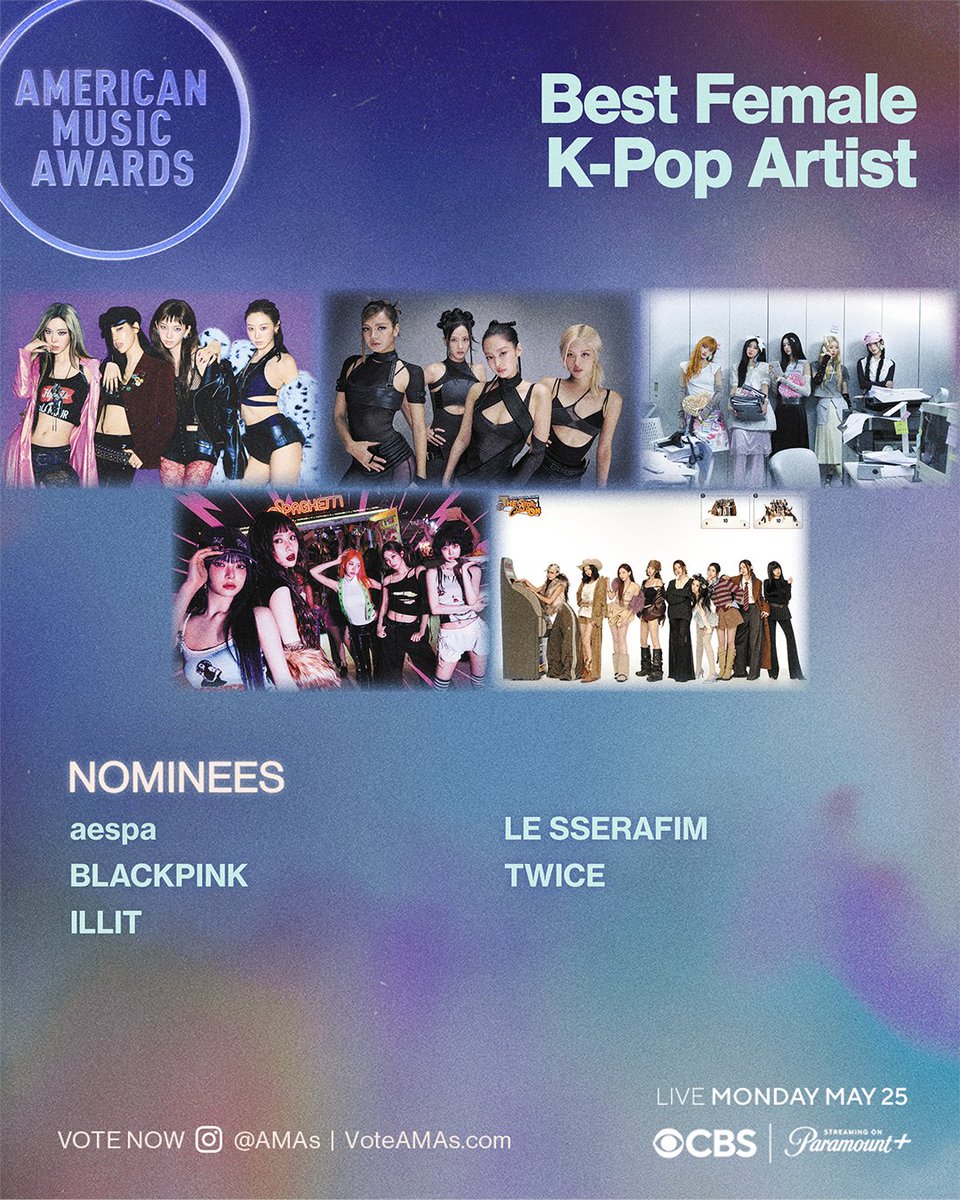

The 2026 American Music Awards nominations have been unveiled, and this year marks a historic, unprecedented sweep for K-Pop. A record seven Korean artists across five major categories have been nominated, signaling K-Pop's complete transition from a niche interest to a dominant force in mainstream American music. This analysis breaks down every nomination, the strategic campaigns behind them, and the undeniable power shift these nods represent.
- Why The 2026 Nominations Are a Game-Changer
- Nominee Deep-Dive: Artist, Song & Strategy
- Beyond Pop: K-Pop's Impact on Hip-Hop & Collaboration Categories
- AMAs vs. Grammys: Why This Award Show Got It Right
- The Road to 2027: What This Means for Future U.S. Campaigns
- AMA 2026 K-Pop Nominations FAQ
Why Are The 2026 AMA Nominations Such a Historic Moment?
For years, K-Pop's presence at major U.S. award shows was often symbolic—a single "social" or "fan-voted" category nod. The 2026 AMAs have shattered that ceiling. Nominations in core, genre-agnostic categories like Artist of the Year and Song of the Year are a testament to commercial performance and cultural impact metrics the industry can no longer ignore.
The Numbers Don't Lie: Chart and Sales Dominance
The inclusion is directly tied to measurable, undeniable success. Multiple K-Pop acts have achieved #1 on the Billboard 200 and Hot 100 this nomination cycle, with sustained streaming numbers that rival and often surpass their Western counterparts. The AMAs, which base nominations on key interaction, sales, and airplay data, simply could not overlook these figures.
A Shift from "Novelty" to "Peer" Recognition
This represents a critical perceptual shift. Being nominated alongside artists like Taylor Swift, Drake, and Beyoncé in primary categories frames K-Pop idols not as internet phenomena, but as legitimate peers in the global music landscape. It’s an institutional validation that bypasses the "tokenism" critiques of the past.
This recognition mirrors the slow, then sudden, rise of artists in their own ecosystems. For a look at how a veteran idol navigates a major career transition, read our analysis of EXY's emotional exit from Cosmic Girls.
Nominee Deep-Dive: Artist, Song & The Strategy Behind Each Nod
Let's examine each K-Pop nomination, the specific work that earned it, and the calculated industry move it represents.
Artist of the Year: The Main Event
The nomination of BTS's Kim Namjoon (RM) in this category is arguably the most significant. His sophomore solo album, *Indigo Horizon*, was a critical and commercial tour-de-force, topping charts for weeks and spawning a hit collaboration with a top-tier U.S. rapper. This nod rewards his artistic evolution and standalone market power.
Similarly, BLACKPINK’s nomination follows their monumental, record-grossing world tour and a year of unparalleled brand dominance. Their strategy of fewer, larger-scale releases has created an event-like demand that translates directly into the engagement metrics the AMAs track.

Song of the Year: The Sonic Crossover
NewJeans's "Echo in the Bubble" and Stray Kids' "Thunderous March" represent two poles of sonic invasion. NewJeans’s track dominated TikTok and radio with its Y2K-inspired groove, proving irresistible crossover appeal. Stray Kids’ nomination, however, is a victory for unadulterated, high-intensity K-Pop production, showing the mainstream can embrace its core sound.
"Seeing our name next to legends in Song of the Year... it confirms that the language of music truly has no borders." — A comment attributed to Stray Kids' Bang Chan in a recent fan meeting.
Best New Artist: The Fourth Generation Arrives
The nomination of girl group ILLUSION and boy group &TEAM here is a forecast of the future. ILLUSION’s hyper-stylized concept and viral choreography captured the global Gen Z audience overnight. &TEAM, following their explosive recent release &TEAM - We on Fire: What Just Landed, demonstrates the powerful hybrid model of multinational K-Pop groups designed for global reach from debut.
Artist/Group Category Nominated Work Key to Success Kim Namjoon (RM of BTS) Artist of the Year *Indigo Horizon* (Album) Critical acclaim, high-value collabs, solo chart dominance BLACKPINK Artist of the Year Overall年度 Activity / Tour Record-breaking tour, massive brand impact, sustained demand NewJeans Song of the Year "Echo in the Bubble" TikTok virality, radio-friendly sound, streaming monster Stray Kids Song of the Year "Thunderous March" Fanbase power, unique production, strong physical sales ILLUSION Best New Artist Debut EP *Mirage* Concept mastery, viral social media, strong rookie numbers &TEAM Best New Artist Single "We on Fire" Global pre-debut buildup, hybrid JP/KR/US promotion TAEYANG (BIGBANG) Collaboration of the Year "After Dawn" ft. Latto Strategic genre-blend, vocal showcase, cross-generational appealBeyond Pop: K-Pop's Impact on Hip-Hop & Collaboration Categories
The nominations extend beyond the expected "Pop" realm, indicating deeper genre integration.
Collaboration of the Year: The Blueprint for Success
TAEYANG's nomination for "After Dawn" featuring rapper Latto is a masterclass in strategic collaboration. Unlike past features that felt tacked-on, this track was built as a true duet, leveraging TAEYANG's iconic R&B vocals with Latto's verses in a natural, chart-ready blend. It performed well across both artists' fanbases and on urban radio formats.
The Unspoken Hip-Hop Influence
While no pure "K-Hip-Hop" act is nominated this year, the influence is palpable. RM’s nomination is rooted in hip-hop, and the production across nominated songs incorporates hip-hop beats and rhythms more confidently than ever. This suggests that K-Pop's absorption and reinterpretation of hip-hop is now being recognized at the source.
AMAs vs. Grammys: Why This Award Show Finally Got It Right
The stark contrast between the AMAs' embrace and the Grammys' continued hesitation is the industry's hottest topic.
Fan Power vs. Committee Decision
The AMAs incorporate fan voting as a component and heavily weight commercial data—areas where K-Pop excels. The Grammys, with its opaque nomination committees and historical focus on industry relationships, has been slower to adapt. The 2026 AMA slate proves that when you follow the data and the audience, K-Pop is unavoidable.
A More Accurate Reflection of the Music Landscape
By nominating these artists, the AMAs present a more accurate picture of what people are actually listening to and engaging with in 2026. It acknowledges the decentralized, global, and fan-driven nature of modern music consumption, something legacy institutions have struggled to map. For the latest in what's driving charts, visit our Charts page.
The Road to 2027: What This Means for Future U.S. Campaigns
The 2026 nominations are not an endpoint, but a new baseline. Here’s what agencies and labels will analyze.
The "AMA Strategy" Will Become Standard
Labels will now explicitly plan U.S. single and album rollouts with AMA eligibility periods and data-tracking metrics in mind. Campaigns will be more structured, with targeted radio pushes and strategic collaboration timing to maximize visibility in the key tracking windows.
Increased Pressure on The Grammys
This watershed moment increases the scrutiny on the Recording Academy. If the fan-driven, data-reflective AMAs can recognize K-Pop's pinnacle artists, the question of why the Grammys haven't becomes louder. It may force a faster evolution of their processes.
This evolution includes managing idols as global celebrities, where the lines between public and private blur. The intense scrutiny was recently highlighted in The Soju Spill, which examined the real-world costs of this spotlight.
A More Level Playing Field for 4th Gen Groups
The Best New Artist nominations prove that a powerful debut strategy can lead to immediate mainstream recognition. This will encourage even more ambitious global debut plans and potentially shift how groups are constructed and marketed from their inception. Discover more about the latest generation of artists on our Artists page.
AMA 2026 K-Pop Nominations: Your Questions Answered
How can I vote for my favorite K-Pop artist at the AMAs?
Voting for the AMAs typically opens a few weeks before the ceremony on the official AMA website and via social media platforms like Twitter. Details for 2026 voting are not yet announced, but fans should monitor official AMA and artist social channels. Fan voting usually counts for a percentage of the final award decision.
Why are some huge K-Pop hits from this year not nominated?
The AMA eligibility period (typically around 12 months leading to a cutoff date) is crucial. A massively popular song that dropped after the cutoff won't be eligible until next year. Additionally, while a song may be huge with fans, the AMAs also weigh U.S. radio airplay, mainstream streaming playlists, and sales—a different ecosystem than domestic Korean charts.
Does this mean K-Pop will start making more "English-language" music?
Not necessarily. The nominated songs include both Korean and English tracks. "Echo in the Bubble" is primarily in English, while "Thunderous March" is mostly Korean. The success indicates that the production, performance, and overall "vibe" are the crossover keys, not just language. Strategic English singles will continue, but they are part of a broader toolkit, as seen in the lasting impact of WayV's "Love Talk".
Will the artists actually attend the ceremony?
Given the historic nature of these nominations, attendance is highly likely. Agencies view this as a prime platform for global exposure. Expect full red carpet treatment, potentially collaborative performances, and significant media engagements scheduled around the event. It will be a major logistics operation for the involved companies.
Are dating scandals or private issues a risk to this recognition?
While personal scandals can dominate headlines, as explored in pieces like Tzuyu's Concert Rumor, award nominations of this scale are based almost entirely on quantifiable commercial and cultural impact data from the past year. Unless an issue directly affects an artist's ability to promote or their public support in the voting period, it is unlikely to retroactively affect a nomination based on past performance.
Conclusion: The Inevitable Has Finally Happened
The 2026 American Music Awards nominations are a cultural milestone, the formal receipt of a bill that has been coming due for years. K-Pop is no longer knocking on the door—it has walked into the main hall and is being handed a nameplate. This will recalibrate marketing strategies, intensify industry competition, and empower artists to pursue even more ambitious creative directions with the confidence of a truly global audience.
The true impact will be seen in 2027. Now that the path has been cleared, which artist will be the first to win in a major category? How will this influence the sound and strategy of groups debuting tomorrow? For continuous analysis on this evolving story, bookmark our News page. The music didn't change borders; the borders finally caught up to the music.