
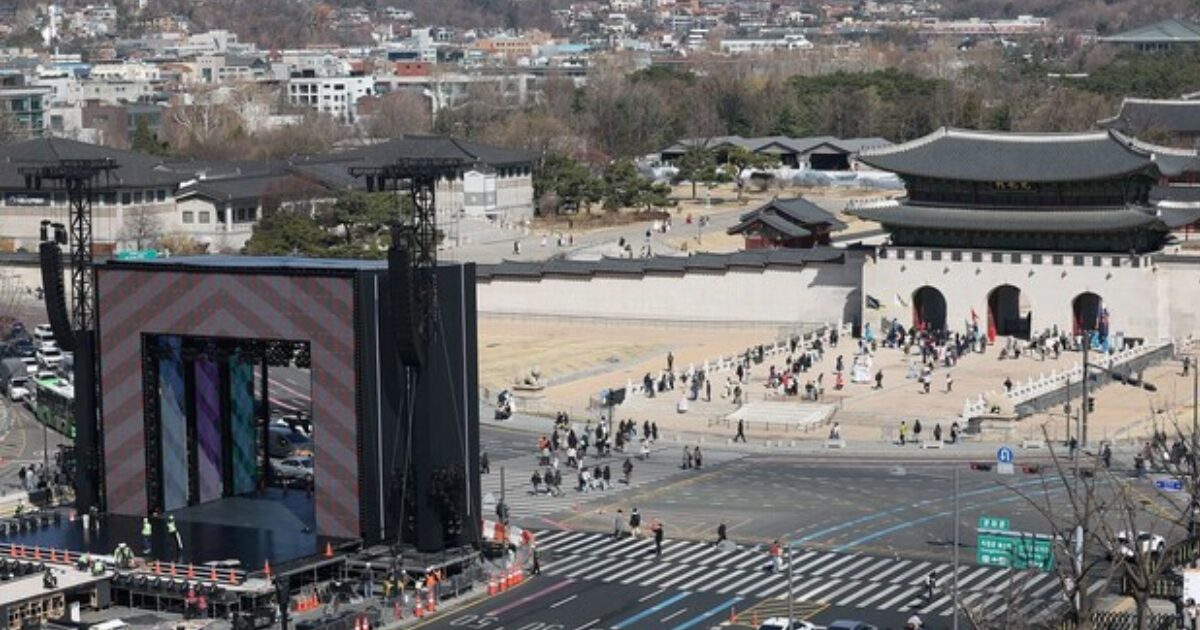

The world watched, breath held, as the seven members of BTS stood atop a specially constructed stage at Seoul’s iconic Gwanghwamun Square. The date was October 15, 2023. Backed by a traditional Korean orchestra and against the stunning backdrop of the illuminated Gyeongbokgung Palace, they performed “ARIRANG,” a fusion rearrangement of the beloved folk song, for their long-awaited full-group comeback. It was a moment of profound cultural gravity, cinematic beauty, and emotional catharsis for the global ARMY. What the broadcast couldn’t show was the immense logistical and financial engine humming behind the scenes—a machine fueled by an investment so large it underscores a new era in K-Pop production.
Today, exclusive financial disclosures obtained by K-Beats and confirmed by multiple industry sources reveal the total cost borne by HYBE for that single, historic event. The figure? A staggering 1.2 billion Korean Won (approximately $890,000 USD at the time) paid directly to the Seoul Metropolitan Government for permits, security, public space rental, and city services. This sum, a record for a single-day musical event in the city’s history, does not even include the group’s own production costs—stage construction, artist fees, orchestra, crew, global live-streaming infrastructure, and the multi-camera cinematic shoot—which insiders estimate to triple the overall expenditure. This revelation opens a new window into the capital-intensive, high-stakes strategies HYBE is deploying to maintain BTS’s unparalleled position during their chapter-two solo activities and to architect their collective future.
From Stadiums to Squares: The Pivot to Cultural Spectacle
The “ARIRANG” comeback was never conceived as a typical music show stage or even a stadium concert. In the wake of BTS’s announced hiatus from group activities to fulfill mandatory military service, the strategic imperative shifted. The goal was no longer to sell tickets to hundreds of thousands, but to create an indelible, symbol-rich moment that would resonate on news broadcasts, history books, and cultural discourse worldwide. It was a statement of identity and continuity.
A Calculated Departure from the Formula
BTS’s journey has been marked by increasingly grand scales, from arenas to stadium world tours. However, as members like RM and SUGA embarked on solo projects that explored deeply personal themes, the group’ collective return demanded a different language. “ARIRANG,” a song deeply woven into the Korean psyche, offered that lexicon. The location—Gwanghwamun Square—is the nation’s symbolic heart, a site of celebrations, protests, and collective memory. By choosing this venue, HYBE and BTS consciously moved from the commercial domain of ticketed entertainment into the public, civic, and cultural sphere. This pivot, as our analysis of RM's Gritty Decision to Perform Through a Ligament Tear showed, is part of a broader pattern of the members prioritizing artistic and symbolic statements even at personal cost.
The decision also came with a unique set of challenges and costs. Public space of this significance is not simply rented; it is negotiated through layers of permits, safety certifications, and historical preservation considerations. The Seoul Metropolitan Government, while supportive of promoting Korean culture globally, imposes stringent requirements to protect the area and ensure public safety, all of which carry a price tag.
Breaking Down the 1.2 Billion Won: Where the Money Went
The payment to the Seoul Metropolitan Government, detailed across several budget lines, reveals the monumental task of temporarily transforming a national plaza into a world-class production set.
Security and Crowd Control: The Largest Line Item
Nearly 40% of the fee, approximately 480 million won, was allocated to a massive security operation. This included:
- Police Deployment: Hundreds of officers for perimeter control, traffic rerouting, and anti-terrorism surveillance.
- Private Security: Licensed personnel for immediate stage and artist protection.
- Crowd Management Infrastructure: Temporary barriers, checkpoints, and medical stations, anticipating the thousands of fans who would gather beyond the official, limited-audience perimeter.
“When you are dealing with an artist of BTS’s global magnitude in an open, symbolic space, security isn’t an expense; it’s the foundational investment. The potential risk to public safety and national image is too great to compromise on,” explained a former city events coordinator who spoke to K-Beats on condition of anonymity.
Site Restoration and Environmental Guarantees
A further 350 million won was earmarked as a restoration deposit and fee. Gwanghwamun Square is not just pavement; it’s an archaeological sensitive area with historical artifacts underground and delicate stonework. The contract stipulated:

- Non-invasive stage installation methods (no deep drilling).
- 24/7 monitoring by city-appointed heritage inspectors.
- A guaranteed, bond-backed restoration plan to return the square to its exact prior state, including repair of any accidental damage to the iconic King Sejong Statue area or the “Waterway of History.”
Public Service Logistics and Permits
The remaining funds covered the labyrinth of permits for noise ordinance waivers, public broadcasting rights, temporary closure of major roads impacting city bus routes, and compensation for affected local businesses. It also included sanitation services—deploying and staffing portable restroom facilities and a post-event clean-up crew of city workers operating on overtime pay.
This financial breakdown reveals a key truth: the actual performance was just the tip of the iceberg. The investment was in creating a permissible environment for a global spectacle to occur in the heart of a living, working metropolis.
The ARMY’s Mixed Chorus: Pride, Concern, and Debate
Upon the release of this financial information, the ARMY reaction across social media platforms and fan forums has been multifaceted, reflecting the maturity and economic awareness of the fandom.
Pride in Scale and Ambition
A dominant sentiment is one of awe and pride. Many fans see the 1.2 billion won fee as a tangible measure of the event’s historic importance and HYBE’s commitment to giving BTS a comeback worthy of their status. “Only BTS could justify this level of investment for a single performance. It shows how seriously the company and the city take their role as global cultural ambassadors,” wrote a user on the popular forum Weverse. The cinematic quality of the broadcast, made possible by such a budget, is frequently cited as a point of satisfaction.
Financial Scrutiny and Ethical Questions
However, a significant, vocal segment of the fandom has engaged in critical scrutiny. This echoes past debates about HYBE’s spending priorities, such as those explored in our report on The "BTS Private Paradise" Scandal, where fan expenditure and exclusivity were questioned. The concerns now are corporate: “While the performance was beautiful, I can’t help but think this 1.2 billion won is part of the reason concert tickets and merchandise prices keep rising,” tweeted a fan with a large following. Others question the optics of such a large payment to a city government, wondering about transparency and whether it sets a problematic precedent for pricing smaller artists out of public spaces.
“It’s a double-edged sword. We want the best for our artists, and ‘the best’ clearly costs a fortune. But as fans who ultimately fund HYBE’s operations, we have a right to discuss if this is the most sustainable or equitable way to express artistic vision,” commented a moderator of a major fan-driven economics discussion thread.
Industry Ripples: Redefining the "Comeback" Playbook
The revelation of HYBE’s investment has sent shockwaves through the K-Pop industry, prompting executives and producers to reevaluate their own strategies.
The High-Stakes "Event-ization" of Music Releases
The “ARIRANG” comeback is the apex of a trend towards the “event-ization” of major comebacks. It’s no longer enough to release a music video and appear on music shows. For top-tier groups, the release must be a unique, one-time experiential moment—a theatrical premiere. This creates immense pressure on mid-tier and rookie agencies that cannot dream of such capital outlays, potentially widening the gap between the industry’s haves and have-nots. The focus shifts from musical competition to spectacle competition.
Cultural Capital as Currency
HYBE’s spend is also a direct investment in cultural capital. By aligning BTS so powerfully with a national symbol like “Arirang” in the nation’s most symbolic square, they are cementing the group’s legacy as more than idols—as institutions. This move protects and elevates their brand value in a way that a flashy but generic commercial performance could not. It’s a long-term asset play, insulating the group from the typical commercial volatility of pop music. This strategic layering of meaning is similar to the depth found in solo work, like SUGA’s collaboration with a legendary vocalist, as detailed in The Cosmic Collision article.
Furthermore, it strengthens HYBE’s bargaining position with the Korean government and cultural bodies, framing the company not just as a entertainment vendor, but as a partner in national soft power projects. This symbiotic relationship can yield future benefits in permits, endorsements, and policy considerations.
The Road Ahead: Legacy, Logistics, and the 2025 Reunion
The “ARIRANG” event now stands as a benchmark, both artistic and financial. Its implications will shape the next phase for BTS and HYBE.
Firstly, it sets a daunting precedent for the group’s eventual full reunion, anticipated around 2025. The expectations from fans and the industry will be astronomical. Will HYBE seek to outdo itself with an even larger, more complex, and more expensive production? The logistical and financial天花板 has been dramatically raised. Planning for that event, likely targeting a capacity that dwarfs even stadiums, begins now. You can follow the early rumors and preparations for all such major events on our News page.
Secondly, it highlights the increasing importance of non-traditional revenue streams to justify such expenditures. The 1.2 billion won was not recouped through ticket sales. Its return on investment came from global streaming revenue, sponsored content, subsequent documentary sales, and the incalculable boost to brand equity for both BTS and HYBE’s stock price. This model will become more prevalent, pushing agencies further into the media production business.
Finally, the event is a powerful signal of intent. As BTS members gradually complete their military service, this performance is a placeholder—a majestic, expensive, and culturally-rooted promise that the group’s future endeavors will prioritize artistic integrity and global impact on their own terms. The 1.2 billion won, in the final analysis, was not just a payment for a venue. It was a down payment on a legacy, a bold declaration that the story of BTS will be told in the grandest possible chapters, written across the very fabric of their homeland’s most storied spaces. For a deeper look at the artists shaping this industry’s future, visit our comprehensive Artists page.
As the industry digests this news, one thing is clear: the rules of the game have changed. The era of the billion-won comeback has arrived, and in characteristic fashion, BTS and HYBE are the ones who wrote the first check.