
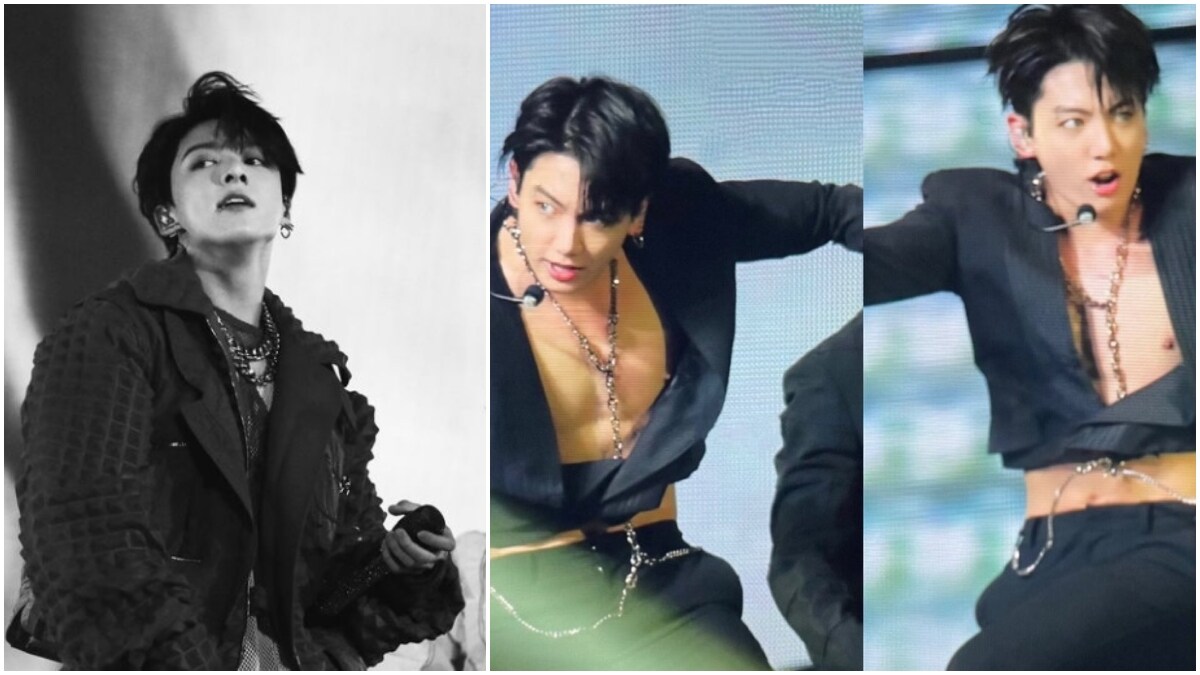

The air inside Seoul's Gocheok Sky Dome was thick with a singular, electric anticipation. It was the final night of BTS's long-awaited "FOREVER" comeback concerts, a celebration marking not just new music but a collective homecoming. As the opening notes of the introspective ballad "Cloth & Soul" began, Jimin stood center stage, a solitary figure under a stark, white spotlight. His voice, fragile yet firm, painted a picture of vulnerability. Then, during a climactic high note, it happened: the left shoulder seam of his delicate, silk-blend top appeared to give way, the fabric slipping down his arm in what the world instantly assumed was a devastating wardrobe malfunction. The gasp from the audience was audible, a wave of shared concern. But Jimin didn't falter. He didn't rush to cover himself. Instead, he closed his eyes, let the fabric fall, and finished the note, his bare shoulder and a glimpse of his torso now part of the performance. What followed wasn't panic, but a powerful, silent choreography of revelation.
In the days that followed, the incident was dissected across social media and news outlets, filed under "unfortunate accidents." However, sources intimately involved with the creative direction of the "FOREVER" tour have now exclusively confirmed to K-Beats that the moment was no accident. It was a meticulously planned, rehearsed, and deeply symbolic act of artistic expression—a premeditated "malfunction" designed to shatter expectations and communicate a message far beyond the music. This is the story of how BTS, once again, turned a potential scandal into a profound statement.
A Legacy Built on Unraveling Norms
To understand the significance of this act, one must look at the trajectory of BTS not just as performers, but as cultural iconoclasts. From their earliest days, their narrative has been interwoven with themes of self-acceptance, societal pressure, and the struggle to maintain one's identity under a glaring spotlight. Their discography is a map of this journey, from the rebellious anger of "No More Dream" to the weary introspection of "The Last" from Jimin's solo work.
This particular chapter finds its roots in the group's ongoing navigation of their mandatory military service era. Their comeback, while celebratory, carries the weight of maturity and the scars of an industry that often treats idols as commodities. The "FOREVER" concept photos and trailers were rife with imagery of binding, wrapping, and delicate fabrics—aesthetic choices that, in retrospect, were clear foreshadowing. As we explored in our analysis "Artistry vs. Industry: Inside BTS's Reported 'Battle for Authenticity,'" the members have historically been fiercely involved in the narrative depth of their performances, sometimes pushing back against more commercial interests. The staged malfunction emerges as a potent extension of this battle—a physical manifestation of breaking free from constraints.
The Weight of the Perfect Image
The K-Pop industry is built on a foundation of flawless visuals. Idols are presented as impeccable, their appearances managed down to the most minute detail. A wardrobe malfunction is, in this context, a nightmare—a crack in the perfect facade. It represents a loss of control. By deliberately orchestrating such a moment, BTS and their creative team, led by long-time collaborator and performance director Song Sung-deuk, sought to reclaim that narrative. They aimed to demonstrate that vulnerability and imperfection are not signs of weakness or unprofessionalism, but can be powerful, controlled tools of art. It was an act of taking something the industry fears and wielding it as a weapon of authenticity.
Deconstructing the Moment: Choreography of Revelation
According to our sources, the "malfunction" was coded into the performance as "Point Ravel" (a play on 'unravel'). It was not left to chance.
The Technical Precision
The custom-made top worn by Jimin was engineered with a series of magnetic closures and weakened seams designed to release under the specific tension of a choreographed arm movement. The moment was timed to the millisecond within the song's emotional peak. Stage lighting was programmed to subtly shift, drawing the eye without creating a jarring visual break. Every crew member on headset was aware of the cue. This wasn't a secret kept from staff; it was a coordinated mission.
"The intention was never to shock for shock's sake," revealed a member of the creative team who spoke on condition of anonymity. "It was about visualizing the song's core theme: 'What sustains us is not the unbreakable armor, but the threads of truth we choose to show, even when they're frayed.' Jimin embodied that lyric physically. He practiced controlling the fall of the fabric for weeks—how to move with it, not against it. It was some of the most delicate choreography he's ever done."
The Symbolic Resonance
The choice of the song "Cloth & Soul" is crucial. Lyrics like "They weave a cage of expectations, thread by thread / But my soul's garment is woven from a different breed" take on a literal, powerful dimension. The falling fabric became a metaphor for shedding the imposed identity, the "cage" of the idol image. In the subsequent song, "Rise," Jimin—now with the top intentionally styled off-one-shoulder for the remainder of the set—engaged in more vigorous choreography, the modified costume symbolizing a newfound freedom and strength born from that vulnerability.

This deliberate blurring of concert and concept art echoes a growing trend in the industry towards immersive, theatrical performances. For more on how newer groups are testing creative boundaries, see our feature on TWS's bold collaborative strategies.
ARMY's Decoding: From Concern to Collective Epiphany
The initial fan reaction was a masterclass in empathetic panic. Social media exploded with concern for Jimin's well-being. Hashtags like #JiminAreYouOkay trended globally. Forum threads on platforms like Weverse and Netizen Buzz were flooded with posts analyzing the clip, debating whether it was real, and expressing anger at what was perceived as a costuming failure by HYBE's team.
However, the narrative began to shift within hours. Astute fans, known as "theory ARMY," started connecting the dots. They juxtaposed the "malfunction" footage with earlier concept photos showing torn fabrics and broken strings. They analyzed the unchanged, calm demeanour of the backup dancers and the lack of any backstage scramble in fan-taken videos. A pivotal post on a popular fan board stated:
"This wasn't a mistake. Watch Jimin's eyes. There's no surprise, only intensity. The fabric fell exactly on the lyric 'I unravel.' This is performance art. HYBE didn't fail him; he and the team are speaking to us."
The conversation then transformed from concern to deep analysis:
- Appreciation for the Risk: Fans praised the artistic courage, acknowledging that such a stunt could have been wildly misconstrued.
- Symbolic Analysis: Lengthy essays and video edits explored the metaphor, linking it to BTS's entire history of discussing mental health and the pressure of perfection.
- Industry Critique: Many used the moment to spark broader discussions about the unrealistic standards of flawlessness in K-Pop, drawing parallels to debates like those sparked by the scrutiny over live vocals.
The episode became a unifying puzzle for the fandom, strengthening the bond between artist and audience through shared understanding. It was a conversation that moved far beyond simple gossip, living primarily on platforms like our News page where fans seek deeper insight.
Industry Tremors: Precedent, Power, and PR
Within the K-Pop industry, the confirmation of a staged malfunction has sent ripples through agency boardrooms and creative departments. The move is unprecedented in its scale and audacity. While provocative performances exist, none have so deliberately mimicked a classic "fail" moment for symbolic purpose.
A New Tool in the Creative Arsenal
Creative directors are now openly wondering if this opens a new avenue for storytelling. "It breaks the fourth wall in a very visceral way," commented one director from a mid-sized agency. "It forces the audience out of passive viewing and into active interpretation. It's high-risk, but the reward in terms of narrative depth and fan engagement is potentially massive." However, most agree that such a tactic requires an artist with immense credibility and a fandom primed for artistic discourse—a privilege BTS has earned over a decade.
HYBE's Calculated Gambit
This incident also sheds light on the current dynamics within HYBE. At a time when the corporation is under immense public and legal scrutiny—as detailed in our reporting on the police investigation into Chairman Bang Si-hyuk—allowing, and indeed supporting, such a controversial artistic choice is fascinating. It suggests one of two strategies: either a confident doubling-down on artistic integrity as a core brand value, or a sophisticated diversion tactic to steer the media narrative towards creative discussion and away from corporate scandals.
It also serves as a stark contrast to how other agencies handle image crises. Where some might sue for defamation over leaks or suppress controversies, HYBE and BTS have effectively taken control of a potential "scandal" narrative and authored its meaning in advance. This level of narrative control is a formidable power, blurring the lines between artist management and media manipulation in a way that will be studied for years. For a look at how other agencies face scandals, the ongoing Seoul Salon scandal presents a very different approach to crisis management.
The Unraveled Thread: What This Means for BTS's Future
The "Point Ravel" moment is not an isolated stunt. It is a cornerstone of the "FOREVER" era's philosophy. Insiders hint that this act of deliberate vulnerability sets the tone for the group's activities in this phase of their career.
Firstly, it signals a content universe where metaphor will be made literal. Upcoming music videos, promotional material, and even the design of the official lightstick for this era are expected to incorporate motifs of repaired fabric, golden stitching (a reference to the Japanese art of kintsugi), and strength born from acknowledged fragility. This positions BTS not just as musicians, but as auteurs of a multi-sensory experience.
Secondly, it empowers the individual members in their solo endeavors. Jimin, by executing this moment, has cemented his solo identity as a fearless performance artist. It gives permission for other members to pursue similarly bold, conceptually dense projects without the fear of being "too avant-garde" for the mainstream. Their work will likely continue to challenge the very infrastructure of the idol system from within.
Finally, it raises the bar for artistic sincerity in the industry. As BTS members gradually fulfill their military duties, their group activities will become more precious and likely more intentional. They are using their unparalleled platform not just to perform, but to preach a gospel of imperfect authenticity. The staged malfunction is a sermon delivered in silence and fabric—a reminder that true connection isn't found in flawless presentations, but in the shared, human experience of things coming apart, and the beauty of choosing how to put them back together.
As the "FOREVER" tour continues its global leg, all eyes will now be on every seam, every thread, searching for meaning. BTS has once again changed the game, proving that the most powerful statements are sometimes made without saying a word. The conversation around their artistry, and its impact on the wider landscape of K-Pop, continues to evolve daily, a story you can follow through the lens of all our artists on our Artists page.