
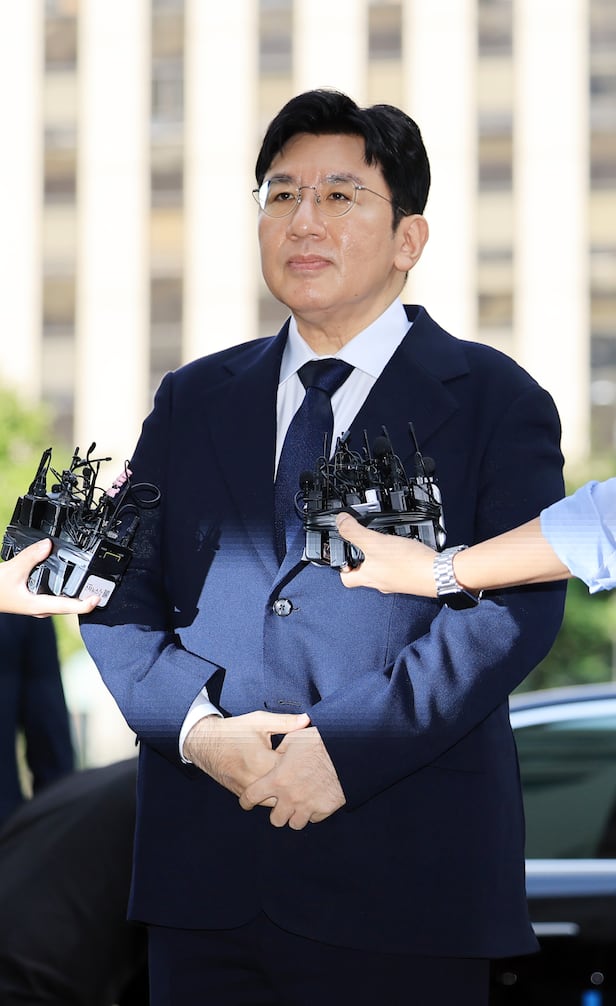

The foundation of modern K-Pop, often perceived as unshakeable, felt a distinct tremor this week. In a press conference that sent shockwaves from Seoul to global fan communities, Park Jung-bo, chief of the Seoul Metropolitan Police Agency, confirmed that an investigation into Bang Si-hyuk, the visionary Chairman and founder of HYBE, is actively proceeding. While details remain tightly guarded under the veil of "investigative confidentiality," the mere official acknowledgment of a probe targeting the industry's most influential figure marks a watershed moment. This isn't just corporate news; it's a seismic event that forces a re-examination of power, legacy, and the very structure of the global music behemoth Bang himself built from the ground up.
The announcement, made on the 23rd, was characteristically sparse on specifics. Chief Park stated the police "are currently investigating" the matter, declining to elaborate on the nature of the allegations or the involved parties. This vacuum of information has become a chasm filled with speculation, anxiety, and intense scrutiny. For a company whose stock price is as much a measure of fan sentiment as financial performance, and for an industry where the chairman is a celebrated, almost mythologized figure, the implications are profound. The investigation places HYBE—home to BTS, LE SSERAFIM - PUREFLOW pt.1: What Just Landed" rel="internal">LE SSERAFIM, NewJeans, and countless other stars—in territory it has never navigated before: a potential legal storm centered on its founder.
The Architect and His Empire: From Hitman Bang to HYBE Chairman
To understand the magnitude of this moment, one must first understand the man at its center. Bang Si-hyuk, affectionately known as "Hitman Bang" for his prolific songwriting, did not merely start a company; he engineered a paradigm shift. His journey from a behind-the-scenes producer at JYP Entertainment to the chairman of a corporation that rivals Korea's largest conglomerates is the stuff of K-Pop legend. His founding of Big Hit Entertainment in 2005 was a gamble, but his bet on a then-unknown group named BTS, coupled with a revolutionary fan-centric, narrative-driven strategy, redefined the idol business model.
HYBE's transformation from Big Hit was more than a rebrand; it was an declaration of ambitions that stretched far beyond music. Under Bang's chairmanship, HYBE aggressively expanded through acquisitions—source music, Ithaca Holdings, Quality Control Music—and diversified into tech, webtoons, and education. This strategy, often analyzed on our News page, positioned HYBE not just as a label, but as a "music-based lifestyle platform." Bang's role evolved from hands-on producer to corporate strategist and industry titan, a figure whose decisions ripple across the entire entertainment landscape.
This context makes the police investigation so jarring. The narrative around Bang has consistently been one of visionary genius and, more recently, of corporate power. Allegations or scrutiny of a personal or professional nature were never part of that story. The probe, therefore, threatens to unravel a carefully cultivated image and raises immediate questions about corporate governance and stability at the highest level of a publicly traded, globally scrutinized company.
Decoding the Update: What the Police Did and Didn't Say
The official update from Chief Park Jung-bo was a masterclass in saying very little with immense consequence. The statement confirmed the existence of an active investigation, dismissing any notion that preliminary inquiries had been closed or were insignificant. The refusal to disclose the "investigative subject" or the case's specifics is standard police procedure in Korea, designed to protect the integrity of the investigation and the rights of all involved. However, in the court of public opinion, this silence is deafening.
We are currently investigating the case. As the case is under investigation, it is difficult to confirm the investigative subject.
Industry insiders and legal analysts parsing the statement note several key points. First, the fact that the chief of the Seoul Metropolitan Police Agency addressed it directly suggests a case of substantial scale and public interest. Second, the phrasing indicates the investigation is beyond its earliest stages, likely involving the collection of evidence and interviews. The potential scope is vast, ranging from financial and securities law violations related to HYBE's aggressive market activities, to more personal allegations. The lack of clarity has led to a frenzied, and often irresponsible, rumor mill online, which the police's secrecy arguably fuels.
The Shadow of Precedent: K-Pop and Legal Scrutiny
While unprecedented for a figure of Bang's stature, the K-Pop industry is no stranger to scandal and police investigation. From contract disputes and slave contract allegations in the 2000s to the devastating Burning Sun scandal that exposed networks of corruption, the industry's glossy exterior has periodically been pierced by legal proceedings. However, those typically involved active idols, managers, or company executives lower down the chain. A probe targeting the founder and chairman of the industry's leading corporation represents an escalation, potentially signaling authorities' willingness to examine the immense power concentrated at the very top of the entertainment food chain.

This occurs within a broader Korean societal context of increasing scrutiny on chaebols and corporate leaders. The investigation, regardless of its outcome, may be viewed as part of a larger pattern of holding powerful figures accountable, shifting the landscape in which all Korean conglomerates, including entertainment giants, operate.
A Fandom on Edge: ARMY and HYBE Stans Grapple with Uncertainty
The reaction from the global fan community, particularly ARMY, has been a complex tapestry of concern, defiance, and cautious pragmatism. On platforms like X (formerly Twitter) and Weverse, the initial response was one of shock, with "Bang Si-hyuk" and "HYBE" trending worldwide. The dominant sentiment among many fans is a protective defense of Bang's legacy, intertwined with deep anxiety over any potential impact on the artists, especially BTS members currently fulfilling their military service.
Fandom spaces have become arenas for debate. One faction urges absolute trust in Bang Si-hyuk and dismisses the investigation as baseless or a targeted attack, often linking it to HYBE's competitive dominance. Another, more somber segment expresses worry about corporate stability and the potential for internal turmoil that could affect future group activities and comebacks. Comments like, "I'm just worried for the artists, they've been through enough," and "This feels bigger than us, the stock is going to crash," capture the prevailing mood of nervous anticipation.
This incident has also reignited older, simmering debates within fandom about HYBE's corporate direction. Some fans have quickly connected this news to past reports of internal creative tensions, such as those outlined in our report on BTS's advocacy for authentic lyricism. The narrative frames the investigation as a potential consequence of the corporation's rapid, perhaps overzealous, expansion under Bang's chairmanship, moving away from its artist-centric roots. This faction views the probe not as an attack, but as a necessary check on corporate overreach, even as they separate their love for the artists from their critique of the corporation.
Industry-Wide Ripples: Stability, Stocks, and a Potential Power Vacuum
The financial markets delivered the most immediate and tangible verdict. Following the police update, HYBE's stock price experienced significant volatility, reflecting investor skittishness. In an industry where perception is currency, uncertainty at the helm is a critical vulnerability. Analysts are now weighing scenarios ranging from a quick resolution with no material impact to prolonged legal proceedings that could hamper decision-making, delay new ventures, and affect investor confidence long-term.
Beyond the ticker tape, the investigation sends a chill through the entire K-Pop ecosystem. HYBE is not an isolated entity; it is a major partner, competitor, and trendsetter. Its strategies, from its multi-label system to its forays into AI and web3, are closely watched and often emulated. A destabilized HYBE could create a temporary vacuum at the top of the industry, potentially allowing competitors like SM Entertainment under Kakao, or JYP Entertainment, to gain strategic ground. It also raises questions for HYBE's myriad subsidiary labels and partners—from ADOR and its hit group NewJeans to KOZ Entertainment led by Zico—about the continuity of support and resources.
Furthermore, this situation tests the strength of HYBE's corporate structure. In recent years, Bang has consciously stepped back from day-to-day operations, empowering a cadre of CEOs like Park Ji-won (HYBE) and Jang Yoon-ju (HYBE AMERICA). The true test of HYBE's institutional resilience is whether this machinery can operate smoothly, and reassure its artists and partners, amidst a crisis focusing on its founder. Can the company prove it is bigger than one man, even if that man is its creator?
The Global Perception: K-Pop's Plague of Scandals?
Internationally, this news risks being absorbed into a simplistic "K-Pop scandal" narrative by mainstream media. For an industry that has fought for legitimacy and artistic recognition beyond tabloid fodder, this is a reputational threat. It provides ammunition for those who dismiss the genre as a superficially glossy industry riddled with hidden corruption. The pressure on HYBE to manage communications transparently and effectively is immense, not just for its own sake, but for the image of K-Pop as a whole on the global stage.
Navigating the Unclear Path Forward: Scenarios and Stakes
Predicting the outcome is impossible, but several paths lie ahead. The most favorable for HYBE is a swift conclusion to the investigation with no charges filed, allowing the company to announce a full vindication and attempt to return to business as usual. However, the shadow of the probe may linger on its reputation.
A more prolonged investigation, or one that results in formal charges, would trigger a crisis management scenario of historic proportions. It would necessitate a clear separation between Bang the individual and HYBE the corporation, possibly leading to a more formal distance, such as a leave of absence from his chairman role. The board of directors would face immense pressure to demonstrate robust governance and seamless succession planning.
For the artists, the path is one of cautious continuity. Groups like LE SSERAFIM - PUREFLOW pt.1: What Just Landed" rel="internal">LE SSERAFIM, TWS, and &TEAM have meticulously planned comebacks and promotions that are likely too far along to alter. The focus for labels will be insulating their artists from the corporate storm, ensuring that music and fan engagement continue unabated. As we saw with the strategic rollout of TWS's pre-comeback collaboration, HYBE's labels are adept at forward-looking strategy; that skill will now be applied to crisis navigation.
Ultimately, this moment is a stark reminder of the duality of the K-Pop industry. It is a world built on dreams, artistry, and global connection, as visible on our Charts page, but it is also a multi-billion dollar business operating within complex legal and financial frameworks. The investigation into Bang Si-hyuk, regardless of its final conclusion, has already pierced the veil between these two realities. It forces a conversation about accountability, corporate power, and the future of an industry at a crossroads. The world is now watching to see if the house that Bang built can withstand the storm, and how the legions of artists and fans within it will fare as the waves crash against its walls.