
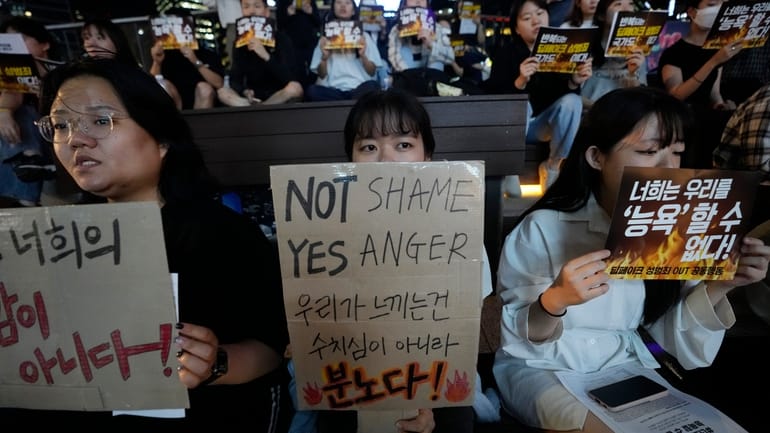

In a landmark ruling that signals a new era of accountability, multiple perpetrators creating and distributing malicious deepfakes of SM Entertainment artists have been sentenced to prison. This decisive legal victory, detailed in SM's latest update, is not merely a corporate press release but a watershed moment for the entire K-Pop industry. It establishes a powerful precedent, shifting the battleground for idol safety from social media complaints to the court of law, and forces a critical conversation about technology, ethics, and fandom.
- What Did SM Entertainment's Official Update Actually Say?
- Why Are These Prison Sentences a Game-Changer for the Industry?
- Which SM Artists Have Been Primary Targets of Deepfake Abuse?
- Is This a Problem of Technology or a Crisis in Fan Culture?
- How Are Other Agencies Responding Compared to SM's Strategy?
- Your Deepfake Questions Answered
What Did SM Entertainment's Official Update Actually Say?
On April 10, SM Entertainment broke its silence with a statement that was both a report and a warning. The agency provided a concrete update on its relentless, and often underreported, legal campaign against digital crimes targeting its roster.
The Core Announcement: Sentences and Zero Tolerance
The statement confirmed that the Seoul Central District Court had sentenced individuals involved in creating and disseminating deepfake content and other malicious posts to imprisonment. SM did not mince words, stating the sentences reflect the "seriousness of the damage inflicted upon the artists' personal rights." This move from investigation to conviction is the crucial pivot point.
Beyond the Headlines: The "Jipyo" Reporting Center
SM highlighted its proprietary "Jipyo" system—a dedicated digital monitoring and reporting center. This isn't a passive email inbox. It's an active, 24/7 operation employing legal and technological teams to scour the darker corners of the internet, collect evidence, and file complaints. The update served to publicize this system, encouraging fans to report violations directly through this official channel, thereby funneling evidence directly to their legal team.
"Our company is taking strict legal action without any settlement or leniency against all kinds of malicious activities... We will continue to do our best to protect the rights of our artists." - SM Entertainment Official Statement Excerpt
A Strategic Communication Shift
This update represents a tactical shift in communication. Previously, agencies often issued generic warnings. By announcing specific legal outcomes—prison sentences—SM is communicating two things to the public and to potential offenders: their efforts are effective, and the consequences are severe and real. It’s a deterrent wrapped in a press release.
Why Are These Prison Sentences a Game-Changer for the Industry?
The imprisonment of deepfake offenders sets a legal and psychological precedent that fundamentally alters the landscape. For years, anonymous online harassers operated with a perceived sense of impunity. That shield has now been cracked.
From Civil to Criminal: Escalating the Stakes
Most previous legal actions by entertainment companies resulted in fines or suspended sentences under defamation or insult laws. A prison sentence elevates the crime from a civil dispute to a serious criminal offense. It sends an unambiguous message that creating non-consensual intimate imagery (NCII) via AI is not a minor cyber-misdeed but a felony with life-altering repercussions for the perpetrator.
The Evidence Hurdle and SM's Methodical Approach
One major challenge in prosecuting such crimes is gathering court-admissible evidence from ephemeral online spaces. SM's methodical, evidence-first approach through its Jipyo center appears to have been key. By systematically documenting violations, tracing IP addresses, and building watertight cases, they provided prosecutors with the material needed to seek and obtain maximal penalties.

Psychological Impact on Artists and Fans
For artists, this legal validation is a form of protection that goes beyond security guards. It affirms that the law recognizes their personhood and rights are being violated. For fans, it empowers the respectful majority. It draws a clear line between supportive fandom and criminal harassment, a distinction sometimes blurred in toxic online spaces. It echoes the sentiment of vulnerability turned to strength, similar to when groups like Stray Kids openly confronted personal insecurities, transforming a point of potential mockery into one of connection and respect.
Which SM Artists Have Been Primary Targets of Deepfake Abuse?
While SM's statement rightly protects victim privacy by not naming specific artists, industry observation and prior legal filings paint a clear picture. The targets are often the agency's most globally prominent, visually iconic, and discussed idols.
Female Idols at the Forefront of a Gendered Crime
Tragically, the overwhelming burden of deepfake abuse falls on female artists. Members of aespa, particularly Karina and Winter due to their high visibility, have been frequent targets. Senior artists like Girls' Generation's Taeyeon and Red Velvet's Irene have also been subjected to these violations for years. The crime is deeply gendered, weaponizing AI technology to perpetuate digital sexual violence.
Male Idols and Different Forms of Malicious Editing
Male artists face a different, yet equally damaging, spectrum of abuse. While explicit deepfakes exist, they are more often targets of defamatory edits—manipulated videos or audio meant to falsely show them in scandals, making derogatory statements, or exhibiting problematic behavior. NCT members, due to the group's vast size and constant content, are often victims of such defamatory forgeries.
The Ripple Effect on Group Dynamics and Mental Health
The impact is never isolated. When one member is targeted, it affects the entire group's morale and dynamics. It creates an atmosphere of fear and violation that can stifle creative expression and fan interaction. The agency's legal fight is, therefore, also a fight to preserve the mental well-being and professional integrity of its entire artistic community.
Is This a Problem of Technology or a Crisis in Fan Culture?
Blaming the technology alone is a facile answer. Deepfake AI is the tool, but the driver is a malignant subculture that has festered within certain online fandoms. This is a crisis of ethics, entitlement, and the toxic extremes of fan-idol relationships.
The "Sasaeng" Mentality Goes Digital
The mindset that fuels physical sasaeng behavior—obsession, possession, and a disregard for boundaries—has seamlessly migrated online. Creating a deepfake is the ultimate violation of autonomy, a digital manifestation of the belief that an idol's image and persona are commodities to be controlled and manipulated by the "fan." It's the logical, horrifying endpoint of viewing idols not as human beings but as customizable fictional characters.
Anonymity and the Disinhibition Effect
The cloak of online anonymity provides a false courage. Offenders who would never dare approach an idol in person feel empowered to commit profound violations from behind a keyboard. This disinhibition, combined with the ease of accessing AI tools, has created a perfect storm. SM's legal victories directly attack this by proving anonymity is fragile and can be pierced by determined legal action.
The Role of Platforms and the "Viral Fame" Calculus
Social media platforms' algorithms, which often prioritize engagement over ethics, inadvertently incentivize shocking content. This creates a perverse calculus similar to that seen on survival shows, where controversy can be leveraged for attention—a dynamic we analyzed in "The Ending Fairy Gambit". The rush for clicks and notoriety drives the spread of this abusive content, forcing agencies to play a relentless game of whack-a-mole on platforms that are often slow to respond.
How Are Other Agencies Responding Compared to SM's Strategy?
SM's aggressive, public-facing legal strategy is now a benchmark. However, the broader industry response has been fragmented, ranging from proactive to passive. The table below contrasts the emerging approaches.
Agency / Approach Key Tactics Public Communication Notable Challenges SM Entertainment (Proactive-Legal) Dedicated in-house monitoring center (Jipyo), pursuing criminal charges, seeking prison sentences, evidence systematization. Detailed updates on legal outcomes, naming sentencing results as deterrent. High resource requirement; international jurisdiction for overseas offenders. Hybe & Other Majors (Legal-Reactive) Regular statements vowing "strong legal action," working with law firms, filing civil and criminal complaints case-by-case. Periodic warnings, less frequent specific updates on case outcomes. Can appear generic; lacks the deterrent of highly publicized convictions. Mid-Size Agencies (Resource-Limited) Reliance on platform reporting tools, occasional legal warnings for extreme cases, focus on crisis management after viral spread. Minimal; often silent unless a scandal erupts. Lack of financial/legal bandwidth for sustained fights; artists are more vulnerable. Artist-Led Initiatives Direct appeals to fans, personal legal actions (rare), using livestreams to address issue. Deeply personal but places emotional burden on victim. Forces artist to re-traumatize themselves; effectiveness varies.The "SM Doctrine" and Its Potential Adoption
SM's model—investing in infrastructure to make legal prosecution efficient—may become the new industry standard for large companies. The success of obtaining prison sentences creates pressure on other "Big 4" agencies to match this level of rigor to assure their artists and families of their protective capabilities.
The Need for an Industry-Wide Coalition
Ultimately, no single agency can win this war. The most effective future step would be a unified coalition—akin to music chart alliances—where agencies pool resources, share blacklists of repeat offenders, and lobby together for stronger national legislation. The precedent set by SM provides powerful case studies to present to lawmakers.
Your Deepfake Questions Answered
What exactly is a "deepfake" in the K-Pop context?
In K-Pop, it most commonly refers to AI-generated forged videos or images that superimpose an idol's face onto someone else's body, often in explicit or compromising situations. It also includes manipulated audio (voice cloning) to create fake statements or songs. It's a form of digital forgery designed to harass, defame, or sexually exploit.
Can international fans be prosecuted?
Yes, but it's more complex. South Korean law can apply if the content is accessed within Korea or targets a Korean citizen. SM and other agencies collaborate with international legal partners. While extradition is unlikely, offenders can face travel bans to Korea and prosecution under their own countries' laws, which are increasingly adapting to cover such digital crimes.
How can respectful fans help combat this?
Do not view, share, or engage with deepfake content—even in outrage. Engagement boosts its algorithmic spread. Report it immediately through official agency channels (like SM's Jipyo) and platform reporting tools. Supportively amplify the artists' official work and messages, reinforcing a positive digital environment.
Does this legal action limit artistic expression or parody?
No. Legal lines are drawn at malice, defamation, and violation of personal rights. Parodies, fan art, and tribute videos made in good faith are protected. The cases SM is pursuing involve clear intent to cause harm, spread falsehoods, or generate non-consensual intimate imagery, which have never been considered protected expression.
What's the difference between a deepfake and a harmless edit?
Intent and content. A harmless edit might place an idol's face on a funny movie scene for amusement. A deepfake is malicious, often creating fake pornography, fake scandalous behavior, or fake statements to damage reputation. Context and the nature of the fabricated scenario are key differentiators.
Are AI cover songs considered deepfakes?
This is a legal gray area. While using AI to clone an idol's voice to sing another song is a copyright and personality right violation, it is typically treated differently from malicious video deepfakes. Agencies are beginning to address these, but current criminal sentences are focused on the most damaging, defamatory, and explicit visual forgeries.
The New Frontier of Protection
SM Entertainment's update is more than a legal bulletin; it's a declaration that the rules have changed. The era of passive endurance is over, replaced by a formidable, evidence-driven offensive. These prison sentences are a stark beacon for the industry, proving that the most toxic elements of digital fandom can and will be met with the full force of the law.
For other agencies, the path forward is clear: invest in protection with the same vigor as you invest in production. For fans, it's a call to champion a culture of respect that matches the artistry you admire. The conversation around idol safety has permanently expanded, moving from physical sasaengs to digital violators. As the industry grapples with this, follow the ongoing evolution of agency policies and legal frameworks on our News page, and explore the profiles of artists navigating this new landscape on our Artists page.
The final takeaway is one of cautious optimism. While the technology of abuse evolves, so does the machinery of justice. In this high-stakes digital arms race, the first major battle has been won in a courtroom, setting a precedent that will resonate from the recording studio to the darkest corners of the internet.