
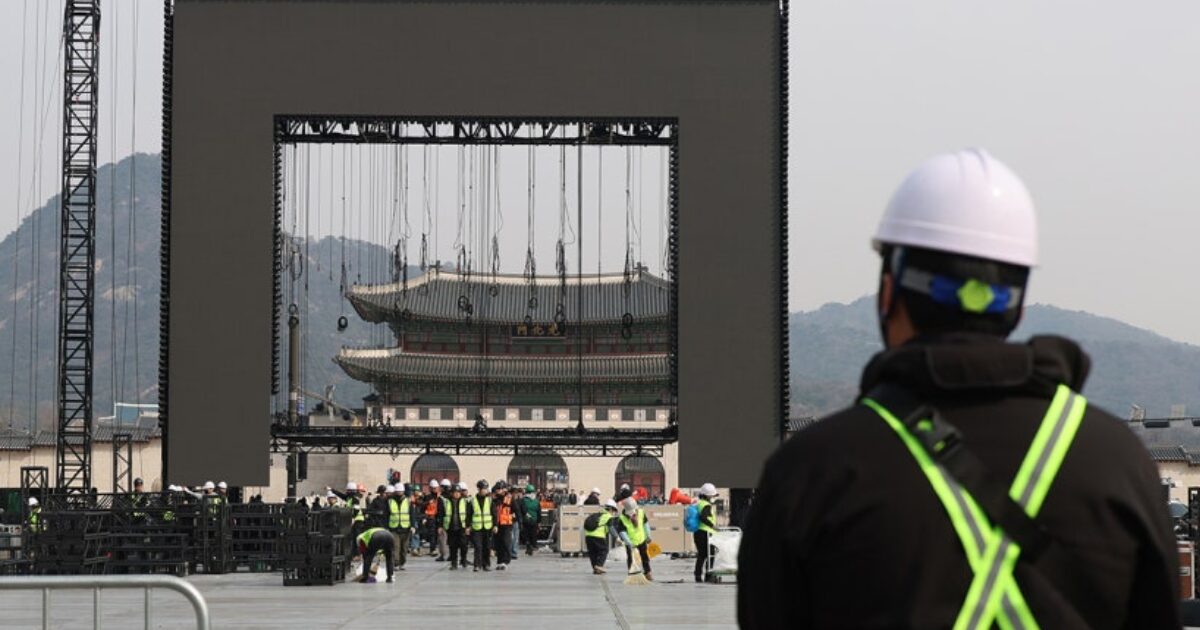

The iconic stretch of Gwanghwamun Square, a place synonymous with Korean history and public gathering, found itself at the center of a modern cultural phenomenon this week. The imminent, highly anticipated free public concert by BTS's Jung Kook, part of the '2024 FESTA' celebrations, was already set to be a landmark event. However, the narrative took a sharp turn when the Seoul Metropolitan Police Agency preemptively released a detailed statement regarding the massive security and traffic control operation planned for the event. What was framed by authorities as a standard, necessary preventative measure quickly spiraled into a heated public debate, raising complex questions about resource allocation, the scale of celebrity, and the thin line between celebration and civic disruption.
From Army to ARMY: BTS and the Weight of the Landmark Stage
To understand the gravity of the police statement, one must first appreciate the unique symbiosis between BTS and open, historic venues. This is not the group's first rodeo in turning a national plaza into a concert ground. Their 2015 "BTS LIVE: The Most Beautiful Moment in Life On Stage" concert at the same Gwanghwamun Square was a pivotal moment, signaling their explosive connection with the public. Subsequent global events, like the 2019 "BTS WORLD TOUR 'LOVE YOURSELF: SPEAK YOURSELF'" in Seoul’s Olympic Stadium, set benchmarks for scale and logistical complexity.
For Jung Kook, this performance carries a profound personal weight. As a member who has openly shared his struggles with the immense pressure of idol life, stepping onto this stage solo is a testament to resilience. As explored in our previous coverage, The Crossroads at Seven: Inside One BTS Member's Brush with Burnout and the Epiphany That Saved His Career, such moments are hard-won. A Gwanghwamun show is never just a concert for BTS; it is a statement of cultural presence, a gift to fans, and a high-stakes logistical puzzle.
The choice of venue inherently transcends music. Gwanghwamun is the ceremonial heart of Seoul, flanked by government buildings, historical monuments, and major thoroughfares. An event here is not merely booked; it is negotiated with city officials, cultural heritage considerations, and public safety as the paramount concern. This context forms the essential backdrop against which the police's proactive announcement must be viewed.
The Precedent of Pop and Public Space
K-pop events in public spaces have a storied, sometimes chaotic history. From surprise flash mobs to officially sanctioned concerts, the mobilization of fandoms can overwhelm infrastructure. The police statement implicitly references this history, aiming to avoid past incidents of overcrowding, pedestrian gridlock, and safety hazards that have occurred during high-profile idol appearances. This isn't just about BTS; it's about managing the predictable outcome of the world's most powerful fandom converging on a single, open point.
Decoding the Dispatch: A Breakdown of the Police Statement
The Seoul Metropolitan Police Agency’s release was notable for its detail and preemptive nature. Typically, operational specifics for event security remain internal. By going public, the police framed the narrative around preparedness and transparency, but also inadvertently highlighted the staggering scale of the undertaking.
The statement confirmed the deployment of what they termed "significant resources" as a "preventative measure." This phrasing is the crux of the controversy. Sources close to the planning indicate this includes:
- A multi-layered human barricade and crowd control system stretching several blocks from the main stage.
- Drone surveillance units for real-time monitoring of crowd density and movement.
- Complete rerouting and partial closures of major arteries like Sejong-daero, significantly impacting weekday evening traffic.
- Dedicated medical response teams and cooling stations, anticipating large crowds in summer heat.
- Coordinated operations with private security from Big Hit Music and city event staff.
"Our primary objective is to ensure this cultural event can proceed safely and smoothly for everyone—attendees, local residents, and commuters alike. The resource allocation is based on credible risk assessments from past events of similar magnitude. This is about prevention, not reaction."
The statement emphasized that these measures were "standard protocol for an event of this projected size and profile". However, the explicit confirmation of such a large-scale deployment days before the event became news itself. Critics immediately seized on the cost, both financial and social, while supporters applauded the foresight.

The "Preventative" Principle: Reading Between the Lines
Why frame it as "preventative"? Industry insiders suggest this is a strategic communication move. By publicly outlining the plans, the police achieve several goals: they manage public expectations for travel disruption, they deter unprepared fans from last-minute travel hoping to get close, and they establish a clear record of due diligence. It is a CYA (Cover Your Assets) maneuver in an era where any public safety incident is scrutinized. It also serves as a tacit acknowledgment of BTS's unprecedented drawing power—a power that requires a state-like response.
Fanfare and Frustration: The ARMY and Public Split Reaction
The reaction from the fandom, ARMY, was multifaceted and fiercely debated across social media platforms and fan communities. The divide often fell along generational and geographical lines.
International ARMY, largely unable to attend, expressed awe and pride. Tweets and posts marveled at the police treating a Jung Kook concert "like a national security event," viewing it as the ultimate testament to his and BTS's status. For them, the statement was a point of prestige, a metric of influence. "Only BTS makes the police hold a press conference before a free concert," became a common, celebratory refrain.
Local Korean ARMY and Seoul residents, however, displayed more nuanced and mixed feelings. Many fans planning to attend praised the proactive safety measures, expressing relief that crowd control was being taken seriously. "After the Itaewon tragedy, no one should question over-preparation. I feel safer knowing they have a plan," wrote one fan on a Korean forum.
Conversely, a vocal segment of the public, including non-fans and commuters, voiced frustration. Online communities and comment sections saw critiques labeling the event a "public nuisance" and questioning the "opportunity cost" of diverting so many police resources. "What about the neighborhoods that need these officers on patrol? Is a concert, even for BTS, more important than daily public safety?" questioned one popular post on a major portal site. This taps into a recurring, broader societal conversation about celebrity privilege and resource allocation, reminiscent of debates sparked by other high-profile incidents, such as The Unraveling Of A Scandal: How A "Speaking English" Jab At BTS Exposed Deeper Cultural Rifts, where cultural value is constantly negotiated.
The Economic Counter-Argument
Fans and industry advocates were quick to counter criticism by highlighting the economic windfall. Such an event drives massive revenue for local businesses—from food and merchandise vendors to nearby hotels and transportation. The global media coverage of the concert itself, amplified by the police statement, serves as invaluable promotional content for Seoul as a cultural capital. This argument frames the police deployment not as a cost, but as a necessary investment in facilitating a major economic and cultural activity.
The Ripple Effect: Industry-Wide Implications of a Policed Spectacle
Beyond the immediate controversy, the police's public statement sets a new precedent with significant implications for the entire K-pop industry.
1. The New Normal for Mega-Events: Promoters and agencies for top-tier groups will now likely factor in the possibility of pre-emptive, public police briefings as part of their event planning for any large-scale public venue. This adds a layer of diplomatic liaison with city authorities that goes beyond mere permits. It raises the barrier for what constitutes a "major" event, potentially creating a new elite tier defined by the level of civic coordination required.
2. Security as a Status Symbol: Paradoxically, what was intended as a practical measure may become a perceived badge of honor. For groups aspiring to BTS's level, a significant police footprint for their events could be seen as a benchmark of success. This could lead to more ambitious (and logistically challenging) venue choices as groups and their companies seek to validate their market position.
3. Scrutiny on Free Events: The "free" nature of the Jung Kook concert is central to the resource debate. If a free event triggers this level of response, it may discourage agencies from planning similar fan-centric gestures in sensitive urban locations, pushing events back into ticketed, controlled stadiums. This would mark a shift away from the communal, accessible ethos that events like FESTA often embody.
This incident also highlights the evolving role of idols as public figures who command not just attention, but civic resources. It places them in a category alongside major sporting events or national festivals. As seen with other groups breaking new ground, like P1Harmony making history on the Billboard 200, each new milestone reshapes the industry's operational landscape. The Gwanghwamun situation is a logistical milestone with real-world consequences.
Curtain Call: What This Means for the Future of Fan Events
As the lights go up on Gwanghwamun Square after Jung Kook's final encore, the echoes of this debate will remain. The success of the event—measured not just in fan joy but in incident-free execution—will be the ultimate test of the "preventative" strategy. A smooth event will validate the police's approach and likely cement it as a blueprint. Any major issues, despite the deployment, would lead to intense criticism.
Looking forward, the relationship between K-pop's mega-events and public infrastructure will only grow more complex. Agencies may pursue earlier, more integrated planning with city officials, potentially sharing some of the operational costs to mitigate public criticism. We may also see innovation in crowd management technology, such as virtual queueing or augmented reality viewing zones, to reduce physical pressure on sites.
For BTS and ARMY, this is another chapter in navigating unprecedented fame. It underscores that their activities are no longer confined to music charts or stadiums; they are civic events with wide-ranging ramifications. The police statement, in its dry bureaucratic language, ultimately confirmed a cultural truth: BTS is a force that moves not just hearts, but entire systems of urban management.
This moment serves as a case study for the next generation of idols. As they climb the ranks on our Charts page and build their profiles on our Artists page, the lesson is clear: with great popularity comes not just great responsibility, but great logistical footprint. The challenge for the industry will be to celebrate these monumental gatherings while ensuring they are sustainable, safe, and respectful of the communities that host them. The show, as always, must go on—but the conversation about how it happens is now center stage.