
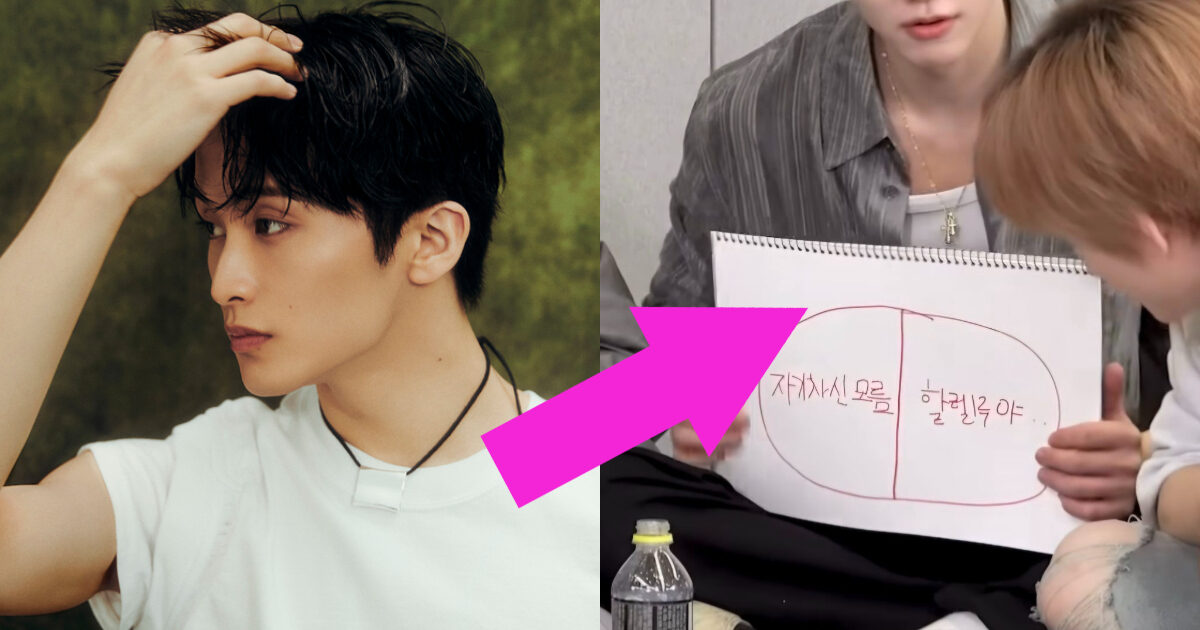

The digital life of a K-pop idol is a permanent archive. Every stage, every variety show laugh, every behind-the-scenes moment is cached in the collective memory of the internet, waiting to be rediscovered and recontextualized. This week, the algorithm exhaled a particularly resonant artifact: a years-old photo of NCT's Mark Lee, taken during a casual live broadcast, where he humorously pointed to a diagram of the human brain. The caption, written in his own hand, read simply: “My brain structure.” At the time, it was a goofy, endearing glimpse into the idol's self-deprecating humor. Today, following the seismic news of his withdrawal from the NCT 127 unit as part of SM Entertainment's large-scale “NCT NEW TEAM” reorganization plan, the image has transformed. It is no longer just a meme, but a Rorschach test for the fandom, a blueprint suddenly being scrutinized for clues about the artist's mind, his journey, and the very architecture of the group he helped define.
This resurgence is more than a nostalgic blip. It represents a profound moment of fan-led mythmaking and emotional processing. In the absence of extensive direct commentary from Mark or SM on the personal nuances of the unit change, fans are turning to the existing archive to build a narrative. The “brain structure” photo, in its charming simplicity, has become a focal point for discussing the complex cognitive and emotional load carried by an idol who was, for so long, the beating heart of multiple units simultaneously. It prompts a deeper investigation into the price of being a “perpetual rookie,” the evolution of an idol's identity, and how the industry's structural experiments ultimately map onto the individual minds within them.
The Foundation: Mark Lee and the NCT Experiment
To understand the weight of this moment, one must first understand Mark Lee’s unique and foundational position within the NCT universe. Debuted in 2016 with the inaugural unit NCT 127, Mark was immediately thrust into the forefront of SM Entertainment's ambitious, boundary-pushing “infinite expansion” concept. He wasn't just a member; he became a cornerstone. He would later join the project group NCT U for various singles, become a central pillar of the teenage-centric unit NCT DREAM (initially designed with a graduation system), and lead the supergroup SuperM. His schedule was a legendary feat of endurance, often involving simultaneous promotions for different units, recording sessions, and flights across continents.
“Mark is NCT,” became a common fan refrain, and it held a deep truth. He embodied the group's fluid, adaptive, and interconnected spirit more than perhaps any other member. His rap style—technical, energetic, and brimming with youthful sincerity—became a signature sound across the brand. He was the reliable center, the bridge between concepts, and the familiar face for fans navigating NCT's complex ecosystem. This role, however, came with immense pressure. As discussed in our analysis of The Many Faces of Min Yoongi, idols who operate under multiple personas often engage in a complex dance of identity. For Mark, his identity was fragmented across teams, each with its own dynamics and fan expectations.
The "Perpetual Rookie" and the Weight of Multiplicity
The term “perpetual rookie” was often applied to Mark with affection, referencing his repeated introductions in new units. But beneath the cute nickname lay a reality of constant resetting, relearning group chemistry, and proving himself anew. Where most idols solidify a single group identity, Mark's was perpetually under construction. The mental and emotional labor of this cannot be overstated. The old “brain structure” photo, in hindsight, feels like a subconscious acknowledgment of this unique cognitive load. What *does* the brain of an idol navigating four distinct group identities, musical styles, and performance modes look like? The photo’s viral return suggests fans are now, with the clarity of hindsight, asking that very question.
The Seismic Shift: Understanding the "NCT NEW TEAM" Reorganization
The context that transformed a silly photo into a cultural artifact was SM Entertainment's late 2023 announcement regarding NCT's future. The company unveiled plans for a new, fixed-unit debut named “NCT NEW TEAM” (since officially named NCT WISH), which would include selected members from the existing NCT lineup alongside new rookies. Crucially, it was confirmed that Mark Lee and his fellow NCT DREAM member Haechan would step back from their activities in NCT 127 to focus on NCT DREAM and the new group.
This was not a casual scheduling note. For many, it felt like the end of an era. NCT 127, the Seoul-based unit and often considered the flagship, would continue without two of its most recognizable voices. SM framed the move as a strategic step to stabilize units and ensure the well-being of members who had been juggling overwhelming schedules. However, for the fandom, it was a tectonic shift in a landscape they had grown accustomed to. Mark’s identity was inextricably linked to 127; his opening "chewing gum" rap in “Cherry Bomb,” his fiery verses in “Kick It,” were defining moments for the unit. His withdrawal signaled a fundamental rewiring of the NCT system itself.

The announcement forced a reevaluation of everything we thought was permanent about NCT's structure. Mark in 127 wasn't just a position; it was a premise.
Between the Lines: Health, Strategy, and Legacy
Industry analysts pointed to several factors. First, the undeniable issue of idol health and burnout, a topic that has rightfully gained prominence. The non-stop cycle Mark and Haechan endured was unsustainable. Second, a business strategy: solidifying NCT DREAM's powerhouse status as a fixed unit and carefully building the new team with established star power. Mark’s presence in NCT WISH guarantees immediate attention and a sense of continuity. Finally, it marked a maturation of the NCT concept itself—from infinite expansion to a more sustainable model of consolidated, focused units, a shift perhaps hinted at by the evolving dynamics of sub-units like those explored in our coverage of Jeno & Jaemin's 'DUALITY' tour.
Decoding the "Brain": Fan Reaction as Collective Therapy
Into this emotional and informational vacuum flowed the “brain structure” photo. On platforms like Twitter, TikTok, and Instagram, the image was repurposed with new, poignant captions. Fans used it to express a multitude of feelings:
- Gratitude and Fatigue: “This brain held the lyrics, choreo, and pressure for 127, Dream, U, and SuperM for 8 years. Let it rest.”
- Metaphoric Interpretation: Sectors of the diagram were labeled with unit names, song titles, and inside jokes, visually mapping his career.
- Sadness and Acceptance: “We’re finally seeing the full blueprint, now that the construction phase is changing.”
- Humorous Coping: New diagrams speculated what his “new brain structure” for the Dream+WISH era might look like.
This phenomenon is a powerful example of fan agency. Lacking an official, intimate breakdown of Mark’s own feelings, the fandom collectively latched onto a pre-existing symbol to create their own narrative of closure and understanding. It’s a process of participatory sense-making, not unlike how fans dissect every nuance of idol behavior, as seen in the conversation sparked by BTS V's candid "Black Box" moment. The photo provided a safe, shared language to discuss complex emotions: loss for the 127 era, concern for Mark’s well-being, and optimism for his future.
A Contrast in Scandals: The Privacy of Change
Notably, the reaction to Mark’s unit change has been overwhelmingly protective and supportive, a testament to his earned respect. This stands in stark contrast to the often-toxic scrutiny idols face over personal matters. Where the public and fans feel entitled to comment on an idol's body, as explored in "Beyond the Scale", or their private relationships, Mark’s career shift has been framed as a professional and personal well-being decision. This distinction is crucial. It highlights a growing, albeit uneven, fan maturity in separating an idol’s artistic career from invasive personal speculation, a boundary even tested by the unique allowances granted to senior idols like BTS's Jin.
Industry Architects: The Broader Implications of NCT's Restructuring
SM Entertainment’s decision to recalibrate NCT is a case study with industry-wide ramifications. It signifies a pivot from a high-concept, artistically ambitious but logistically grueling model toward one prioritizing sustainability and member longevity. For years, NCT was the bold experiment—could a group be a permanent revolving door of members and units? The answer, as this move suggests, requires compromise.
First, it acknowledges the human limits of idol scalability. You cannot infinitely expand a human being’s capacity, no matter how talented. Second, it reflects a market consolidation. Instead of diluting fan attention across constantly shifting lineups, building stronger, fixed-unit fandoms may be more financially sound in the long term. Third, it sets a precedent for how large, multi-unit groups might manage transitions as members age and priorities shift.
Mark’s role in this is symbolic. He was the prototype for the “infinite idol,” proving it was technically possible. His gradual consolidation of focus now prototypes the necessary next phase: consolidation for depth over breadth. Other companies with large group systems will be watching closely. Has SM found a way to retire a revolutionary concept with grace, or is it merely pausing it? The success and reception of NCT WISH, with Mark at its helm, will be a key indicator.
The Next Build: What the Future Holds for Mark and NCT
So, what does the future blueprint look like? For Mark Lee, the path, while still demanding, is now streamlined. His primary creative homes will be the record-breaking, now-permanent NCT DREAM and the nascent NCT WISH. This offers him a chance to deepen his artistic identity within these specific contexts. Fans can anticipate a Mark who is perhaps less fragmented, potentially more involved in the creative direction of his units, and hopefully, operating with a healthier balance. The relentless “perpetual rookie” can finally evolve into a seasoned leader and mentor.
For NCT 127, the challenge is to redefine their sound and dynamics without two key vocal colors. This could lead to a compelling new chapter, allowing other members to step into more prominent roles and explore fresh musical territories. For the wider NCT brand, the era of hyper-expansion is formally over. The focus shifts to fortifying its existing pillars: 127, Dream, and WISH. The promise of “infinite” now applies less to member count and more to the infinite musical possibilities within a more stable structure.
The resurfaced “brain structure” photo will likely fade from the viral cycle, but its significance will remain. It captured a moment of unguarded, youthful humor from an idol on the brink of an unparalleled journey. Its return bookends that journey’s most chaotic, expansive phase. It reminds us that behind the grand concepts, the global tours, and the record-breaking sales are individual humans with complex inner worlds. As Mark Lee moves to construct the next phase of his career, fans, using the tools of meme, metaphor, and deep affection, have simply shown that they were paying attention to the architect all along. They studied the blueprint, and they understand the plan. The future of NCT, and of one of its brightest stars, is now being built on a foundation of legacy, hard-earned respect, and a collective hope for a sustainable, joyful next design. For the latest on this evolving story and all movements within the idol world, follow our continuous coverage on our News page and explore the profiles of your favorite artists on our Artists page.