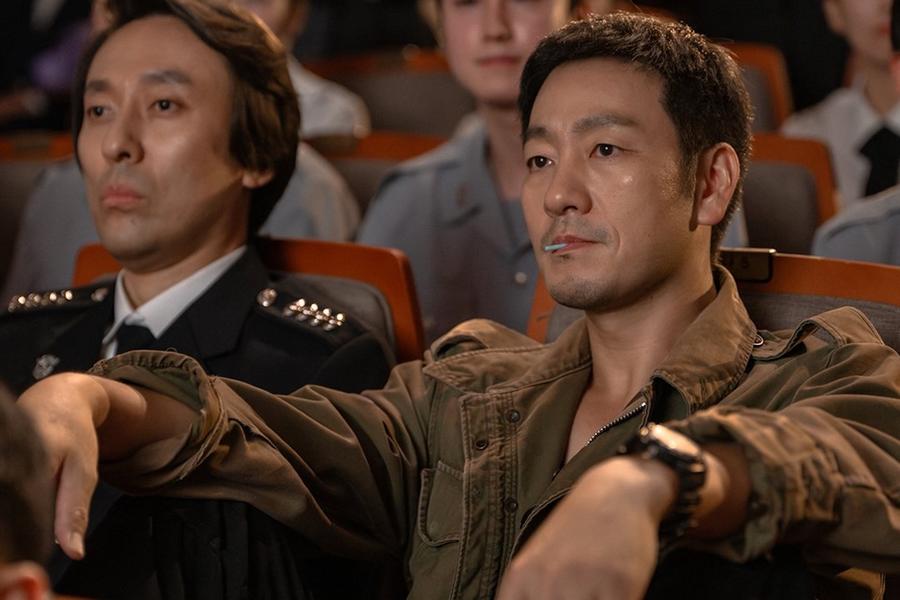

The landscape of Korean entertainment is littered with talented actors who have mastered a specific niche, but few have navigated such a stark and successful evolution as Park Hae Soo. Known globally for his cunning, green-track-suited turn as Cho Sang-woo in Netflix's cultural behemoth "Squid Game," and domestically beloved for his charming, comedic roles in series like "Prison Playbook," Hae Soo is now deliberately stepping into the shadows. The first chilling stills from his upcoming drama "The Scarecrow" reveal not the friendly face fans are accustomed to, but the hardened, haunted visage of a detective on the edge. This isn't just another role; it's a deliberate and daring metamorphosis, signaling Hae Soo's intent to cement his status as a serious, versatile leading man in the hyper-competitive realm of Korean thrillers.
A Calculated Evolution: Tracing the Path to "The Scarecrow"
To understand the significance of Park Hae Soo's casting in "The Scarecrow," one must look back at the deliberate steps of his career. Unlike many stars who explode from idol training systems, Hae Soo's journey was carved on the stage. A seasoned theater actor, his foundational years were spent honing his craft in live performances, where nuance, projection, and emotional immediacy are paramount. This classical training provided a rock-solid foundation for his transition to screen, allowing him to imbue even his most lighthearted characters with a palpable depth.
From the Stage to the Screen: Building a Foundation
His breakout television role came with the 2017 hit "Prison Playbook," where he played Kim Je-hyuk, a star baseball pitcher navigating life behind bars. The role showcased his incredible range, requiring him to oscillate between naive optimism, stubborn pride, and heartfelt camaraderie. It was a performance that endeared him to the nation, proving he could carry a series with both humor and heart. This was followed by diverse projects, but the global earthquake that was "Squid Game" in 2021 catapulted him into an entirely different stratosphere of fame. As Cho Sang-woo (Player 218), Hae Soo masterfully portrayed a complex anti-hero—a man whose intelligence and desperation curdled into ruthless betrayal. The role demonstrated his ability to handle moral ambiguity and psychological tension, a crucial precursor to the darkness of "The Scarecrow."
Post-"Squid Game," his choices have been strategic. He avoided being typecast as the villain, instead taking on the lead in the heist thriller "Money Heist: Korea - Joint Economic Area," further flexing his ability to helm a high-stakes, ensemble genre piece. Each role has been a building block, layering experience in comedy, psychological drama, and action. "The Scarecrow" appears to be the synthesis of all these elements, demanding a performance that is physically demanding, psychologically intricate, and emotionally draining. It's the logical next step for an actor who has consistently challenged himself, moving from the theatrical to the televised, from the comedic to the catastrophic, and now, into the mind of a hunter of men.
Unveiling the Nightmare: Inside "The Scarecrow" and Park Hae Soo's Transformation
The recently released stills from "The Scarecrow" are more than just promotional images; they are a statement of intent. Gone is any trace of the affable Je-hyuk or the sharply dressed Berlin. In his place is Detective Kim, his eyes holding a storm of exhaustion, obsession, and simmering rage. The production has been shrouded in secrecy, but the premise is a gripping entry into the crowded serial killer thriller genre. The story follows Detective Kim as he investigates a series of gruesome, seemingly connected murders that shake his city to its core. However, the hunt becomes profoundly personal when the detective finds himself forcibly entangled in the killer's game, not as an investigator, but as a pawn—or perhaps a target.
A Descent into Obsession
The stills meticulously craft this narrative of a man unraveling. In one, Hae Soo is seen in a dimly lit, chaotic incident room, photos of victims and cryptic clues plastering the walls behind him. His hair is disheveled, his posture is one of weary defiance, and his gaze is locked on something beyond the camera—a puzzle he cannot solve. Another shows him in a rain-drenched alleyway, the harsh neon lights reflecting off the wet pavement, casting dramatic shadows across his determined face. The atmosphere is pure noir, suggesting a world where the line between justice and obsession is perilously thin.
"This role required a physical and mental hollowing out," a production insider was quoted as saying in Korean media reports. "Park Hae Soo didn't just play Detective Kim; he lived in his skin. The weight of the case, the frustration, the fear—it all had to be real. You see it in his eyes in these stills. That's not acting; that's immersion."
The title, "The Scarecrow," is itself a rich symbol. In folklore, a scarecrow is a hollow figure designed to ward off threats, a decoy. Does it represent the killer's methodology, using fear as a weapon? Or does it mirror the detective's own state—a man increasingly stripped down, positioned as a warning, and left exposed in a field of danger? This thematic depth promises a show that aims to be more than a procedural cat-and-mouse chase; it seeks to explore the psychological corrosion that such a hunt inflicts on the hunter. For Hae Soo, this meant adopting a new physicality—a tighter, more reactive posture, a gaze that scans for threats, and a face that carries the cumulative fatigue of countless dead ends and sleepless nights.
The Fandom Pulse: Anticipation, Concern, and Unwavering Support
The reaction from fans and the online K-drama community to the "The Scarecrow" stills has been electric, trending across multiple social media platforms. On forums like Namu Wiki and communities on Twitter and Instagram, the response is a fascinating mix of awe, nervous excitement, and protective pride.

Many long-time fans, who have followed Hae Soo from his theater and "Prison Playbook" days, express a sense of proud vindication. "We always knew he had this intensity in him," one fan wrote on a popular discussion board. "Seeing him in 'Squid Game' was a glimpse, but this... this is him fully embracing a darker, more complex leading man role. He's not just riding the wave of fame; he's using it to dive into deeper waters." This sentiment echoes a broader trend where audiences reward actors for challenging transformations, similar to the discussions sparked when idols like Dreamcatcher's Gahyun shed her stage name to pursue serious acting careers.
Navigating the Weight of Expectation
However, with immense hype comes immense pressure. Some fans voice concerns about the intense subject matter and the potential for the role to be emotionally taxing for the actor, drawing parallels to the immense scrutiny faced by other stars in high-profile projects. "I hope he's taking care of his mental health," tweeted one concerned supporter. "These dark roles can leave a mark. I just want him to know we support him no matter what." This highlights the increasingly intimate and empathetic relationship between Korean entertainment stars and their global fandoms, a dynamic we've analyzed in pieces like our look at J-Hope's candid revelation about swimming, which explores how vulnerability fosters deeper connection.
Internationally, the buzz is inextricably linked to his "Squid Game" fame. "Player 218 is back, but this time he's on the right side of the law (I hope)!" is a common refrain, indicating that the new drama will attract a massive global audience on whatever platform secures its distribution rights. The overwhelming consensus, however, is one of supreme confidence. Fans believe Hae Soo has the chops to deliver, turning the anxiety into eager anticipation for a performance that could define the next chapter of his career. For the latest on how fans are driving these conversations, check out our News page, where we track community trends daily.
Industry Lens: The Strategic Move in a Crowded Genre
From an industry perspective, Park Hae Soo's leap into "The Scarecrow" is a masterclass in career management. The Korean thriller and crime drama market is arguably the most competitive in the world, with shows like "Signal," "Stranger," and "Through the Darkness" setting an exceptionally high bar. For an actor to enter this arena as the lead is to invite comparison with some of the industry's most revered names.
Hae Soo's strategy appears to be two-fold. First, by choosing a project with a psychologically tormented detective at its core, he is directly aiming for the prestige and critical acclaim that this genre can offer when executed well. It's a play for legitimacy and longevity, proving his "Squid Game" success was no fluke but evidence of a substantial talent capable of headlining a serious, story-driven series. Secondly, this move distances him from the "celebrity cameo" or "global star" label. He is positioning himself as an actor's actor, one whose choices are driven by the script and the challenge, not merely by scale or platform.
The Broader Landscape of Actor-Idol Transitions
His journey also reflects a broader, fascinating trend in Hallyu: the seamless and respected crossover from other entertainment fields into top-tier dramatic acting. While many idol-actors face uphill battles for recognition, actors like Hae Soo, who came from theater, or others who transition from respected supporting roles, often find a smoother path. They are judged primarily on their craft. This stands in contrast to the sometimes brutal scrutiny faced by stars from variety backgrounds, a tension we examined in our deep-dive on Song Ji Hyo's "Running Man" journey.
The success of "The Scarecrow" could have significant ripple effects. It could cement OTT platforms' confidence in Hae Soo as a standalone draw, potentially leading to more leading offers in international productions. For the domestic industry, it reinforces the value of classically trained actors who can deliver nuanced performances in high-concept genre fare. Furthermore, a hit series would solidify the "Park Hae Soo" brand as synonymous with quality and intensity, making his future projects automatic events. Tracking the performance of such high-profile dramas is a key feature of our Charts page, where we analyze viewer engagement and buzz metrics.
The Road Ahead: What "The Scarecrow" Means for Park Hae Soo's Future
As the production of "The Scarecrow" continues, all eyes will be on its eventual release date and platform announcement. The project represents a pivotal crossroads in Park Hae Soo's trajectory. A critically and commercially successful turn could open the door to a new echelon of roles—perhaps more international film offers, auteurs seeking his particular blend of intensity and vulnerability, or even awards season recognition.
However, the drama also carries the inherent risk of any high-expectation project. The serial killer genre is saturated, and audiences are discerning. The narrative must offer fresh twists and profound character work to stand out. Hae Soo's performance will need to be the undeniable anchor, the human core around which the mystery revolves. If he succeeds, he will have successfully navigated one of the most difficult transitions in entertainment: evolving from a beloved character actor and global phenomenon into a respected dramatic lead on his own terms.
Ultimately, "The Scarecrow" is more than a new drama; it's a declaration. Park Hae Soo is not content to remain in the boxes the industry or fandom might place him in. He is actively chasing complexity, embracing darkness, and pursuing the kind of role that leaves an indelible mark on both the audience and the actor. In doing so, he joins the ranks of artists who understand that true longevity comes not from repeating a winning formula, but from the courage to constantly reinvent, even if it means staring into the abyss of a killer's game. As the entertainment world watches, one thing is certain: the playful inmate and the desperate gamester are gone. In their place stands Detective Kim, and with him, the next formidable chapter in the remarkable story of Park Hae Soo.