
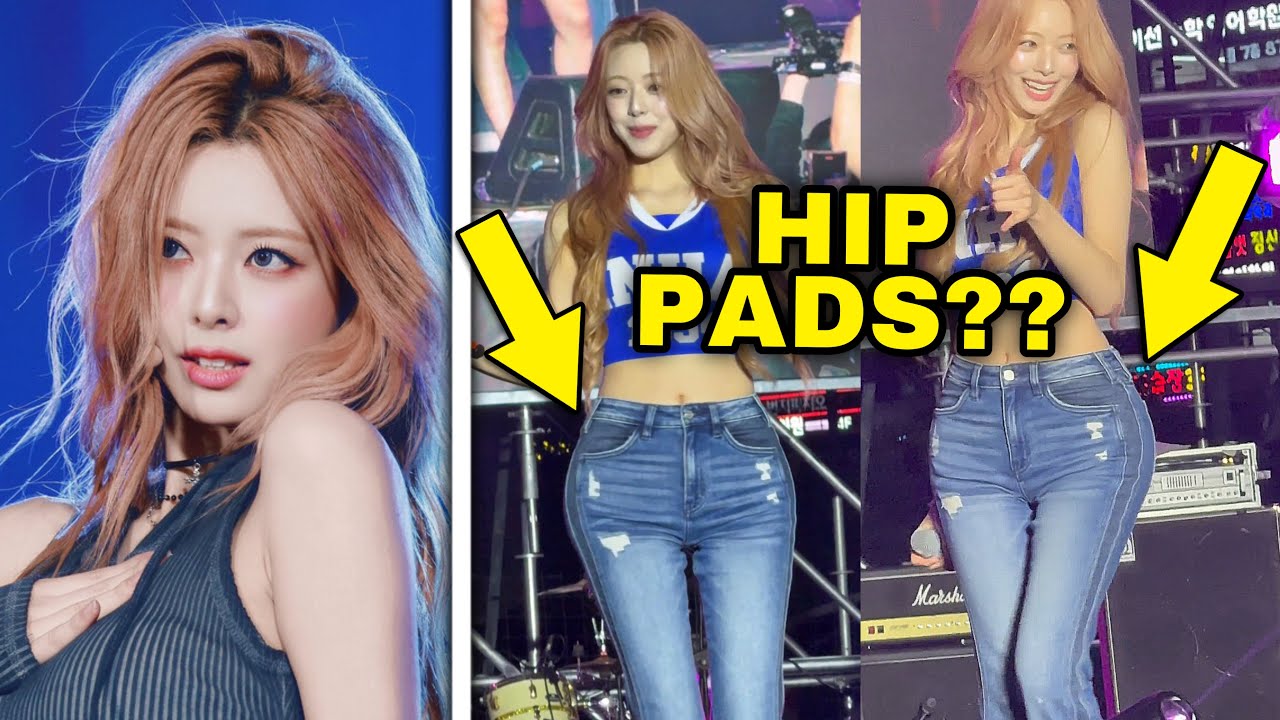

The world of K-Pop moves at a blinding pace, a whirlwind of comebacks, stages, and fashion moments. Yet, some conversations, often the most invasive and persistent, refuse to be left behind. This week, the spotlight—harsh and unyielding—turned once more to ITZY's Yuna. Following her appearance at a recent luxury brand event, a familiar and contentious term trended across online communities: "hip pads." Not as a celebration of style or performance, but as a renewed wave of speculation and allegation about her physique, dissected in slow-motion clips and scrutinized in still images. What was intended to be a showcase of an idol's growing stature in the fashion world was swiftly overshadowed by a toxic debate about the authenticity of her form.
For fans, the reaction was a fierce, protective firestorm. For critics and anonymous forums, it was fodder for relentless analysis. For the industry at large, it is a wearying reminder of a cycle that seems unbreakable. This incident is not an isolated case of online noise; it is a symptom of a deeper, systemic issue within K-Pop culture: the obsessive, often cruel, surveillance of the female idol body, where every change is questioned, and natural development is frequently met with cynical disbelief. This story delves beyond the flash of a camera bulb to explore the years of pressure on Yuna, the mobilization of her fandom, and what this recurring narrative says about the environment in which these young artists exist.
The "ITZY Girl" and the Weight of a Visual Title
To understand the gravity of the current discourse, one must first understand Yuna's journey and the specific lens through which she has always been viewed. Debuting in 2019 at just 16 under the powerhouse agency JYP Entertainment, Yuna was immediately catapulted into the center of the "visual" conversation. With her striking features, long limbs, and radiant confidence, she fulfilled a coveted role in the group's dynamic. As the "visual" and a lead dancer, her appearance was—and always will be—an intrinsic part of her professional identity. This comes with immense privilege but also an inescapable burden.
ITZY’s brand was built on self-love and empowerment, anthems like "WANNABE" and "Not Shy" championing individuality. Yet, the members, particularly Yuna, have navigated the stark contrast between those messages and the reality of public scrutiny. From her debut, comments fixated on her body, comparing her to her fellow members and setting a baseline from which any perceived deviation is measured. This history is crucial context; the current allegations are not a new critique but the latest chapter in a long-running saga of public assessment. For a deeper look at the pressures ITZY faces on the global stage, including unforeseen challenges, read our analysis of The Unfinished Road: Inside ITZY's Sudden Auckland Concert Cancellation.
The Evolution of an Idol: From Teenager to Young Adult
A critical, and often willfully ignored, factor in this debate is the simple passage of time. Yuna debuted as a mid-teenager. It is a biological fact that bodies change from adolescence into young adulthood. Hip development, changes in fat distribution, and overall silhouette maturation are normal processes. However, in the K-Pop ecosystem, where idols are often frozen in their debut image, natural growth is frequently pathologized or attributed to artificial means. The expectation is not just for maintenance, but for a static, often narrowly defined, perfection.
The Spark: Deconstructing a Fashion Moment
The event in question was a high-profile gathering for a renowned fashion house. Yuna arrived in a chic, tailored ensemble that accentuated her figure—a choice meant to showcase sophistication and a departure from more stage-centric outfits. Almost immediately, specific angles and video frames were isolated and spread across platforms like Pann Nate, Instiz, and Twitter. The commentary was not about the brand, the styling, or her poise.
Instead, threads meticulously analyzed the drape of her trousers, the way fabric fell on her hips, and compared these clips to footage from months prior. The term "hip pad" was deployed not as a neutral descriptor of a potential styling tool (common in fashion and performance), but as an accusation of deception—an attempt to artificially create a silhouette she was accused of not naturally possessing. This analysis operates on a flawed premise: that the public has an unequivocal, expert understanding of her unclothed, un-styled body at every point in time.
"It's the same pattern every time. She looks healthy and confident, and immediately the detectives come out with their 'analysis.' They can't accept that a young woman's body can change, or that fashion is about illusion and tailoring," wrote one frustrated fan on a popular forum, capturing the sentiment of many.
The Role of Styling and Perspective
Professional stylists and fashion editors were quick to point out, albeit in quieter corners of the internet, what the viral critiques ignored. High-waisted, structured trousers; strategic pleating; padding in clothing (from shoulder pads to hip contours) is a centuries-old technique in high fashion and costume design. A photograph or a three-second video clip from one angle is forensic evidence of nothing except the chosen aesthetic of that moment. The conversation, however, had already leapt past these nuances, solidifying into a binary argument: real vs. fake, natural vs. augmented.

The Midzy Wall: Fandom Mobilization in the Digital Age
In response to the swirling allegations, ITZY's fandom, MIDZY, launched a formidable counter-campaign. This was not passive disappointment but an active, multi-platform defense strategy. Hashtags praising Yuna's beauty and strength trended worldwide. Fans compiled lengthy threads showing her physical evolution over the years, highlighting the gradual nature of change. They countered "analysis" videos with their own compilations showcasing how lighting, angles, and clothing drastically alter appearance.
More poignantly, fans shared personal stories of body image struggles, linking Yuna's experience to a universal battle against unrealistic standards. They framed their defense not just as protection of their idol, but as a stand against a culture of bullying and body shaming. This transformed the incident from a gossip item into a broader social discussion. The fan response highlighted a modern dynamic in K-Pop: the fandom as a digital shield, educated in media literacy and ready to combat negative narratives with coordinated positivity and evidence.
MIDZY's reaction also served as a stark reminder of the emotional contract between idol and fan. As explored in our piece on The Uncomfortable Price Tag, the relationship is built on perceived intimacy and loyalty. Seeing an idol attacked on such a personal level triggers a powerful protective instinct, channeling the fandom's collective energy into defense.
The Darker Side: When Defense Crosses Lines
While the majority of fan response was focused on positive uplift, the heat of the debate inevitably led to skirmishes. Some defenders aggressively targeted not just the original commenters, but anyone perceived as not being supportive enough, including other fans who urged for a more muted response. This highlights the tension within fan culture itself—the pressure to present a unified, militant front can sometimes stifle nuanced conversation even within the supportive community. The incident underscores how any discourse about an idol's body, whether critical or defensive, exists on a knife's edge, prone to escalation.
An Industry Predicated on Perfection: The Bigger Picture
The Yuna incident is a microcosm of an industry-wide pathology. K-Pop sells a fantasy of flawlessness, where every detail—from vocal pitch to synchronized movement to physical appearance—is meticulously curated. This creates an environment where any deviation from that curated image is treated as a breach of contract, a puzzle to be solved. The speculation about procedures, diets, and enhancements is a constant background hum, occasionally erupting into a main narrative as it has now.
This scrutiny is disproportionately aimed at female idols. While male idols face commentary, the analysis of female bodies is more persistent, invasive, and tied to their value. The "visual" member of a girl group operates under a specific microscope, where their beauty is both their currency and their cage. The allegations against Yuna, whether about hip pads or other enhancements, ultimately stem from a refusal to believe that the "perfect" image presented could be anything but artificially constructed. It reflects a deep public cynicism, bred by an industry that often prioritizes the final, polished product over the honest, human process behind it.
"The conversation is never about health, talent, or artistry. It's reduced to geometry and suspicion. It drains the humanity out of these performers and reduces them to contested objects," commented a veteran entertainment reporter, speaking on condition of anonymity due to the sensitivity of the topic.
This phenomenon is not unique to Yuna. From the intense pressure on rookies to maintain a specific weight to the endless commentary on idol pregnancies, as seen in the groundbreaking story of Breaking the Mold: STELLAR’s Han Areum, the industry's relationship with the female form is complex and often traumatic. The current debate exists on this same spectrum, a symptom of a system that commodifies appearance. For more on the tensions between artistic identity and corporate control that shape these environments, consider The Agust D Paradox.
Silence and Signals: What Comes Next for Yuna and ITZY?
Officially, the response will be silence. JYP Entertainment is highly unlikely to issue any statement addressing the "hip pad" allegations directly. To do so would legitimize the speculation and set a precedent of having to publicly address every intrusive rumor about an artist's body. The company's strategy will be one of "quiet continuity"—proceeding with ITZY's scheduled activities, releasing new content, and allowing the news cycle to move on, as it inevitably does.
The true impact, however, is felt behind the scenes. For Yuna, this is another layer of mental armor she must don. Every future styling choice, every outfit for a performance or event, will now be made with the awareness of this hyper-scrutiny. Will she and her stylists consciously avoid certain silhouettes to pre-empt criticism, or will they defiantly embrace them? The psychological toll of knowing that millions of eyes are dissecting your form, not for artistry but for perceived "truth," is immense.
For the industry, this is another data point in an ongoing crisis. While change is slow, the vocal defense from fans and a growing global conversation about body autonomy and the ethics of fan culture may gradually shift the boundaries. The rise of idols who speak more openly about mental health, and incidents like the public declaration of personal life by figures such as Jin-ah, suggest a slow erosion of the old, rigid rules.
Ultimately, the story of this week is not about hip pads. It is about a young woman who has grown up in the public eye, trying to navigate her own physical maturity against a backdrop of impossible standards and cynical commentary. It is about a fandom's love translating into a digital fortress. And it is about an industry that must eventually confront the contradiction of selling empowerment while perpetuating a culture of relentless bodily inspection. Until that reckoning, talented performers like Yuna will continue to shine on stage, while off it, their very beings remain a battlefield. For the latest on how idols are navigating these complex landscapes, follow our ongoing coverage on our News page and explore profiles of artists across the genre on our Artists page.