
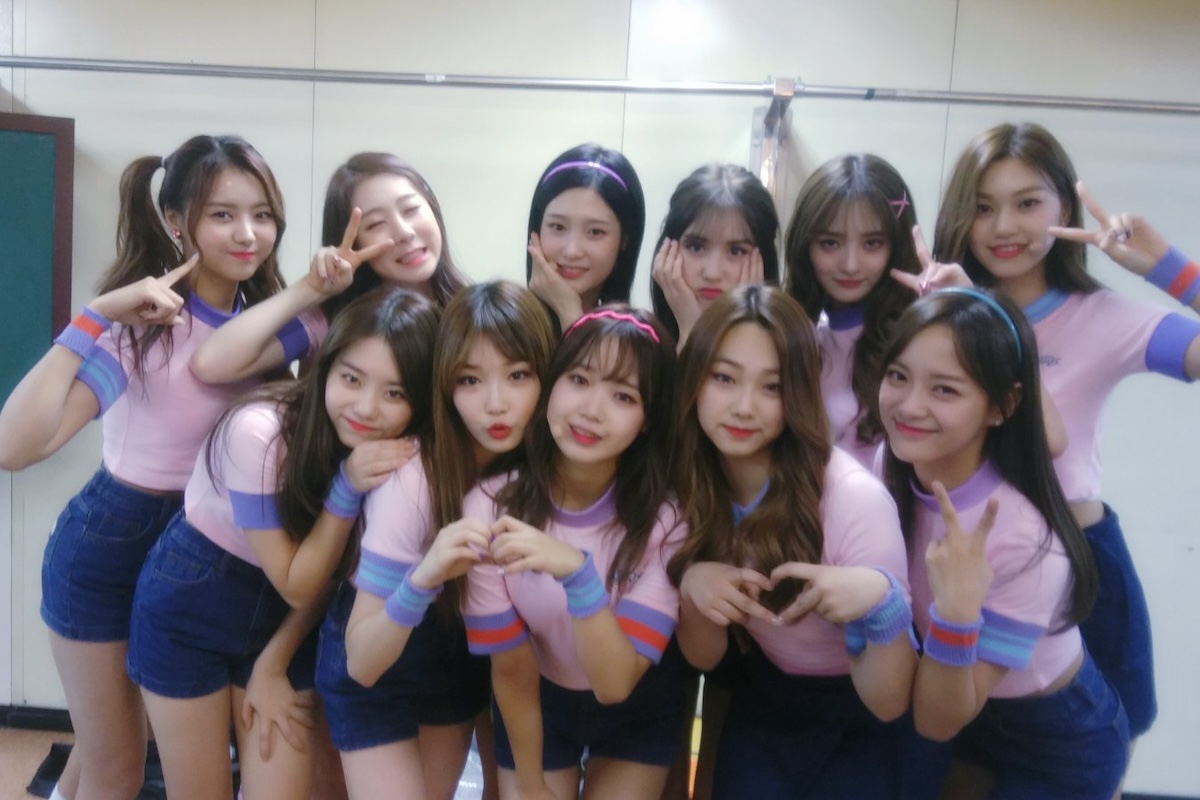

I.O.I, K-Pop's foundational project group born from the nation-wide audition Produce 101, has officially named their fandom Angdoongi, a decision far more significant than a simple label. This move, eight years after their final goodbye, is a strategic and emotional reaffirmation of the group's permanent place in the industry, directly influencing how agencies manage "temporary" idols today. It serves as a masterclass in legacy building, fan culture respect, and the evolving business of idol longevity.
- What Does "Angdoongi" Actually Mean & Why Was It Chosen?
- Why Announce a Fan Name 8 Years After Disbandment? The Hidden Strategy
- The I.O.I Blueprint: How Temporary Groups Build Permanent Legacies
- Project Group Playbook: I.O.I vs. Later Generations
- Angdoongi & Fan Power: The New Rules of Post-Disbandment Engagement
- I.O.I & Angdoongi: Your Questions Answered
What Does "Angdoongi" Actually Mean & Why Was It Chosen?
The announcement of Angdoongi as I.O.I's official fan club name was met with immediate warmth and recognition from long-time fans. The term isn't invented; it's deeply rooted in the group's cherished history.
The Literal Translation and Emotional Weight
Romanized as Angdoongi, the Korean term "앙둥이" is an affectionate portmanteau. It combines "앙" (Ang), derived from the French "ange" meaning "angel," and "둥이" (doong-i), a common Korean suffix denoting cuteness and endearment, similar to "cutie" or "sweetie." The direct translation lands somewhere between "Little Angel" and "Angel Cutie."
This name wasn't plucked from thin air. It was a term of endearment used by the I.O.I members themselves for their fans during their active, whirlwind year in 2016-2017. By formalizing this in-house nickname, the agency and members are honoring the authentic language of their original relationship.
More Than a Name: A Nod to "Very Very Very"
The choice is also a subtle, brilliant callback to I.O.I's iconic debut track, "Very Very Very" (꾸꾸꾸). The song's chorus and concept were built on adorable, repetitive sounds and a youthful, crush-driven theme. "Angdoongi" fits perfectly into that sonic and conceptual universe—it sounds like a word that would appear in the lyrics of a B-side track about puppy love.
This creates a holistic brand identity. The fan name now sonically and emotionally matches the group's most famous musical moment, strengthening the entire I.O.I ecosystem. It’s a detail that shows the decision-makers went beyond marketing and tapped into pure nostalgia.
Why Announce a Fan Name 8 Years After Disbandment? The Hidden Strategy
On the surface, naming a fan club for a group that hasn't had a release since 2017 seems puzzling. However, this timing is deliberate, sophisticated, and speaks volumes about the modern K-Pop landscape.
Capitalizing on the "Golden Anniversary" Momentum
The announcement comes amidst a period of sustained I.O.I activity and nostalgia. Member reunions for variety appearances, solo career milestones from stars like Chungha and Kim Se-jeong, and the continual reverence shown by 4th generation idols have kept the group's legacy alive. Naming the fandom now formalizes this renewed energy.

It transforms scattered fan enthusiasm into a unified, recognized community with a shared identity. This is crucial for monetizing legacy content, selling reunion concert merch, or launching official archival projects. A named fandom is a measurable entity.
The HYBE Precedent and Industry Shifts
This move cannot be viewed in isolation. The K-Pop industry is intensely focused on intellectual property (IP), legacy acts, and fan community ethics. As discussed in our deep-dive analysis Beyond the Poll: The Legal & Ethical Storm Around Bang Si-Hyuk, how agencies treat their artists' and fans' emotional equity is under unprecedented scrutiny.
By bestowing an official name, the stakeholders (likely involving Swing Entertainment and the members' various agencies) are making a clear statement: I.O.I and its fans deserve permanent, official recognition. It's a low-cost, high-reward gesture that builds immense goodwill and sets a responsible precedent, contrasting sharply with agencies that let fan communities languish.
The I.O.I Blueprint: How Temporary Groups Build Permanent Legacies
I.O.I was the prototype. Their success—and the enduring pain of their disbandment—created a rulebook that every subsequent project group has studied.
The "Limited Time" Scarcity Model
I.O.I’s 7-month active period as a full group created an artificial scarcity that made every moment precious. This model, while painful, forged an incredibly dedicated fanbase. The Angdoongi naming is the final piece of this model, offering a form of closure and permanence that the original contract did not.
It tells fans, "Your support was never temporary to us, even if our lineup was." This emotional contract is now a critical part of the project group formula, seen in the careful pre-planning for groups like IZ*ONE and their eventual solo/unit debuts.
Alumni Power and Networked Success
Unlike a disbanded group from a single agency, I.O.I's members returned to 8 different companies, creating a powerful network across the industry. An Angdoongi fan is incentivized to follow not just one alumni, but potentially all, creating a web of support that benefits the entire ecosystem.
This decentralized success story, from soloists to actresses to variety stars, proves the project group's value wasn't just in its temporary sales, but in launching multiple sustainable careers. The fan club name unites supporters of this entire network.
Project Group Playbook: I.O.I vs. Later Generations
The strategy for managing temporary groups has evolved dramatically since I.O.I. Let's compare how different generations have handled fan identity and legacy.
Group (Generation) Fan Club Name & Timing Legacy Strategy Key Outcome I.O.I (3rd Gen Prototype) Angdoongi (Announced 8 years post-disbandment) Post-hoc formalization of organic fan term; focuses on emotional closure and permanent legacy status. Unifies scattered alumni fandoms; cements historical importance. IZ*ONE (3rd/4th Gen) WIZ*ONE (Announced at debut) Full, active-group fan culture from day one. Post-disbandment strategy includes exclusive "ONE, THE STORY" concert and continued unit/solo support. Maintained powerful, unified fandom pressure that directly influenced post-group activities (IVE, LE SSERAFIM - PUREFLOW pt.1: What Just Landed" rel="internal">LE SSERAFIM, solo debuts). Kep1er (4th Gen) Kep1ian (Announced at debut) Standard active-group naming. Facing unique challenge of "fixed" contract length in a faster-moving industry. Test case for whether pre-planned, time-bound groups can maintain fan engagement amidst intense 4th gen competition. ARTMS / Loossemble (Post-IZ*ONE) New names under new group banners (e.g., CLUE for ARTMS) Leveraging project group alumni loyalty to launch new, permanent entities. Fans carry over but with renewed identity. Demonstrates the "second chapter" model, where the project group is a launchpad for more stable, creator-driven careers.As seen in the table, I.O.I's path was unique. They pioneered the emotional journey but are only now, belatedly, formalizing the institutional parts. Later groups like IZ*ONE benefited from this, having a named fandom from the start, which created a powerful lobby for their future. The current era, as analyzed in pieces like Beyond the Milestone: How "Do It" Exposes Stray Kids' Blueprint, is about constant engagement—a lesson applied even to project groups' lifecycles.
Angdoongi & Fan Power: The New Rules of Post-Disbandment Engagement
The Angdoongi announcement is a signal to the entire industry: the fan-idol relationship does not end with the contract.
From Passive Audience to Permanent Stakeholders
Modern K-Pop fandoms are recognized as stakeholders. Naming a disbanded group's fandom officially acknowledges that these fans hold a piece of the group's cultural IP. It grants them a continued, recognized role in the group's story, whether through voting in legacy polls, supporting reunion projects, or simply keeping the hashtag alive.
This mirrors a broader trend where fan sentiment directly influences agency decisions, a dynamic visible across our K-Beats News coverage.
The "Evergreen Content" Economy
With a named fandom, legacy groups like I.O.I can more effectively participate in the "evergreen content" economy. This includes:
- Re-packaged albums and vinyl for new collectors.
- Official archive content (behind-the-scenes, variety) on platforms like YouTube.
- Brand collaborations that tap into nostalgia, targeting the now-adult fanbase with purchasing power.
A unified fan club name makes marketing these initiatives infinitely easier and more targeted. It turns memory into a measurable market segment.
I.O.I & Angdoongi: Your Questions Answered
Does this mean I.O.I is reuniting?
Not necessarily. A fan club name is about honoring the past and unifying the existing community. While it certainly fuels hope and makes a future reunion project more marketable, it is not a direct announcement of new music or promotions. It stabilizes the foundation upon which any future activity could be built.
Can I still become an Angdoongi if I'm a new fan?
Absolutely. The beauty of official legacy recognition is that it welcomes new fans into the fold with a clear identity. Exploring I.O.I's discography, their legendary appearances on shows like Knowing Bros, and following the members' stellar solo careers—like Kim Se-jeong's acting or Chung Ha's performances—are perfect ways to join the Angdoongi community. Start your journey on our Artists page to explore each member's path.
How is this different from a "fandom name" for an active group?
Functionally, it's the same—it's a collective identity. Culturally, it carries a heavier weight of nostalgia and closure. For active groups, the name is a call-to-arms for current promotions. For Angdoongi, it's a tribute to a shared history and a banner under which to celebrate a legacy that continues through eleven individual flourishing careers.
Will other disbanded project groups like Wanna One do this?
The I.O.I precedent makes it highly likely. Wanna One's fandom, Wannable, was already strongly officialized during their active days, but a similar reaffirmation post-disbandment would be a powerful gesture. The success of the Angdoongi response will be closely watched by other agencies managing legendary project groups.
What's the biggest takeaway for the general K-Pop industry?
That emotional intelligence is good business. Respecting the full lifecycle of a group—including its post-disbandment chapter—builds irreplaceable brand loyalty that can span decades. It shows that in K-Pop, endings can be managed with as much care as debuts, a principle that benefits everyone from fans to agencies.
Conclusion: The Door is Still Open
The naming of Angdoongi is not a period at the end of I.O.I's sentence; it's an elegant ellipsis. It confirms that the story of Korea's first national project group is still being written, not just in retrospectives, but in the active, loving community of its fans. It sets a new standard for how the industry values its history and the people who made it.
For Angdoongi themselves, this is a long-overdue recognition. For the industry, it's a lesson in legacy management. And for future project groups, from survival show spin-offs to special collaborations, the message is clear: plan not just for the promotion period, but for the forever that comes after. To explore how other groups master their long-term strategy, delve into our analysis of sustained success on our Charts and Trends page.