
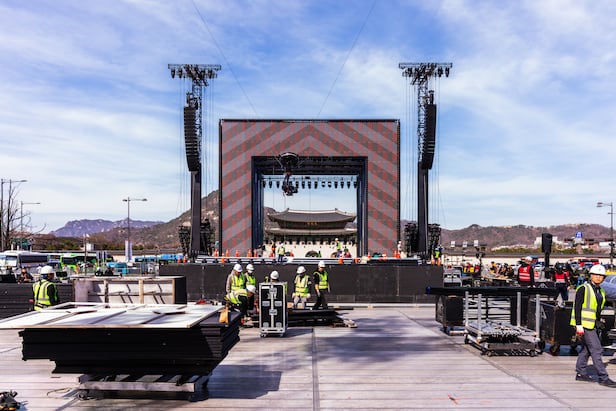

"This wasn't just a performance. It was a declaration. We needed a stage that wasn't a stage at all, but the heart of the nation itself." — An anonymous HYBE creative director.
The image is etched into the collective memory of the K-Pop world: BTS, all seven members, standing shoulder-to-shoulder on a stark, elevated platform as a sea of tens of thousands fans, ARMY, floods the historic Gwanghwamun Square in central Seoul. The 2017 "You Never Walk Alone" comeback stage was a seismic event, a bold departure from the controlled environments of music shows and concert halls. For years, the logistical marvel and symbolic weight of that choice have been celebrated, but the crucial who and why behind the selection remained shrouded in company lore. Now, in a recent internal documentary released by HYBE commemorating the label's legacy, a pivotal revelation has come to light: the final, decisive push to secure Gwanghwamun came directly from the company's founder and chairman, Bang Si-hyuk, often referred to reverently as "Hitman" Bang.
A Group at a Crossroads: The Pressure of "Wings" and the Promise of "YNWA"
To understand the gravity of the Gwanghwamun decision, one must first rewind to BTS's position in late 2016 and early 2017. The group's "Wings" album had been a monumental success, shattering records and catapulting them to new heights of domestic and international fame. Yet, with great success came immense pressure. The narrative surrounding BTS was rapidly evolving from "underdog idols" to "global phenomena." The follow-up, "You Never Walk Alone," was a repackage carrying immense emotional weight, featuring the anthemic "Spring Day" and the powerful "Not Today." This wasn't merely another comeback; it was a consolidation of their artistic identity and a direct address to their fans about companionship and resilience.
The standard comeback show format—a high-production studio event broadcast online—felt increasingly insufficient. The team wanted an experience that matched the scale of their ambition and the depth of their connection with ARMY. As one producer noted in the documentary, "We had outgrown the studios. The music was about walking together through a cold spring, about solidarity. We needed to physically be with our fans, in an open space, to make that metaphor real." Early brainstorming reportedly included locations like the Jamsil Olympic Stadium grounds and other large public parks, but each lacked the definitive, unmistakable symbolism the creative team sought.
The Birth of an Audacious Idea: Gwanghwamun Enters the Frame
The initial suggestion to use Gwanghwamun Square reportedly came from a junior member of the production team, a move hailed internally as a stroke of "mad genius." Gwanghwamun is not just a public square; it is the ceremonial epicenter of South Korea. Framed by the Gyeongbokgung Palace gates and the statue of Admiral Yi Sun-sin, it is a place of national protests, celebrations, and history. Securing it for a K-Pop concert was unprecedented, a bureaucratic and security nightmare of the highest order. The sheer audacity nearly killed the idea in its infancy. Permits, traffic control, public safety concerns, potential noise complaints, and the sheer cost of constructing a temporary stage in such a politically sensitive location created a wall of "no's" from various logistical and risk-assessment departments within HYBE's then-structure, Big Hit Entertainment.
For more context on the immense pressures BTS's members were under during this pivotal era, our retrospective on RM's decision to perform through a severe ligament injury sheds light on their unwavering dedication.
The "Hitman" Decides: Bang Si-hyuk's Historic Intervention
This is where the new revelation takes center stage. As the documentary reveals through candid interviews with now-senior staff, the project was at a standstill, teetering on the edge of being scrapped for a safer, more conventional venue. The debate reached the highest levels of the company. It was then that Bang Si-hyuk, who had been closely monitoring the comeback plans, called a key meeting. According to a former Head of Performance Planning, Bang's directive was clear and final:
"He listened to all the concerns—the cost, the risk, the sheer difficulty. He then said, 'But is it not the right thing for this music, for this moment? If we are talking about BTS and ARMY walking together, where better than the very road that symbolizes the journey of our nation? The difficulties are for us to solve. Make it happen.'"
This wasn't just a CEO approving a budget; it was a founder affirming the core ethos he instilled in BTS: artistry that challenges boundaries. Bang reportedly personally made calls to facilitate high-level discussions with Seoul Metropolitan Government officials, leveraging his and the group's growing cultural capital to frame the event not as a mere concert, but as a cultural export and a positive youth event. His approval shifted the entire internal mindset from "why we can't" to "how we will."
Logistics of a Dream: Building a Stage on History
With Bang's mandate, the HYBE machine shifted into overdrive. The logistical operation became legendary internally. The stage had to be free-standing, requiring no damage to the historic square. Sound engineering had to be meticulously planned to contain decibel levels in the open city center. A crowd management plan for what was hoped to be 20,000-30,000 fans had to be devised and approved by multiple city agencies. The team coordinated with over a dozen government and private entities. "It felt like planning a state event," recalled a logistics manager. "Every single cable, every barrier, every security guard's position was mapped and negotiated." The risk was palpable; a single misstep could have resulted in a public relations disaster for both BTS and the city. Yet, the belief that this was a historic moment, a phrase repeatedly used in the documentary, drove the team forward.

A Sea of ARMY: The Day History Was Made
On February 18, 2017, the vision became reality. Far exceeding expectations, an estimated 50,000 fans flooded Gwanghwamun and the surrounding avenues, a peaceful, overwhelming ocean of people. The live broadcast captured not just a performance, but a phenomenon. The stark, cold weather seemed to amplify the warmth of "Spring Day," and the defiant energy of "Not Today" reverberated off ancient palace walls. The shots of the massive, orderly crowd from the aerial drone became iconic, used in countless international news reports to illustrate the Hallyu wave.
The emotional climax was raw and unscripted. As the final notes faded, the members, visibly overwhelmed, broke down in tears on stage. Jungkook famously apologized for crying, while RM tried to articulate the inarticulable feeling of seeing their dreams physically manifested in the heart of Seoul. It was a powerful, human moment that transcended pop music, cementing the bond between artist and fan. For a deeper look at the profound artistic collaborations that shaped BTS's music during this period, explore our feature on the legendary vocalist who anchored Suga's most vulnerable track.
Echoes in the Fandom: ARMY and the Legacy of a Sacred Site
The fan reaction to this revelation has been profoundly emotional across social media platforms. For ARMY, Gwanghwamun is hallowed ground, often referred to as the "birthplace of the modern ARMY spirit." On platforms like Twitter and Weverse, hashtags like #GwanghwamunHeart and #ThankYouHitmanBang have trended globally.
"Knowing that Bang PD-nim fought for that stage… it makes so much sense," wrote one fan on Weverse. "He always saw their potential as artists who could fill not just stadiums, but history." Another fan tweeted, "Gwanghwamun wasn't just a venue. It was the moment BTS and ARMY became a undeniable cultural force. We were no longer just fans at a concert; we were part of a public, historic event. Thank you for believing in that vision." The story has also reignited discussions about Bang Si-hyuk's unique role as a mentor and protector of BTS's artistic integrity, a dynamic rarely seen between a label founder and an active group.
This sense of collective history stands in stark contrast to other fan events that have sparked controversy. The ethos of an open, public celebration differs greatly from exclusive, high-cost fan meetings that can create divisions within the fandom.
Industry Ripples: Redefining the Scale of K-Pop Comebacks
The impact of the Gwanghwamun stage on the K-Pop industry cannot be overstated. It established a new benchmark for what a "comeback" could be. It was no longer confined to televised music shows with limited live audiences. It became a global streaming event anchored in a real-world spectacle.
- The Public Space as Stage: It proved that with the right artist and planning, iconic public locations could be leveraged for massive promotional impact, blending culture, tourism, and music. Later examples, like Blackpink's Guerrilla concerts in other global locations, can trace a conceptual lineage to this pioneering event.
- Executive Courage: It highlighted the importance of visionary leadership in entertainment. Bang Si-hyuk's decision is now studied as a case of risk-taking rooted in deep understanding of one's artists' brand and narrative. It signaled to other agencies that protecting and amplifying an artist's core message sometimes requires bypassing conventional wisdom.
- Cultural Legitimacy: The successful, peaceful execution of the event helped further legitimize K-Pop as a serious cultural industry in the eyes of governmental and public institutions in Korea, paving the way for more public-private partnerships.
This move towards grand, narrative-driven comebacks reflects a broader trend in K-Pop, where the line between performance and cultural statement is increasingly blurred. For insights into how idols themselves are challenging industry narratives, see our report on an SM idol's candid confession about trainee life.
Looking Forward: From Gwanghwamun to the World Stage
The revelation about Bang Si-hyuk's role closes a chapter in BTS's history while simultaneously reframing its importance. It serves as a poignant reminder of the foundational trust and vision that propelled BTS from idols to icons. As BTS members currently navigate their military service era, with solo projects flourishing, the Gwanghwamun story is a cornerstone of their legend.
For HYBE, now a sprawling multi-label conglomerate, the story is a touchstone for its corporate culture—a reminder that its genesis was in bold, artist-first creative bets. As they develop new groups and global strategies, the lesson of Gwanghwamun is that true impact often lies beyond spreadsheets and risk assessments. It lies in recognizing a historic moment and having the conviction to seize it.
For ARMY and the industry, Gwanghwamun remains the ultimate proof of concept. It proved that the connection forged through music could physically manifest, could stop the heart of a major city, and could create a shared memory powerful enough to define a generation of fans. As we track the future of the industry and the eventual, highly anticipated full-group reunion, one wonders what "historic moment" the next chapter will demand. If the past is any indicator, it will be one where the stage is not just a platform, but a statement. For the latest on all such pivotal moments in K-Pop, follow our ongoing coverage on our News page, and explore the full spectrum of talent shaping the scene on our Artists page.