
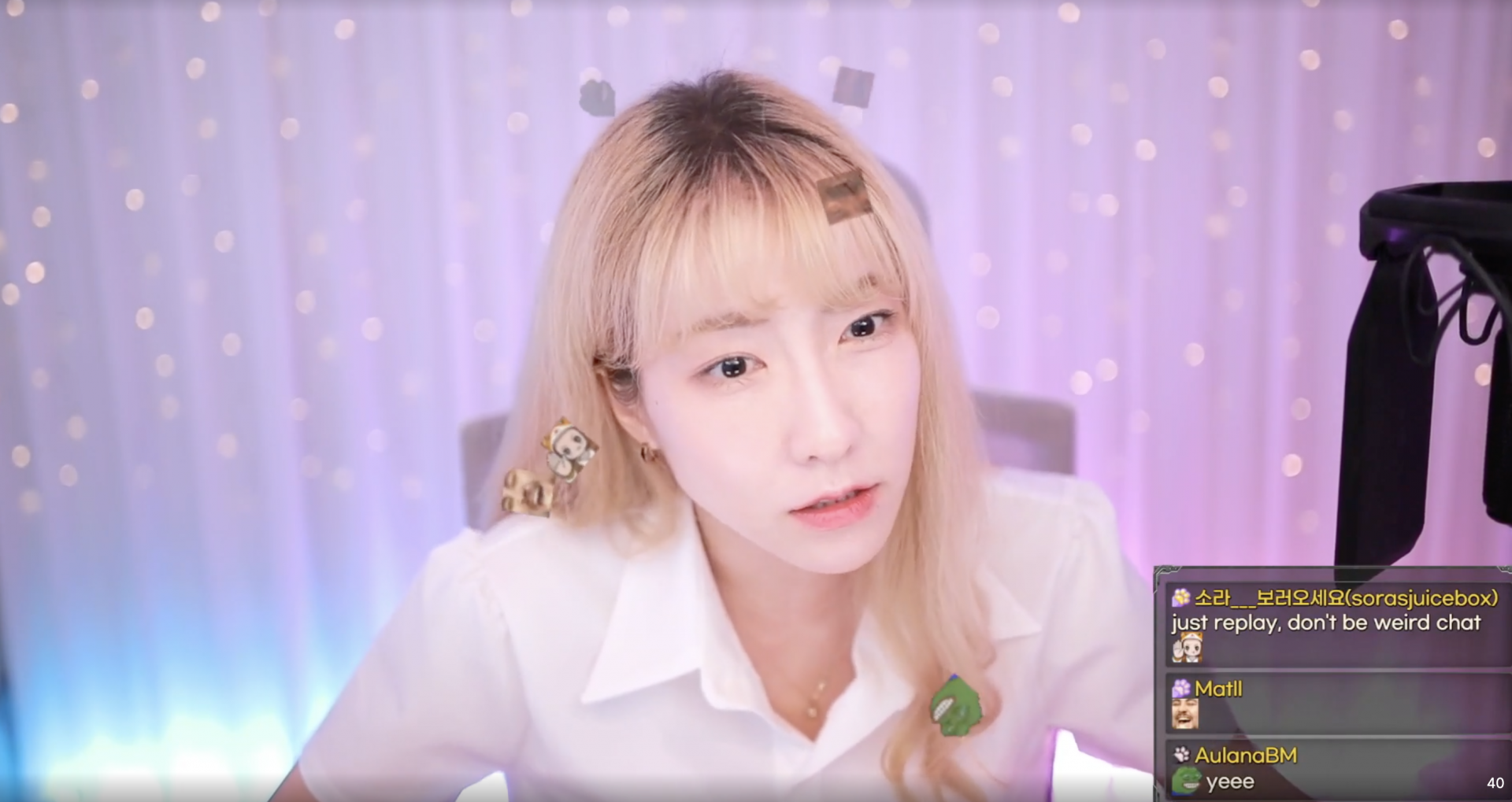

The glow is different. It’s not the searing, sweat-beaded heat of concert stage lights or the flawless, diffused fluorescence of a music show set. This light is softer, emanating from a ring lamp that perfectly frames a face millions once knew only through highly produced music videos and meticulously managed variety show appearances. On the screen, Lee Seo-yeon—formerly known as Ara of the mid-2010s girl group BLISS—laughs, a genuine, unedited sound that fills the headphones of 15,000 concurrent viewers. She’s mid-bite into a plate of tteokbokki, reacting to a subscriber’s super-chat question about her old choreography. “That move? My back still remembers it,” she jokes, before seamlessly shifting to explain the nuances of the sauce she’s eating. This is her stage now: the live stream. And her performance is simply, compellingly, herself.
This scene, playing out nightly on a popular streaming platform, represents one of the most intriguing career pivots in recent K-Pop memory. The transition from idol to influencer is not new, but the scale, strategy, and raw authenticity with which Lee Seo-yeon has embraced live streaming is carving a new blueprint. It’s a story about life after the spotlight dims, about leveraging hard-earned fame into a self-directed empire, and about what happens when the rigidly controlled idol persona is shed for the unpredictable, interactive world of real-time digital connection. Her journey from the trainee dungeon to the idol dorm to her own curated streaming studio is a masterclass in resilience and adaptation in the hyper-competitive Korean entertainment landscape.
The Rise and Fade of BLISS: A Foundation Built in a Crowded Era
To understand the significance of Lee Seo-yeon’s second act, one must first revisit her first. Debuted in 2015 under Starline Entertainment, BLISS was a seven-member girl group that entered a market already saturated with powerhouse acts like TWICE, Red Velvet, and GFRIEND. Their concept was “elegant fantasy,” with orchestral-pop title tracks like “Moonlit Sonata” and elaborate, fairy-tale-inspired costumes. Ara, as Seo-yeon was known, held the position of lead dancer and sub-vocalist, often cited for her precise, fluid movements and her warm, stable voice in ballad B-sides.
BLISS achieved what many industry insiders would call “moderate success.” They secured several music show nominations, never quite clinching a win, and built a dedicated, if niche, domestic and international fandom. Their albums sold respectably, and they maintained a consistent schedule of comebacks for nearly four years. However, the group became a case study in the challenges faced by mid-tier agencies. Scandals were absent, talent was present, but the elusive “big break”—a viral moment, a massively popular reality show appearance—never materialized.
“We worked harder than anyone could imagine,” Seo-yeon reflected in a later stream, a rare moment of solemnity. “But sometimes, the timing, the song, the public’s mood… it’s alchemy. We had all the ingredients but couldn’t quite spark the reaction.” The group’s activities gradually slowed after 2018, with members beginning to pursue individual acting or modeling gigs. By early 2020, with contracts expiring and the agency focusing on a new boy group, BLISS quietly disbanded without a formal farewell concert, a fate all too common for groups that linger just below the top tier.
The Post-Group Drift and the First Forays Online
For the next two years, Lee Seo-yeon’s public presence was sporadic. She appeared in a few web dramas, hosted a minor podcast about health, and maintained a polished but infrequently updated Instagram. It was a period, as she describes it, of “figuring out what my voice was without a microphone handed to me by a company.” The structured life of an idol—where every meal, word, and appearance is part of a grand plan—had ended, leaving a vacuum.
This drift is a critical piece of context. The end of an idol contract often leads to what fans call “disbandment depression,” a period of adjustment for both the artist and their supporters. For every idol who transitions seamlessly into acting or solo music, there are dozens who step away from the public eye entirely. Seo-yeon’s initial steps were cautious. She began uploading casual dance covers to YouTube, not of trendy new songs, but of classic K-Pop hits from the 2000s and 2010s. The production was simple: just her, in a practice room, dancing with the technical proficiency of a veteran. The comments section slowly transformed from “I miss BLISS!” to “Your technique is incredible” and “You explain movement so well.”
This organic shift in feedback was the first spark. She started doing brief, live Q&A sessions at the end of her videos, which grew longer and more popular than the dance covers themselves. People were less interested in seeing her perform a perfected routine, and more fascinated by her unfiltered thoughts, her stories from trainee days, and her insights into the industry. The audience was voting with its attention, and Seo-yeon was shrewd enough to listen.

The Streaming Ascent: Building a Community, Not Just a Fanbase
In late 2022, Lee Seo-yeon made the decisive pivot. She signed an exclusive contract with a major global live streaming platform, investing in professional audio-visual equipment and transforming a room in her apartment into a cozy, aesthetically pleasing studio. Her content strategy was brilliantly hybrid. She wasn’t just a gamer, just a mukbang (eating show) host, or just a talker. She was all three, underpinned by her unique selling proposition: the lived experience of a former K-Pop idol.
Her weekly schedule became a draw in itself:
- “Memory Lane Mondays”: She reacts to old BLISS performances, K-Pop classics, or debuts from her era, offering behind-the-scenes anecdotes that only an insider could provide.
- “Try It With Me Tuesdays”: A mix of cooking segments, craft projects, or learning new TikTok dances, showcasing her relatable clumsiness and determination.
- “Gaming Grind Thursdays”: Immersive, often hilarious sessions playing popular multiplayer games, where her competitive idol spirit shines through.
- “Open Mic Saturdays”: Long-form, relaxed talk streams where she answers questions, discusses current events in K-Pop, and engages in deep, heartfelt conversations with her community, whom she has dubbed her “Co-Stars.”
The numbers tell a story of staggering success. Within 18 months, she amassed over 2 million subscribers and regularly sits in the platform’s top 10 most-watched Korean channels during her live slots. But the metrics only scratch the surface. The true innovation is in the community culture she has fostered.
“As an idol, my interaction was a one-way broadcast of love. I’d say ‘I love you’ to a crowd, and they’d scream it back. Now, it’s a dialogue,” Seo-yeon explained during a recent stream. “A ‘Co-Star’ will tell me they had a bad day, and I can actually talk to them about it for a minute. Someone will ask for advice on pursuing a dream, and I can share my real failures and lessons. This feels like a real human connection, not a performance of one.”
This ethos extends to her physical meetings. She has organized several successful “Co-Star” offline meet-ups, not in large concert halls, but in rented café spaces where she can actually converse with a few hundred fans. The dynamic is palpably different from a fan sign; it feels more like a gathering of friends who share a common interest in her journey.
The Economics of Authenticity
Financially, the move has been transformative. While specific figures are private, industry analysts estimate that top streamers on her platform can earn mid to high six figures annually through a combination of subscriber payments, super-chats (direct viewer donations), brand integrations, and external advertising. For Seo-yeon, this likely surpasses the total earnings of her entire idol career with BLISS, where profits were divided among seven members, the agency, and countless production costs.
More importantly, she controls the revenue stream and her schedule. There is no agency taking a majority cut, no exhausting sixteen-hour days of rehearsals followed by overnight music video shoots. The pressure is different—the need to consistently show up and entertain in real-time—but the autonomy is total. She has become, in essence, her own CEO, content director, and star performer.
A Chorus of Support: How Fans and the K-Pop Community Have Reacted
The reaction from the K-Pop community has been overwhelmingly positive, though layered with fascinating nuance. Her former BLISS bandmates are frequent supportive commentators in her chat, and she has hosted several of them on her stream for special “reunion” episodes that trend on social media, delighting the original fanbase.
On forums like Pann Nate and theqoo, the discussion around her success is a meta-commentary on the idol system itself. One highly upvoted post read: “Lee Seo-yeon is thriving because she’s doing what companies never allow: showing a real person. Idols are trained to be flawless, which makes them distant. She’s showing the struggle, the boredom, the joy of eating, the frustration of losing a game. It’s relatable.” This taps directly into ongoing conversations about the intense scrutiny idols face, a topic K-Beats recently explored regarding the relentless pressure on public composure.
However, some traditionalist fans and industry observers have expressed a bittersweet sentiment. There’s a palpable sense of “what could have been” had her idol group found greater success. Comments like “Such a talented dancer, it’s a shame she’s just eating on camera now” occasionally surface, reflecting a lingering hierarchy that values traditional stage performance above digital content creation. This perspective mirrors the divided reactions seen when idols step outside rigid expectations, similar to discussions around public commentary on idol bodies.
Yet, the dominant narrative among her peers is one of admiration and curiosity. Several active mid-career idols have been rumored to be watching her streams anonymously, perhaps envisioning their own futures. In an industry with a notoriously short shelf life for many, Lee Seo-yeon’s model presents a viable, prosperous, and controlled “next chapter.”
Industry Ripples: What This Means for the K-Pop Ecosystem
Lee Seo-yeon’s success is not an isolated incident but part of a growing trend. Former idols from groups like Dal Shabet, SPICA, and SONAMOO have also found significant followings on streaming and social media platforms. This shift is forcing a recalibration within the industry itself.
First, it changes the calculus for trainees and young idols. The end goal is no longer solely “top-tier idol group or bust.” There is now a visible, lucrative, and sustainable career path that leverages idol training—discipline, performance skill, camera awareness, fan service—in a completely different arena. This could potentially ease the tremendous pressure on debut groups to succeed immediately, knowing there is a robust ecosystem for life after (or even alongside) group activities.
Second, agencies are taking note. While some might see this as a threat to their control, forward-thinking companies are beginning to view a strong personal brand as an asset that extends beyond the group’s lifecycle. We may see agencies incorporating “personal brand management” or “digital content creation” into trainee curricula, preparing idols for a multi-platform career from the outset. The era of the idol as a purely musical product, whose image is sealed away after disbandment, is evolving.
“Her case proves that the idol skill set is incredibly transferable,” says culture critic Park Ji-won. “The ability to captivate an audience, maintain energy for hours, engage in fan service, and present a compelling narrative—these are the core competencies of a streamer. She didn’t leave her training behind; she repackaged it for a digital, direct-to-consumer age.”
Furthermore, her journey highlights the immense value of the “nostalgia” and “insider knowledge” economy within K-Pop. Fans are hungry for authentic, unfiltered glimpses into the industry’s past and present. This desire for deeper connection and backstory is a powerful driver, one that fuels not only streaming but also the persistent speculation and debate around legendary groups, as seen when a simple interaction sparks wildfire comeback theories.
The Dark Side of the Stream: Navigating Scrutiny in a New Arena
The path is not without its perils. Live streaming is an unforgiving medium where every slip of the tongue, every reaction, is broadcast in real-time and can be clipped, edited, and weaponized. Seo-yeon has already faced minor controversies, such as when an offhand comment about a current group’s song was interpreted as criticism, sparking a brief fan war. She now employs a small moderator team to manage her chat during live streams.
This represents a new form of the public scrutiny idols have always endured, but without the protective buffer of a large agency PR team. She must be her own crisis manager, a challenge that requires a different kind of resilience. It’s a testament to the “thick skin” developed during her idol years, where she was also subject to constant evaluation. For a broader look at the industry's artists, you can always visit our Artists page.
The Next Verse: Where Does the Stream Lead?
So, what’s next for Lee Seo-yeon and this burgeoning pathway she exemplifies? Her trajectory suggests not an endpoint, but a new launchpad. She has already begun leveraging her streaming platform to return to her roots in traditional entertainment, but on her own terms.
She recently released a single, a self-composed ballad funded directly by her streaming revenue and distributed independently. It was promoted not through music shows, but through a week-long series of special streams where she discussed its creation. The song charted respectably on real-time digital charts, proving the potent commercial power of a deeply engaged community. Rumors are also swirling about potential hosting gigs on cable variety shows, with producers recognizing her sharp, unscripted wit and ability to connect with a young demographic.
Looking forward, the convergence between the streaming world and the mainstream K-Pop industry seems inevitable. Could we see active idols with “streamer” roles within their groups? Might agencies launch official group channels with more candid, long-form live content? Lee Seo-yeon’s experiment provides a compelling case study. Her story is ultimately one of reclamation—of her narrative, her time, and her connection with the audience.
In an industry often critiqued for its disposability, she has built something enduring. She has shown that the skills honed in the practice room and on stage are not confined to them. The performance continues, but the script is now her own. As the lines between idol, influencer, and entrepreneur continue to blur, Lee Seo-yeon isn’t just riding the wave; she’s helping to chart its course, one real-time interaction at a time. For the latest on how these evolving careers shape the industry landscape, stay tuned to our News page. Her journey from a defined role in BLISS to the self-defined universe of “Seo-yeon’s Room” is a powerful reminder that in the digital age, a curtain call on one stage can simply be the opening act for another.