
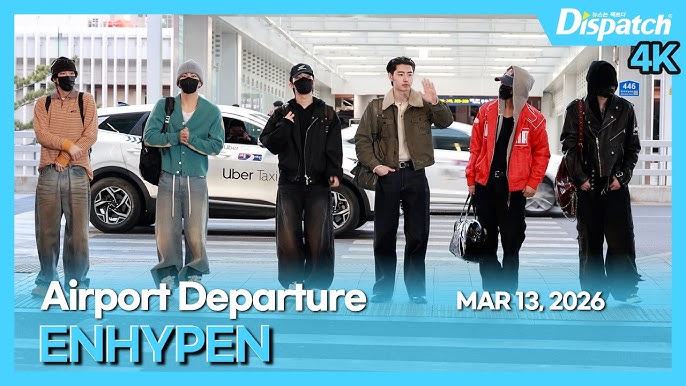

The silence, for some, was deafening. In the meticulously choreographed world of K-Pop, where fan communication is often a carefully managed pillar of an idol's career, the absence of a expected narrative can be as loud as any scandal. This is the complex space ENHYPEN and their fandom, ENGENE, have occupied in recent weeks, following the announcement of member Heeseung's temporary departure from activities due to health reasons. What began as a wave of unified concern has subtly fractured, with a growing segment of the audience vocalizing a pointed critique: a perceived "lack of care" from the group itself regarding their absent center. This sentiment, simmering across social media platforms and fan forums, has ignited a profound conversation about grief, professionalism, and the unspoken rules of parasocial reciprocity in 2024.
The Foundation: ENHYPEN's Forged-in-Fire Bond
To understand the weight of the current moment, one must first appreciate the unique crucible from which ENHYPEN was formed. Debuted in November 2020 under BELIFT LAB, a joint venture between HYBE and CJ ENM, the seven-member group was the product of the intense survival program I-LAND. Their genesis was not a traditional company rollout but a public trial by fire, where their bonds with each other and, crucially, with the viewers who voted for them, were forged in real-time under extreme pressure.
This origin story established a foundational narrative of mutual dependence and raw, visible emotion. Fans witnessed their struggles, their tears of relief, and their moments of doubt. This created a powerful, intimate connection from day one—a connection that has been meticulously nurtured through constant, varied fan communication. From frequent Weverse Lives and bubble messages to candid behind-the-scenes content, ENHYPEN’s accessibility has been a key tenet of their growth. As explored in our previous analysis, "The Unspoken Burden: How ENHYPEN's Jungwon's Live Broadcast Comments Reveal the Complex Reality of Idol-Fan Boundaries", this very openness can sometimes create precarious expectations.
The "Pack" Mentality and Its Evolution
ENHYPEN’s lore, heavily centered around vampires and the concept of a destined "pack," has further deepened the symbolic ties between the members. They are not just colleagues; within their story, they are bound by fate. This narrative, skillfully woven into their music videos and albums, reinforces an ideal of unbreakable unity. For ENGENEs, protecting this "pack" is often seen as part of their role. Therefore, when one member is vulnerable, the fandom’s instinct is to rally around not just him, but the entire group, expecting that protective instinct to be visibly mirrored by the members themselves.
The Catalyst: Heeseung's Hiatus and the Initial Response
On a seemingly routine day, BELIFT LAB released a succinct but serious statement. Member Heeseung would be halting all scheduled activities due to "symptoms of dizziness and psychological anxiety" and would focus on treatment and recovery. The announcement was met with an immediate and overwhelming outpouring of support from ENGENEs worldwide. Trending hashtags wishing him health flooded Twitter, and fan projects organizing well-wish messages quickly mobilized. The initial phase was textbook supportive fandom behavior.
"We ask for your generous understanding so that Heeseung can take ample time to recover and return in full health." - Official Statement from BELIFT LAB
The agency followed standard protocol: announce the hiatus, ask for fan understanding, and temporarily adjust formations for upcoming schedules. The six remaining members—Jungwon, Jay, Jake, Sunghoon, Sunoo, and Ni-ki—continued with their commitments, performing as a unit at events and fan meetings. It was in this "carrying on" that the first threads of discontent began to appear.
The Growing Chorus of "Where is the mention?"
As days turned into weeks without a direct, public acknowledgment of Heeseung from the active members during broadcasts or fan calls, a subset of fans grew increasingly uneasy. On platforms like Weverse and TikTok, comments began to surface: "It's like they've forgotten him already," "Don't they miss him?" "A simple 'we hope Heeseung is resting well' would mean everything." The critique was not about the group's right to privacy or their need to maintain professionalism on stage. Instead, it centered on a perceived emotional dissonance. For fans who view the group's bond as central to their identity, the absence of a verbal or symbolic gesture felt like a breach of an unspoken contract of collective care.
This sentiment was amplified by the constant visibility of the members. Every live broadcast, every cheerful post on social media without a reference to their missing seventh member was, for some, a subtle wound. The expectation was for a performative display of missing him—a expectation rooted in the deeply ingrained parasocial relationships that define modern K-Pop fandom. This dynamic echoes tensions seen elsewhere, such as in the discourse covered in "The Weight of a Word," where leader RM's comments sparked fierce debate about fan agency and idol responsibility.

Fan Fractures: A Spectrum of Empathy and Expectation
The ENGENE fandom is not a monolith, and the reaction to this perceived silence has created a clear, if nuanced, split. The debate is less a war and more a tense family discussion, highlighting the diverse ways fans process worry and project their feelings onto the artists they support.
The Critical Perspective: A Failure of Emotional Labor
For critics, the issue is one of emotional labor and fandom respect. They argue that acknowledging Heeseung is a basic act of solidarity, both with him and with the fans who are also worried. They see it as a missed opportunity to strengthen the "pack" narrative authentically. This faction often draws comparisons to other groups where members on hiatus are frequently mentioned in supportive ways, setting a precedent they believe ENHYPEN should follow.
- Point 1: It validates the fans' own concern, creating a shared space for collective healing.
- Point 2: It publicly reinforces the group's bond, which is a core selling point of their brand.
- Point 3: It performs a necessary "care" that comforts the fandom, which is seen as part of the idol's role.
The Defensive Perspective: Respecting Privacy and Professionalism
On the other side, a large portion of ENGENEs fiercely defend the members' approach. They posit that constant public mention could place undue pressure on Heeseung, making his recovery feel like a public spectacle. They argue that the members' care is undoubtedly expressed in private—through texts, calls, and visits—and that demanding a public performance of grief is intrusive and unhealthy.
"They are carrying the weight of their schedules and the worry for their brother. Their job on stage is to perform, not to manage our emotions about a private health matter. Trust the bond we all believe in." - A comment from a defending ENGENE on Weverse.
This group emphasizes that the members are also young men under immense stress, having to reorganize choreography and parts at a moment's notice while likely being deeply concerned for their friend. To them, the members' continued hard work *is* the act of care—honoring the group and fulfilling promises to fans during a difficult time.
The Silent Majority and the Shift
Between these vocal poles lies the silent majority, whose feelings are likely a mixture of both. However, industry analysts note a subtle but significant shift: the initial universal concern for Heeseung has, for a not-insignificant number, branched into a secondary layer of critique toward the group and agency's communication strategy. This "changed response," as noted in the source, is the heart of the story. It signifies a moment where fan devotion is being filtered through a lens of critical expectation, moving beyond simple support to a more complex demand for accountable emotional reciprocity.
Industry Analysis: Navigating the Unwritten Rulebook
This situation with ENHYPEN is not an isolated incident but a symptom of a larger evolution within K-Pop's fan-idol ecosystem. It touches on several critical industry tensions.
The Parasocial Pressure Cooker
Modern K-Pop is built on the foundation of parasocial relationships—the illusion of a two-way, intimate connection between idol and fan. Platforms like Weverse and V LIVE are engineered to strengthen this illusion. The fallout from Heeseung's hiatus exposes a potential flaw in this model: when a real-life, painful event occurs, the fan, conditioned to feel like a close friend, expects to be "brought into the loop" emotionally. The idol's choice (or directive from the agency) to handle the matter privately can then feel like a personal rejection or a betrayal of the crafted intimacy. This is a recurring theme, as seen when fan concern for an idol's health can sometimes eclipse the artistic event itself.
Agency Protocol vs. Fan Expectation
From a management perspective, BELIFT LAB's approach is textbook crisis management: control the narrative, protect the artist's privacy, and maintain business continuity. The assumption is that the less said, the less fuel for speculative media fires. However, this old-school protocol is increasingly clashing with a fan culture that values transparency and emotional authenticity above polished discretion. The agency may see silence as protective, while a segment of fans interprets it as cold or neglectful of their emotional investment.
The Performance of Grief and the Burden of "Authenticity"
Idols are constantly performing, but the performance of "authenticity" is the most demanded and most treacherous. Fans crave real emotion but also want it delivered in a palatable, shareable format. This places idols in an impossible bind. If they appear too sad, they risk worrying fans further or being criticized for being unprofessional. If they appear unaffected, they are accused of being uncaring. ENHYPEN is currently navigating this razor's edge. Their decision to focus on the stage and their immediate duties may be a genuine coping mechanism, a professional directive, or both—but it is being read through the prism of fan expectation, which demands a specific, visible performance of missing a member.
What's Next: Healing, Communication, and Redefined Boundaries
The path forward for ENHYPEN and ENGENE is fraught with challenge but also ripe with opportunity for deeper understanding. The resolution of this chapter will likely set a precedent for how the group and their fandom interact during future trials.
Firstly, Heeseung's eventual return will be a monumental moment. How the group welcomes him back—both in private and in the sliver they choose to show the public—will be intensely scrutinized. A genuinely warm, organic moment of reunion could do much to assuage the anxieties of those who felt his absence was not properly honored. The group's discography, often reflective of their journey, may also later offer lyrical or thematic clues about this period of separation.
Secondly, this incident may prompt a subtle recalibration of communication from BELIFT LAB. Agencies are slowly learning that in the age of super-connected fandoms, strategic emotional acknowledgment can be as important as logistical announcements. A single, carefully crafted message from the members, perhaps in a written format on Weverse, acknowledging the support for Heeseung and their own feelings about performing as six, could have served as a powerful pressure release valve earlier in the process.
Most importantly, this situation invites a necessary, if difficult, conversation within the fandom about boundaries. It questions how much of an idol's private emotional processing fans are entitled to witness. The debate itself shows that ENGENE is a maturing fandom, engaging critically with the product and the relationship they invest in. This critical engagement, when channeled constructively, can lead to a healthier, more sustainable fan culture that respects idols as complex human beings, not just as providers of emotional service.
In the grand narrative of K-Pop, groups are defined as much by their challenges as their triumphs. For ENHYPEN, this period of navigating a member's hiatus under the watchful, loving, and sometimes critical eye of their fandom is a pivotal chapter in their growth. It highlights the immense weight carried by today's idols: the weight of performance, the weight of expectation, and the silent weight of caring for one another in a world that watches their every move. The true measure of their "care" may never be something we can fully quantify, but the conversation surrounding it reveals the profound depth of connection—and the occasional disconnect—at the heart of modern idol culture. For more insights into the evolving dynamics between artists and their audiences, explore our ongoing coverage on our News page.