

The Unfading Echo of a Love Theme
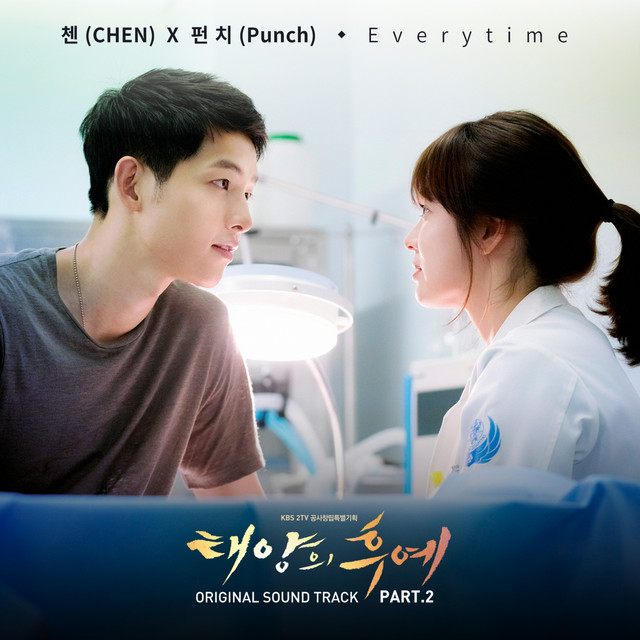
In the fast-paced world of K-Pop and K-Drama, where trends are measured in weeks and virality in days, some creations defy the very concept of an expiration date. On April 5, at approximately 1:40 p.m. KST, one such phenomenon added another jewel to its historic crown. The official music video for “Everytime”, the devastatingly beautiful duet by EXO’s Chen and vocal powerhouse Punch for the global sensation “Descendants of the Sun”, soared past the 300 million view mark on YouTube. This isn’t just a number; it’s a testament. It’s the resonance of a song that became the heartbeat of a cultural moment, a melodic heirloom passed from one drama fan generation to the next, now achieving a streaming milestone that places it in the rarefied air of perennial anthems. For a track released in February 2016, this sustained velocity is nothing short of remarkable, speaking to a legacy that has seamlessly woven itself into the fabric of both K-Pop and K-Drama history.
The Architects of an Anthem: Chen & Punch’s Path to Harmony
To understand the weight of this milestone, one must first appreciate the distinct musical lineages that converged to create “Everytime.” The artists behind it were not a manufactured duo but two singular voices, each carrying their own formidable reputation long before this collaboration.
Chen: EXO’s Golden Voice Steps Into the Spotlight
Kim Jong-dae, known universally as Chen, had already solidified his status as one of K-Pop’s most technically gifted and emotionally potent vocalists long before 2016. As a main vocalist of the supergroup EXO, he was the anchor of some of the group’s most powerful ballads and high notes, beloved for his clarity, control, and the raw feeling he imbued into every performance. However, his participation in “Everytime” represented a significant, high-profile solo venture outside the group’s structure. It was a chance for the public to focus solely on the pristine quality of his voice, stripped of EXO’s intricate choreography and maximalist production. This OST offer was a recognition of his individual artistry—a trust placed in his ability to carry the emotional weight of a flagship drama’s primary love theme. For Chen, it was a pivotal moment that would later pave the way for his successful solo career, proving his marketability and connection with audiences beyond the fandom.
Punch: The OST Queen’s Arrival
On the other side of this duet was Punch (Park Soo-young), a singer who was, at the time, on the cusp of becoming synonymous with drama soundtrack excellence. While she had contributed to OSTs prior to “Descendants of the Sun,” none had the seismic impact of this project. Punch brought a contrasting yet complementary texture to Chen’s powerful delivery. Her voice, often described as airy, wistful, and delicately emotive, provided the perfect foil. She was the emotional whisper to Chen’s resonant declaration. This collaboration served as her true breakout, instantly catapulting her to the top tier of sought-after OST singers. It established the “Punch formula”—a ability to convey heartbreaking vulnerability and lingering longing that makes a scene unforgettable. Together, they weren’t just singing a song; they were embodying the push-and-pull, the urgency and tenderness, between the drama’s leads, Captain Yoo Si-jin and Doctor Kang Mo-yeon.
“The casting of Chen and Punch was a masterstroke. It wasn’t just about getting two good singers; it was about finding two voices that could personify the very conflict of the drama—duty versus heart, strength versus fragility. ‘Everytime’ worked because their vocals together *felt* like the characters,” remarked a veteran music director for Korean television, speaking on the condition of anonymity.
A Milestone Forged in Drama History
The news of the 300 million view milestone is a data point that tells a much larger story. The “Everytime” MV, which primarily features clips from the drama intercut with stylized shots of Chen and Punch recording, functions as a potent nostalgia capsule. Its journey to 300 million is a slow burn of enduring relevance, not a spike of fleeting hype.
Breaking Down the Numbers & The “DOTS” Effect
Surpassing 300 million views for any music video is a landmark, but for an OST released over eight years ago, it is a staggering achievement. It underscores the unique “sleeper hit” trajectory of iconic drama soundtracks. Unlike a promoted idol single with concentrated fan-driven streaming initiatives, “Everytime” accrues views organically from multiple streams: fans of the song itself, drama viewers rewatching key scenes (the famous “red smartphone kiss” scene is forever tied to the song), new generations discovering “Descendants of the Sun” for the first time on streaming platforms, and its use in countless compilations, reaction videos, and social media edits. The drama’s unparalleled global success—it was a massive hit across Asia and a pioneering title in the early wave of K-Drama internationalization—provided a rocket boost that the song never truly came down from. Each new platform that licenses the drama introduces the song to a fresh audience.
This milestone also firmly plants “Everytime” in the record books as one of the most-viewed Korean OST music videos of all time. It stands as a benchmark that new drama soundtracks are measured against, a testament to a perfect storm of impeccable vocal performance, dramatic synergy, and cultural timing. For more on how other veteran artists are cementing their legacies, see our recent coverage of Shinhwa's Lee Min Woo and his wife share photos from their wedding day, a story of enduring personal and professional legacy.
Fandom & The Public: A Chorus of Enduring Love
The reaction to the 300 million view achievement has been a warm wave of collective memory from both dedicated fandoms and the general public. On social media platforms like X (formerly Twitter) and Instagram, hashtags celebrating both Chen and Punch trended, with fans creating celebratory graphics and video edits.

What’s notable is the tone of the celebration. It’s less about competitive fandom and more about shared pride in a cultural artifact. Comments on the YouTube video itself, which have poured in in multiple languages, often say, “I’m back here after 5 years,” or “This drama and this song got me through university.” Another common sentiment: “This song never gets old.” For EXO’s fandom, EXO-L, it’s a point of immense pride in Chen’s individual artistry, a reminder of his irreplaceable voice during his mandatory military service. For Punch’s fans, it’s the cornerstone of her illustrious OST career. For the general public, it’s simply *the* “Descendants of the Sun” song.
“#Everytime300M isn’t just a number. It’s all the times we rewatched DOTS, all the times this song comforted us, all the new fans finding it today. It’s the proof that true music lives forever,” tweeted a popular K-Drama fan account, capturing the communal sentiment.
This event showcases the unique power of an OST to unify disparate fan groups under a single banner of appreciation for great music tied to a powerful story. You can explore more about evolving fan engagement and industry conversations on our News page.
Industry Ripples: What “Everytime’s” Longevity Teaches Us
From an industry perspective, the continued success of “Everytime” is a masterclass in several key trends and reaffirms certain timeless principles.
The Evergreen Power of the “Drama x Idol” Synergy
“Everytime” remains the gold standard for the idol-involved OST. It demonstrated that when the right idol voice—one with legitimate, recognized skill—is paired with the right drama moment, the result can transcend the typical promotional cycle and become a permanent part of the pop culture landscape. It encouraged agencies to strategically deploy their vocalists for OSTs, not just as a side activity, but as a major brand-building and public affinity exercise. The song’s success proved that an OST could be as defining for an idol’s career as a group comeback, sometimes even more so in terms of public recognition.
OSTs as Strategic Assets and Cultural Anchors
This milestone reinforces the concept of hit OSTs as “cultural anchors.” They drive album sales, dominate digital charts for months (or in this case, reappear on charts years later during nostalgic periods), and generate staggering long-term streaming revenue. A song like “Everytime” is a financial and cultural asset that continues to pay dividends nearly a decade later. It also sets a high bar for contemporary drama soundtracks, pushing producers to seek out not just popular names, but authentically fitting vocal combinations. The current trend of intricate, sometimes experimental song structures in idol music, as discussed in our feature "The Structure Rebellion: How K-Pop's New Wave Is Dismantling Song Form", stands in contrast to the timeless, melody-forward approach of “Everytime,” proving there is room for both innovation and classicism.
The YouTube MV as a Permanent Home for Nostalgia
The achievement highlights the role of the official music video as a permanent, easily accessible repository for collective memory. It’s the go-to destination for anyone wanting to relive the drama’s emotion quickly. This has incentivized production companies and music labels to invest in higher-quality OST MVs, knowing they have a long tail of viewership far beyond the drama’s initial airing.
The Road Ahead: Legacies and New Chapters
So, what does crossing 300 million views signal for the future? For the song itself, it guarantees its immortality. “Everytime” will continue to be the benchmark love theme, studied and admired. It will feature in “Best Of” lists for decades and will likely cross 400 million and eventually 500 million views, a slow and steady march into legend.
For Chen, this milestone arrives as he is on the cusp of a major new beginning. Having been honorably discharged from the military, his focus is squarely on his solo career. The public’s renewed attention on “Everytime” serves as a powerful reminder of his unique position in the industry—a top-tier idol vocalist with a proven, massive public hit. It builds immense anticipation for his upcoming solo work, as fans and the general public alike yearn to hear that voice in a new context. It reaffirms that his artistry holds weight far beyond the fandom sphere.
For Punch, this is a reaffirmation of her status as an OST institution. Since “Everytime,” she has built an impeccable discography of drama themes, but this song remains her signature. It ensures that she will remain at the top of every music director’s list for projects requiring emotional depth and vocal purity. Her career trajectory, much like the song’s view count, is one of consistent, respected excellence.
The success of “Everytime” also points to a broader trend of legacy content finding new life. Just as classic dramas are revisited, their soundtracks become portals to the past. This phenomenon isn't limited to music; it's reflected in the continued commercial power of veteran artists in other mediums, as seen in the record-breaking film run detailed in "Beyond the Stage: How K-Pop Idols Are Driving a Historic Box Office Boom."
In the end, the story of “Everytime” hitting 300 million views is a celebration of intangible magic—the magic that happens when a great song meets a great story, delivered by voices destined to sing it. It’s a milestone not just of clicks, but of lasting connection. As the K-Pop and K-Drama worlds charge forward into an ever-more digital and fast-moving future, “Everytime” stands as a beautiful monument to the fact that some feelings, and the songs that score them, are truly timeless. To track how current hits measure up to such enduring legends, check our weekly updates on our Charts page.