
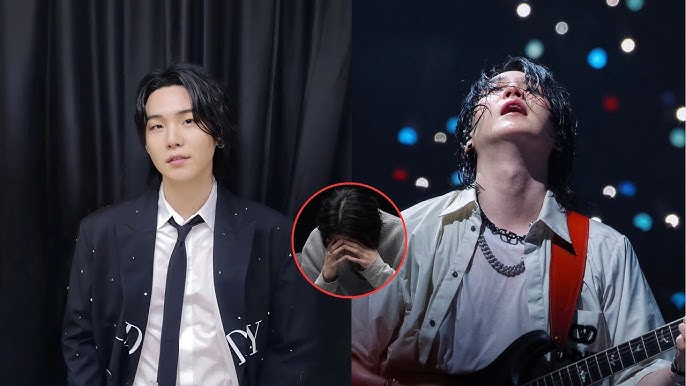

The world of K-Pop is built on narratives—carefully constructed stories of talent discovered, hardships overcome, and bonds forged in fire. Fans, or stans, become archeologists of these narratives, piecing together truths from lyrics, variety show glances, and cryptic Weverse posts. But what happens when one of the industry's most revered figures admits, point-blank, that a core part of his story was built on a foundation of playful, persistent falsehoods? The ARMY universe, and indeed the entire music industry, is reeling this week after BTS's Suga—the razor-tongued lyricist known for his stoic honesty—confessed to having "bullsh*tted" fans for over a decade, finally pulling back the curtain on a persona he meticulously curated since debut.
This isn't a scandal about hidden relationships or corporate malfeasance. It's a far more profound, personal earthquake. In a series of unguarded conversations spanning his recent solo documentary, a surprise live broadcast, and track commentaries on his latest work, Suga (born Min Yoongi) systematically dismantled a key aspect of his public image. The revelation is not a single shocking fact, but a complex tapestry of admitted exaggerations, manufactured nonchalance, and strategic omissions concerning his health, his ambitions, and the very essence of his artistic struggle. It's a move that blurs the line between idol and artist, between commodity and human, leaving fans in a state of awe, heartache, and profound respect. This is the story of Suga's great unmasking.
The Architect of Austerity: Building the Suga Persona
To understand the magnitude of this confession, one must first understand the idol Suga built. Debuting in 2013 with BTS, Min Yoongi was introduced as Suga, a name borrowing from the position "shooting guard" and reflecting his sleek, sharp rap style. But from the beginning, his persona had two distinct pillars: Agust D, his raw, unfiltered alter-ego for mixtapes where he battled depression and rage; and Suga, the more reserved, sometimes sleepy, often sarcastic group member who famously claimed his hobby was "sleep" and his life goal was to be a "stone."
This "stone" image—an unflappable, emotionally guarded, and minimally expressive figure—became his signature. On variety shows, he was the deadpan reaction. In interviews, he gave short, witty answers. He famously downplayed his intense work ethic, allowing the legend of his prolific all-night producing sessions to spread through fan accounts rather than his own boasts. He cultivated an image of someone above the fray, mildly annoyed by the chaos of idol life, which only made his rare, gummy-smile moments more precious to ARMY.
The Health Front: A History of Omissions
A critical part of this facade involved his physical well-being. Suga has been open about his shoulder surgery in 2020, but as he now confesses, the full story was heavily sanitized. "I let people believe it was an old injury from my pre-debut delivery job," he stated in his documentary. "And that was true, but it was also so much more than that." He revealed the pain had been a near-constant, debilitating companion for years, affecting his performance, his mood, and his ability to even lift his arm. He admitted to hiding the severity not just from fans, but often from the members and staff, projecting a toughness he felt was necessary as one of the group's older hyungs.
"I thought if I showed weakness, it would become a crack in the team's foundation. So I said, 'I'm fine,' when I wasn't. I made jokes about being lazy when I was actually in too much pain to move. That was the bullsh*t. I was protecting something, but I was also building a wall."
This extends to mental health. While Agust D tracks like "The Last" and "So Far Away" were hailed for their vulnerability, Suga now says he compartmentalized that pain as purely "Agust D's domain." The idol Suga, he maintained, was separate—more resilient, less affected. "It was a convenient lie," he said. "It let me be honest in one lane while keeping a safe distance in the other."
The Confessional Tapestry: Piecing Together the Real Yoongi
The revelations did not come in a single press conference, but were woven through multiple mediums, creating a layered and arguably more authentic unveiling. The process began with his latest solo album and its accompanying film, where the line between Suga and Agust D visibly blurred, then evaporated. In track-by-track commentaries, he pointedly refused to clarify which lines were "Suga" and which were "Agust D," stating, "There's no difference anymore. It's all me."
The dam truly broke during a lengthy, unplanned live broadcast following the documentary's release. In a sober, reflective mood, he directly addressed the ARMY, stating, "I've been bullsh*tting you all for 13 years about a lot of things." He then elaborated, not with sensationalist tabloid revelations, but with humanizing specifics:

- The "Laziness" Facade: He admitted to actively exaggerating his lazy, sleep-loving image to manage public and company expectations. "If people think you're a workaholic, they never let you rest. If they think you're lazy, every time you work hard, it's a bonus."
- Ambition Denied: He confessed to downplaying his fierce competitive drive and hunger for musical recognition. "In Korea, it's not attractive to seem too desperate. So I acted like I didn't care about charts or awards. Of course I cared. I still do."
- Emotional Distance as Armor: The famous stoicism was a deliberate shield, not his default state. "I felt everything—the hate, the love, the pressure—so deeply it was terrifying. The only way to function was to build a character who was less sensitive."
This deconstruction of his own brand is unprecedented for an idol of his stature. It moves beyond the controlled vulnerability common in the industry into a territory of radical self-responsibility. He isn't blaming a company directive or the pressures of fame in a victimized way; he is owning his own complicity in creating a simplified, more palatable version of Min Yoongi for public consumption. For a deeper look at how idol authenticity is reshaping industry norms, see our analysis in The Moral Microscope: How LE SSERAFIM’s Yunjin Sparked a Culture Clash.
A Fandom's Reckoning: ARMY's Emotional Whiplash
The reaction from ARMY has been a global wave of complex emotions, trending worldwide under hashtags like #WeLoveRealYoongi and #ThankYouForTrustingUs. The initial shock—a genuine "what did we miss?" moment—quickly morphed into a massive outpouring of support and introspection.
On platforms like Weverse and Twitter, fans are engaging in forensic fandom, re-examining old content with new eyes. "You can see it now," one viral thread notes. "The wince he hides when turning quickly in 2018 practice videos. The way he'd sometimes go quiet not because he was bored, but because he was dissociating from pain." This has led to a poignant mixture of guilt and gratitude. Many express heartbreak that he felt he had to carry such burdens alone, while simultaneously feeling trusted and honored by his ultimate transparency.
"It feels like we've been let into a secret room we never knew existed," wrote a longtime fan on a popular forum. "We loved Suga. We were in awe of Agust D. But we're only now meeting the whole, integrated Min Yoongi. It's devastating and beautiful."
However, not all reactions are uniformly positive. A smaller, vocal subset expresses a sense of betrayal, not by the truths revealed, but by the long deception itself. "It makes me question what else is a performance," one comment read. This sentiment touches on a core tension in idol culture: the parasocial contract. Suga’s confession forcefully reminds everyone that the "idol" is, at its heart, a performance. For more on how fans navigate complex relationships with idol personas, explore The Mark Dilemma: Inside the Fan-Driven Campaign.
Industry Shockwaves: Redefining the Idol Playbook
Beyond ARMY, Suga's confession has sent ripples through the K-Pop industry, prompting urgent conversations in boardrooms and trainee dorms alike. Historically, an idol's narrative is a collaborative effort between the artist, the company, and the fandom. What Suga has done is unilateral narrative correction.
Industry insiders speaking to K-Beats on background are divided. Some see it as a dangerous precedent that could destabilize the carefully managed images of other top-tier idols. "If fans start questioning everything, where does it end?" wondered one veteran PR manager. Others, however, hail it as a generational shift. "Gen Z and beyond demand authenticity," said a trend analyst. "Polished perfection is becoming a liability. Suga isn't damaging his brand; he's future-proofing it. He’s trading the ‘flawless idol’ label for the ‘unflinchingly real artist’ crown."
This move is particularly significant within the context of HYBE's current trajectory. As the conglomerate expands and its stock faces volatility, the value of its core artists' genuine connection with fans becomes its most critical asset. Suga’s raw honesty could be viewed as a strategic deepening of that bond, making the BTS brand even more resilient. It aligns with a broader, if uneven, industry trend toward greater artist expression, as seen in the works of senior artists like G-Dragon and Zico. The financial stakes are immense, as detailed in our report on The Billion-Dollar Tremor: How HYBE's Market Turbulence Led to Strategic Pivots.
Furthermore, it raises the bar for what fans can expect. Will new idols now feel pressure to be "authentic" in this brutally transparent way? Or will Suga's stature grant him a unique privilege that others cannot afford? The confession also indirectly critiques the system that made such a facade necessary—the relentless pressure to be strong, to be marketable, to be always "on."
The Road Ahead: Integration, Not Fragmentation
So, what comes next for Min Yoongi and for BTS? This is not a breakdown, but a breakthrough. The immediate effect is the unification of his artistic identities. Future music will likely no longer be sorted into "idol-pop" and "dark-hip-hop" bins. It will all simply be his truth. For the group, as they prepare for their planned 2025 reunion, this sets a powerful tone of maturity and deepened trust, both within the team and with their fandom.
For the industry, Suga has lit a fuse. The conversation about mental health, artistic integrity, and the sustainability of idol personas will intensify. Other artists may feel empowered to share their own "curated truths," leading to a new era of fan interaction. However, this path is fraught. Not every company or artist can, or should, navigate this level of transparency. The risk of backlash or oversharing is real.
Ultimately, Suga’s 13-year confession is a gift of profound complexity. It is not a neat, happy ending, but an invitation into a more nuanced, real, and ongoing relationship. He hasn't shattered his image; he has complicated it, adding shadows and textures to a portrait that was once brilliantly lit but two-dimensional. He has traded the safety of the "stone" for the vulnerability of the human being. In doing so, Min Yoongi hasn't ended his story. He has, at long last, begun writing it in his own hand, without a pseudonym, for all the world to see. For the latest on how artists are navigating their careers with new honesty, stay tuned to our News page and explore the stories of all your favorites on our Artists page.