
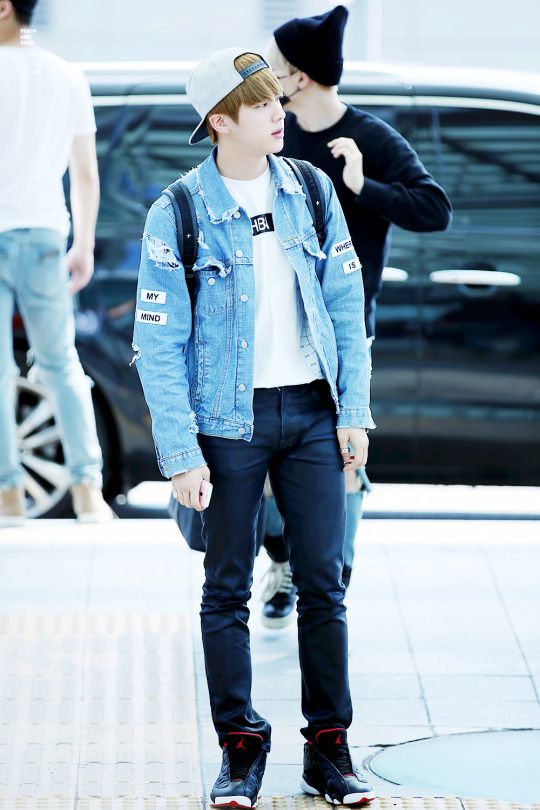

The flash of camera lights at Incheon International Airport is a predictable symphony for the biggest stars in the world. For BTS's eldest member, Jin, it’s a familiar drill. But on a seemingly routine Thursday afternoon, that drill broke down. Emerging from the arrivals gate, Jin—fresh from a personal overseas trip—was met not by the usual smattering of dedicated fans, but by a throng of reporters and media outlets. What happened next wasn't a polished photo-op of a global superstar, but a profoundly human reaction: visible surprise, a tired expression, and a hastily donned hat pulled low. Within hours, the Korean media ecosystem buzzed with descriptors like "confusing" and even "ugly," turning a casual, off-duty moment into a heated discourse on the unrelenting scrutiny of idol life.
This incident, seemingly minor on the surface, has cracked open a vital conversation. It forces us to examine the non-negotiable contract of visibility that top-tier idols sign, the blurring lines between public and private selves, and the often brutal aesthetic standards enforced by both media and a segment of the online community. At its core, Jin’s airport moment is less about a single headline and more about the immense pressure cooker of image maintenance in K-Pop, where even a world-conquering artist, currently serving his country, is not granted a moment of unobserved respite.
The Jin Dichotomy: Worldwide Handsome and the Man Behind the Mantra
To understand the weight of this moment, one must first understand Jin’s unique position within BTS and the industry at large. Debuting in 2013, Kim Seokjin cultivated an early persona around his visual appeal, famously coining the self-affirming nickname "Worldwide Handsome." This was never mere vanity; it was a savvy, self-aware performance that blended confidence with a wink, endearing him to millions. Over the years, Jin has masterfully balanced this flawless, almost ethereal image with a grounded, self-deprecating, and often hilariously blunt real-personality—the "dad joke" king, the competitive gamer, the member unafraid to be joyfully uncool.
A Career Built on Control and Release
This duality is strategic and survivalist. Idols, especially of BTS's magnitude, operate within a framework of intense control. Airport fashion itself is a recognized sub-genre of K-Pop media, with outlets like our News page dedicating columns to dissecting the branded outfits and curated looks of stars in transit. These are not mere travel snaps; they are extensions of a idol's brand, often coordinated with their agency and fashion partners. Jin, throughout his career, has participated in this ritual, offering charming waves and styled appearances. But his true resonance lies in the moments he subverts it—the goofy V-Lives, the candid behind-the-scenes confessions, the conscious decision to showcase imperfection. This has built a bond with ARMY that transcends the typical fan-idol dynamic, rooted in perceived authenticity.
His current context is crucial. As the first BTS member to enlist in the military in December 2022, Jin entered a phase of mandatory service, a period often viewed as a hiatus from the relentless public eye. While on leave, his movements are personal. The expectation, however unconscious, from a media machine hungry for content, is that the "idol switch" is always on. This incident starkly highlighted the fallacy of that expectation.
Deconstructing the "Ugly" Headline: A Moment-by-Moment Media Breakdown
So, what exactly transpired? Based on pooled media footage and eyewitness accounts, Jin arrived on a commercial flight from a private vacation destination. Unaware that his travel details had been leaked to press, he anticipated a low-key exit. The scene that greeted him was several dozen reporters and cameras, positioned for a capture. His reaction was instantaneous and unguarded:
- The Double-Take: A clear, wide-eyed moment of recognition that this was a press scrum, not just fans.
- The Retreat: A physical recoil, stepping back slightly into the security perimeter.
- The Shield: Quickly retrieving a black bucket hat from his bag and pulling it down over his brow, obscuring much of his face.
- The Transit: He moved swiftly through the corridor, offering no smile, no wave, maintaining a solemn expression.
The footage, stripped of context, was packaged by certain outlets with a narrative of bewilderment and discord. The word "ugly" did not refer to Jin's features, but to the *situation*—a K-Pop term sometimes used to describe an awkward, messy, or unpicturesque moment. Yet, the viral phrasing was incendiary. It reduced a complex human response—surprise, fatigue, a desire for privacy—into a value judgment.
"It was clear he was caught off-guard and wanted to be left alone. He wasn't in 'idol mode.' He was just a tired guy getting off a long flight," reported a bystander in fan-captured video commentary.
This breakdown is vital. It shows the machinery of celebrity news at work: the ambush, the capture of an unscripted reaction, the framing of that reaction as "news," and the subsequent amplification through provocative language. Jin’s "crime" was not looking disheveled; he was dressed neatly in casual travel clothes. His "crime" was breaking the fourth wall of celebrity performance by revealing he wasn't prepared to perform.

ARMY Rallies and the Fractured Online Discourse
The fan reaction was swift, massive, and multifaceted, showcasing the power and protective nature of the BTS fandom. Across platforms like Twitter, Weverse, and Instagram, ARMY launched a counter-narrative.
The Hashtag Campaign: #RespectJinsPrivacy
Within an hour, this hashtag was trending globally. Fans flooded it with messages of support, criticizing the invasive tactics of dispatch media and defending Jin's right to a private life. They repurposed the same media photos, circling his tired eyes with captions like "This is a human, not a product" and "He's on his personal time." The campaign was less about denying the events and more about challenging the right of the media to scrutinize them.
The Nuanced Debate Within Fandom
Beyond the unified front, deeper conversations emerged on fan forums. Some expressed sadness that Jin seemed genuinely startled, hoping the experience didn't sour his personal travels. Others used it as a teaching moment for newer fans, explaining the history of airport sasaengs and dispatch culture. A poignant thread discussed the psychological weight of constant readiness, linking this event to past idol statements about the exhaustion of being "always on." This reflective side of the reaction highlighted a mature fandom engaging with systemic issues, not just defending their idol.
Conversely, the incident also drew the expected negative comments from anti-fans and general netizens, who used the images to levy criticisms about his appearance or attitude. This backlash, however, was overwhelmingly drowned out by the supportive wave, illustrating a significant shift in how top-tier fandoms can now directly combat negative media framing.
Industry Implications: The Unsustainable Gaze on Idol Off-Duty Life
Jin's airport moment is a symptom of a much larger industry condition. The incident serves as a case study in the paradox of modern K-Pop celebrity: the demand for authentic connection with idols, paired with a punitive response when that authenticity is anything less than photogenic.
First, it exposes the fallacy of the "off-duty" concept for idols of BTS's stature. As discussed in our analysis of group longevity in pieces like "Beyond the Seven-Year Itch: SEVENTEEN's Landmark Second Contract Renewal", sustained success requires careful management of member well-being. This incident is the antithesis of that—a glaring example of well-being being disregarded for a click. The economic ecosystem around idol sightings, from dispatch photo sales to ad-revenue from viral articles, creates a direct incentive for this kind of ambush journalism.
Second, it highlights the different standards applied. Male idols, particularly, face a complex matrix of expectations regarding masculinity and presentation. Jin’s reaction—stoic, withdrawn, seeking cover—could be read as a conventionally masculine response to an unexpected threat. Yet, it was framed as confusing or rude. This raises questions about what specific performance is demanded in these involuntary situations.
"The airport is not a scheduled fansign. It is a transit point between private life and public life. When we blur that line entirely, we contribute to a culture that sees idols as commodities in all spaces, at all times," commented culture critic Park Ji-won in a recent panel.
Finally, this event resonates with broader trends in global pop culture, where the 24/7 news cycle and smartphone cameras have demolished the last vestiges of private public movement. However, K-Pop's unique structure of highly managed idol personas makes the contrast between the "on" and "off" state more jarring, and therefore more newsworthy, to its system.
Looking Ahead: A Watershed for Privacy Norms?
What does this mean for Jin, for BTS, and for the industry? In the immediate term, it’s unlikely to change Jin's trajectory. He will complete his military service, and the incident will become a footnote. However, its symbolic power is substantial.
For BTS and their agency, HYBE, it may lead to even more stringent privacy measures for traveling members, especially those on personal time during their service period. We may see a move toward complete secrecy on travel logistics, a further retreat from the "airport fashion" spectacle that once benefited idol promotion. This reflects a larger industry pivot where the mental health costs of overexposure are starting to outweigh the promotional benefits of constant visibility.
For the media and fan ecosystem, this is a clarifying moment. The overwhelming fan defense shows a market force: consumers of idol content are increasingly advocating for ethical boundaries. They want access, but not at the expense of the artist's personhood. This could pressure media outlets to reconsider the value and reception of ambush content. Will clicks from outrage outweigh the reputational damage from alienating a massive, loyal fandom?
Ultimately, Jin's "confusing" appearance was a mirror. It reflected back the invasive, often dehumanizing gaze of the celebrity industrial complex. The fact that a man's tired face could spark a global conversation about privacy, respect, and the price of fame is perhaps the most telling aspect of all. As the industry evolves and groups like SEVENTEEN set new standards for longevity and mutual respect, the well-being of artists off-stage must become part of the calculus. True longevity, as seen on our Charts page, isn't just about hits; it's about sustaining the human beings who create them. Jin’s unscripted moment at Incheon may be remembered not as an "ugly" stumble, but as a small, significant crack in the foundation of an unsustainable system, a moment where humanity, briefly, refused to perform.