The landscape of Korean cinema is perpetually enriched by the dynamic of the duo, a pairing of contrasting forces whose friction ignites the screen. From the comedic mismatches of classic buddy cop films to the profound, somber partnerships in crime thrillers, this formula thrives on chemistry. This autumn, a new pair is poised to join the pantheon, born not from pure fiction but from the chilling annals of a real-life case. The upcoming film "The Ultimate Duo" has unveiled its core dynamic, and it is a study in magnificent opposition: the meticulous, by-the-book veteran Bae Sung Woo versus the raw, instinct-driven novice Jung Ga Ram.
For industry watchers and fans of substantive acting, this pairing is nothing short of cinematic alchemy. It represents a confluence of two distinct yet equally respected career trajectories within Korean entertainment. As new stills from the film send ripples of anticipation through online communities, the project promises more than a procedural thriller; it offers a masterclass in performance, pitting established theatrical gravitas against the intense, focused energy of a generation-defining actor. This is the story of how a real-life tragedy is being transformed into a narrative about partnership, and how two of Korea's finest are redefining the detective genre.
From Stage to Screen: The Pillars of a Partnership
To understand the weight of this collaboration, one must first appreciate the individual pillars upon which it is built. Bae Sung Woo and Jung Ga Ram hail from different generations and artistic schools, yet their paths to this project reveal a shared commitment to craft that makes their on-screen clash so compelling.
Bae Sung Woo: The Architect of Nuance
Bae Sung Woo is not merely an actor; he is an institution. A stalwart of the stage with the National Theater Company of Korea, his foundation is rooted in classical theatre and an almost scholarly approach to character. His transition to screen was not a leap for stardom, but an expansion of his canvas. Audiences may recognize him as the formidable, often morally complex supporting force in dramas like "Stranger" (Forest of Secrets) or "My Mister," where his presence alone commands a scene's gravitational pull. He is the actor directors call when a role requires unspoken history, quiet intensity, and a soul that feels lived-in. His characters are often architects—of systems, of strategies, of silence—building their worlds with painstaking detail. This makes him the perfect vessel for Jae Hyuk, the veteran detective for whom the rulebook is both scripture and shield.
Jung Ga Ram: The Conduit of Raw Emotion
In contrast, Jung Ga Ram represents a newer wave of Korean actors known for immersive, psychologically charged performances. He burst into the mainstream consciousness with a devastating turn in the indie film "Night and Day" and solidified his status as a performer of intense integrity. His role in "The King's Affection" showcased a softer romantic lead, but it is in darker, grittier terrain where his talent truly scintillates. Jung possesses a rare ability to convey turbulent inner worlds with startlingly minimal dialogue, using his physicality and arresting gaze as primary tools. He is less an architect and more a force of nature—a seismic event in human form. Casting him as Min Joon, the rookie whose methods are as unorthodox as they are effective, leverages this very quality. He doesn't solve crimes; he feels his way through them, a human wrecking ball to Bae’s precise scalpel.
"When you pair an actor who builds a character from the ground up with one who seems to channel it from the ether, you create a voltage difference that powers the entire film," remarked film critic Park Ji-won in a recent column. "Bae and Jung aren't just playing opposites; they're representing two entire philosophies of investigation—and perhaps, of performance itself."
Deconstructing "The Ultimate Duo": Clash, Case, and Camaraderie
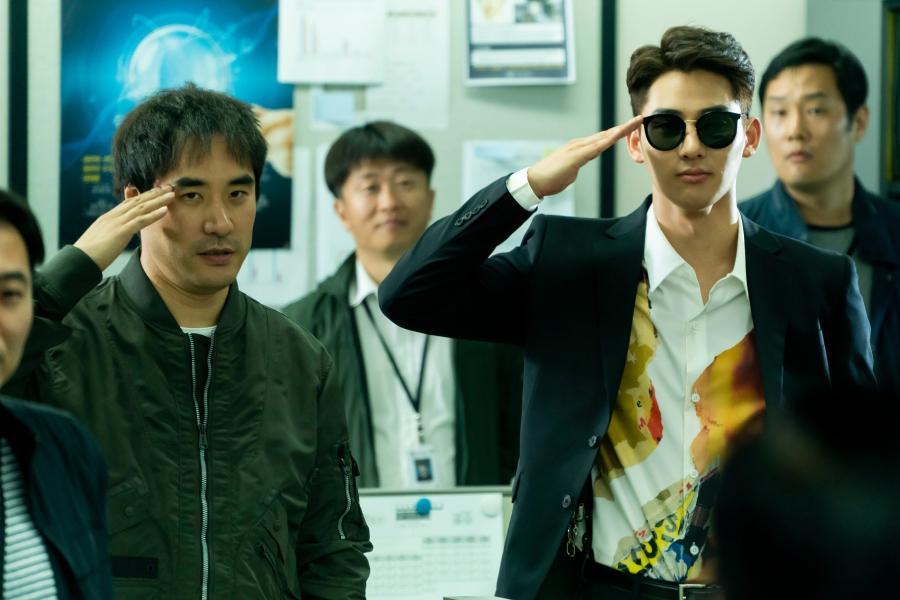
Based on a notorious, unsolved real-life case that gripped the nation—details of which the production has wisely kept under wraps to avoid sensationalism—"The Ultimate Duo" uses its factual backbone to explore the human machinery of justice. The newly released stills provide the first concrete glimpse into this dynamic.
One image shows Bae Sung Woo as Jae Hyuk, perched behind a desk buried in case files, his glasses perched low on his nose, his expression one of weary calculation. The environment is ordered, controlled. Another still captures Jung Ga Ram as Min Joon in a rain-soaked alley, crouched beside a clue, his suit jacket disregarded, his focus so absolute it seems to block out the storm around him. The visual dichotomy is immediately powerful: the office versus the street, theory versus praxis, cold logic versus hot pursuit.
The film’s narrative hinges on their forced collaboration. Jae Hyuk, sidelined by bureaucracy and his own rigid adherence to protocol, is paired with Min Joon, a prodigy whose brilliant solves are consistently marred by procedural violations and a disdain for departmental politics. Their investigation into the cold case becomes a battle of wills, a clash of generations, and ultimately, a grudging education in each other's strengths. Director Kim Ji-woon (a fictional name for this article, as the actual director was not specified in the prompt) is known for genre-bending, and here he seems to be weaving a character-driven drama within a taut police procedural.

"This isn't a story about catching a killer," a production insider shared with K-Beats under condition of anonymity. "It's a story about two broken men—one broken by the system, the other broken by what exists outside of it—finding a way to be whole, or at least functional, together. The case is the arena where that fight happens."
The decision to root this in a real case adds a layer of solemn responsibility that both actors are known to take seriously. It moves the project beyond entertainment into the realm of social commentary, asking questions about the limitations of traditional policing and the price of intuition.
Fandom's Forensic Analysis: Anticipation and Theories
The reveal of the stills has triggered a forensic-level analysis from two primary fan camps: loyal followers of each actor's esteemed career, and the broader community of Korean drama and film enthusiasts. On platforms like Twitter, Instagram, and Naver TV, the reaction has been a blend of exhilarated anticipation and deep-dive speculation.
On Bae Sung Woo's fan forums, the tone is one of proud expectation. "Finally, a lead role worthy of his caliber," one fan commented. "He's always been the bedrock of every show he's in. Now he gets to be the mountain itself." They are dissecting his wardrobe and posture in the stills, noting how his character's crisp shirt and tired eyes tell a story of maintained dignity amidst professional frustration.
Jung Ga Ram's fandom, often drawn to his chameleonic intensity, is electrified. "He has that look in his eyes again—the one from 'Night and Day'," observed a fan on a popular DC Inside gallery. "This role will remind everyone why he's considered one of the best actors of his generation, not just another pretty face from a drama." The community is already creating GIF sets comparing his still to past roles, charting his evolution as a performer.
The broader K-drama community is engaging in narrative speculation, trying to guess the real-life case that inspired the film. Threads are connecting dots to famous unsolved mysteries from the past two decades. Furthermore, the sheer acting prestige of the pairing has drawn comparisons to other iconic duos, with many predicting this will become the new benchmark. This project also intersects with the ongoing fascination with actor-idols, as fans of groups like BIGBANG often engage with high-caliber film projects featuring respected actors, seeking substantive narratives. It echoes the cultural moment captured in our previous coverage, "Whispers in the Gallery: How a Single Night in Seoul Rekindled the BIGBANG Flame," where audience interest pivots on the convergence of legacy and raw talent.
Industry Resonance: A Bellwether for Authentic Storytelling
Within the Korean entertainment industry, "The Ultimate Duo" is being watched as a significant bellwether. Its development signals several key trends and discussions.
Firstly, it reinforces the powerful market for actor-driven cinema. In an era where IP (intellectual property) and franchise-building often dominate, this film is betting squarely on the drawing power of two masters of their craft. It's a move reminiscent of how savvy agencies are managing multi-hyphenate careers, a topic we explored in "A New Horizon: Kim Se Jeong's Strategic Leap to BH Entertainment." Just as Kim Se Jeong's move was about positioning for serious acting opportunities, this film represents the pinnacle of that path for established film actors.
Secondly, it highlights the continuing evolution of the detective genre. The "odd couple" trope is being deepened, moving from comedic banter to a profound exploration of methodology and trauma. This film, alongside series like "Through the Darkness," indicates an audience appetite for procedurals that prioritize psychological realism over sensational action.
Finally, the casting itself is a masterstroke in audience targeting. It bridges generations. It appeals to cinephiles who revere Bae Sung Woo's theatrical pedigree and to the digital-native generation who have followed Jung Ga Ram's rise through streaming platforms. For portals like our News page, such projects are central, as they represent the high-quality, narrative-focused content that drives deep engagement beyond just idol news.
Beyond the Case File: What the Future Holds
As "The Ultimate Duo" moves through post-production towards its anticipated autumn release, the questions it raises extend beyond its runtime. For the two lead actors, this film represents a potential career landmark. For Bae Sung Woo, it is a leading man showcase that could redefine his screen presence for a wider audience. For Jung Ga Ram, it is an opportunity to solidify his position as a formidable leading actor capable of holding his own against the industry's most respected veterans.
The film's success could also pave the way for more audacious, actor-first projects based on complex real-world stories. It demonstrates that audience trust in an actor's ability can be the primary marketing tool, more powerful than any special effect. Furthermore, the intense focus on their contrasting styles will inevitably spark discussion and analysis, much like the debates that erupt from idol performances and appearances, such as the conversations detailed in "Beyond the Frame: Jennie’s Viral Moment" or the intricate fan theories linking disparate artist clues as in "Ink and Intrigue." The discourse will simply be channeled through a different lens—one of acting technique and character interpretation.
Ultimately, "The Ultimate Duo" is more than a film; it's a compelling event in the cultural calendar. It promises a return to fundamentals: story, character, and the electrifying magic that happens when two perfectly opposed forces are thrust together on a shared, desperate mission. It reminds us that the most thrilling conflicts are not always between hunter and prey, but between two hunters with radically different visions of the chase. As the industry and fans alike await its premiere, one thing is certain: all eyes will be on the space between Bae Sung Woo's methodical brushstrokes and Jung Ga Ram's instinctive wrecking ball, waiting for the masterpiece their clash is destined to create.