

Opening: When Two Worlds Collide
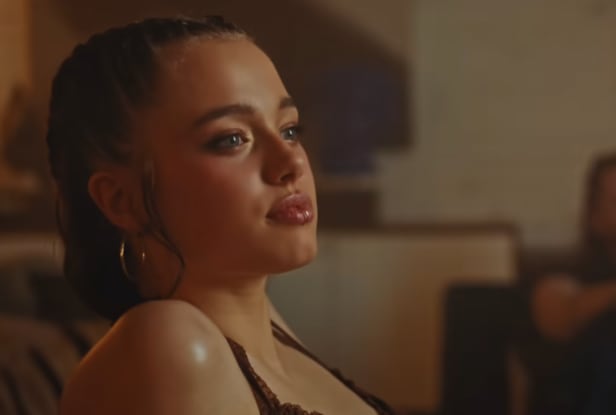
The line between Hollywood glamour and K-Pop’s meticulously crafted universe has always been distinct, separated by oceans, languages, and vastly different entertainment ecosystems. Yet, in a move that has sent shockwaves through both industries, that line has not just blurred—it has been spectacularly erased. The news that Shiloh Jolie, daughter of global icons Angelina Jolie and Brad Pitt, will make her official screen debut in the music video for WJSN’s Dayoung’s solo single “What’s a girl to do” is more than a surprising piece of casting. It is a landmark event, a calculated and fascinating pivot that speaks volumes about the evolving ambitions of K-Pop agencies and the genre’s magnetic pull on a global scale. This isn't a mere celebrity cameo; it is a symbolic passing of the torch, a signal that K-Pop’s visual and narrative language is now a powerful enough draw to attract the next generation of Hollywood’s most watched faces.
For fans of Dayoung and her group WJSN (Cosmic Girls), the teaser release on April 3rd was already a highly anticipated moment. Dayoung, known for her bright, vivacious energy and standout vocal color, embarking on her first official solo endeavor was news enough. But the fleeting, enigmatic glimpse of a new, strikingly familiar face in the teaser footage ignited a firestorm of speculation that our news desk has been tracking closely. The confirmation from STARSHIP Entertainment that the figure was indeed 17-year-old Shiloh Jolie has since rewritten the playbook for what a K-Pop music video can represent on the world stage.
Background: Dayoung, WJSN, and STARSHIP's Cosmic Ascent
To fully grasp the significance of this moment, one must understand the journey of the artist at its center. Dayoung, born Joo Da-young, debuted in 2016 as a member of the 13-member girl group WJSN, a collaborative project between STARSHIP Entertainment and the Chinese company Yuehua Entertainment. The group’s concept revolved around a mystical, celestial theme, with each member representing a star sign or celestial body. From the beginning, Dayoung stood out with her infectiously upbeat personality, a mainstay on variety shows, and a clear, powerful voice that often handled key ad-libs and high notes in their tracks like “Secret” and “Save Me, Save You.”
WJSN’s path, while not without the challenges faced by many large groups, has been one of steady growth and cult adoration. They carved a unique niche with their synth-pop and dreamy, fantasy-inspired concepts, amassing a dedicated fandom, Ujung, who cherished their intricate lore. In recent years, members have begun to stretch their individual wings: Yeonjung with musicals, Seola and Exy with solo singles, and Bona building a formidable acting career. Dayoung’s solo debut is the latest step in this strategic diversification, a chance for an artist long beloved for her supporting roles to claim the spotlight entirely.
Behind them stands STARSHIP Entertainment, a powerhouse agency that has consistently proven its knack for innovation and global thinking. Home to giants like MONSTA X, IVE, and CRAVITY, STARSHIP has never been content to play it safe. From IVE’s confident, self-assured concepts that dominate charts to bold creative directions in music videos, the agency understands the currency of spectacle and talkability. This context is crucial—the casting of Shiloh Jolie is not a random stunt but a typical STARSHIP maneuver: ambitious, headline-grabbing, and strategically aimed at elevating a project’s profile to stratospheric levels.
The News: Decoding the "How" and "Why" of a Hollywood-K-Pop Crossover
The immediate question on everyone’s lips was, simply, how? How does the daughter of two of the world’s most famous actors, who has deliberately stayed out of the acting limelight, end up in a K-Pop music video for a Korean idol’s solo debut? STARSHIP’s revelation of the casting process provides a fascinating case study in modern, borderless entertainment networking.
According to agency insiders who spoke to K-Beats, the connection was not forged through traditional Hollywood channels but through a shared vision for the project’s cinematic narrative. The director for “What’s a girl to do” had conceived a video with a strong, evocative storyline requiring a performer who could convey complex emotion with minimal dialogue, relying on presence and expressive subtlety. During the global search for the right face, a casting director with ties to the international film community suggested Shiloh, who has been quietly studying dance and performance for years.
“The concept demanded a raw, authentic emotionality that felt timeless and unforced. When we reviewed potential candidates, Shiloh’s unique presence and her personal journey of self-expression resonated deeply with the video’s core theme of identity and becoming,” a STARSHIP creative director stated. “The approach was always about the art of the project first. We presented the treatment, the song, and Dayoung’s vision. The alignment was natural.”
Reports indicate that Shiloh, who has shown a growing interest in dance forms from around the world and has been open about her personal artistic explorations, was intrigued by the project’s artistic merit and the opportunity to work within K-Pop’s renowned production system. For STARSHIP and Dayoung, the appeal was multifaceted:

- Narrative Authenticity: Shiloh’s own highly publicized journey of self-discovery and identity aligns powerfully with the teased themes of Dayoung’s song.
- Global Conversation: Her involvement instantly catapults the MV from a fan-focused release to a global media event, covered by entertainment outlets worldwide.
- Creative Prestige: It signals that K-Pop music videos are now considered a legitimate and desirable platform for high-caliber artistic performance, akin to a short film.
This move mirrors a trend we are seeing more of, where K-Pop seeks to integrate global narratives not just through sound, but through visual storytelling. It brings to mind STARLIGHT's strategic casting of actress CHAE MIRAE for narrative depth, though on a massively amplified, international scale.
A New Blueprint for Solo Debuts
For Dayoung, this unprecedented casting is a monumental vote of confidence. It frames her solo debut not as a side project, but as a major, globally relevant artistic statement. The sonic teasers for “What’s a girl to do” suggest a departure from her brighter WJSN sound—leaning into a moodier, more introspective R&B-pop groove. The pairing with Shiloh’s enigmatic image suggests a video that will be heavily story-driven, cinematic, and emotionally charged. This strategic alignment ensures that the conversation revolves around the art, creating a powerful launchpad for Dayoung to redefine her artistic identity beyond the group framework.
Fan & Community Reaction: From Shock to Synergy
The reaction from the K-Pop community and the wider world has been a tidal wave of sheer astonishment, quickly evolving into intense analysis and excitement. On platforms like Twitter, Weverse, and international forums, the news trended for over 24 hours, with hashtags like #ShilohxDaya and #HollywoodxKPop exploding.
Ujungs (WJSN fans) initially expressed shock, with many tweets reading, “I had to check the calendar, this isn’t April Fools?” This quickly turned into proud excitement for Dayoung. “Only our Da-da could pull off a collaboration this legendary,” one fan wrote. “They’re trying to frame this as Shiloh’s debut, but for us, it’s Dayoung’s world and we’re just living in it. This is going to be iconic.” The fandom has mobilized, using the unexpected global attention to promote Dayoung’s discography and variety show appearances, effectively turning the viral moment into a catalyst for deeper engagement.
In the broader K-Pop sphere, reactions have been a mix of awe and analytical scrutiny. Many see it as a “power move” by STARSHIP. “This is next-level marketing. They didn’t just buy ads; they created a global news event,” commented a popular K-Pop analyst on YouTube. The crossover has also drawn the attention of film and Hollywood fans, who are now curiously exploring Dayoung and WJSN’s music, creating a unique and temporary demographic blend in online spaces.
Of course, with any major shift, there is skepticism. Some purists question whether such high-profile casting overshadows the music itself, a debate reminiscent of discussions around other major idol events. However, the prevailing sentiment is one of anticipation. As one netizen put it: “This feels like a cultural reset moment. It’s not a Western artist featuring on a K-Pop track; it’s a Western icon entering the K-Pop visual universe on its own terms. That’s a huge difference.” This delicate balance between music and spectacle is a constant tension, as explored in our analysis of the modern idol privacy paradox, where narrative often extends far beyond the song.
Industry Analysis: Beyond the Headline—The Ripple Effect
The implications of this casting extend far beyond a single music video’s view count. This is a strategic inflection point with potential ripple effects across the industry.
1. The Music Video as Premium Content: K-Pop MVs are already high-budget, narrative-driven productions. Shiloh’s involvement sets a new benchmark, positioning them as coveted acting vehicles. We may see more agencies pursuing similar “prestige casting,” looking to global cinema, theater, or dance for unique faces to elevate their visual storytelling, moving beyond models and influencers.
2. Redefining ‘Global’ Strategy: The traditional K-Pop global playbook involves English-language singles, Western collaborations, and overseas tours. This move introduces a new tactic: narrative globalization. By embedding a globally resonant figure into the core K-Pop visual product, it creates an immediate, organic bridge for international audiences to connect with the story, and by extension, the artist. It’s a more subtle and potentially more powerful form of integration than a forced musical feature.
3. Agency Competition and Prestige: STARSHIP has thrown down a gauntlet. While HYBE has its American label ventures and SM has its virtual avatars, STARSHIP has demonstrated an ability to pull a global cultural moment directly into a core K-Pop release. This raises the stakes for other major agencies, potentially accelerating investments in MV production and international creative partnerships. The focus on creating "event" comebacks is intensifying, much like the historic fan-driven events surrounding major groups, such as BTS's landmark wins that cement legacy through fan power.
4. A New Path for Idols: For idols like Dayoung, this proves that a solo debut can be a canvas for high-concept, boundary-pushing art that attracts attention on a global cultural level, not just a chart position. It empowers artists to think bigger about the thematic and collaborative scope of their individual work.
The Double-Edged Sword of Spotlight
With this level of attention comes immense pressure. The MV will be dissected by film critics, celebrity news outlets, and K-Pop analysts alike. The performance of both Dayoung and Shiloh will be under a microscope. Furthermore, it highlights the intense, often unforgiving spotlight on idols and their collaborators, a pressure cooker environment that can take a significant toll, as discussed in our report on the unspoken burdens within idol groups. The success of this venture will be measured not just in views, but in the sustained quality of the artistic output and its reception.
What's Next: The Dawn of a Hybrid Era
As the countdown to the full release of “What’s a girl to do” continues, the industry holds its breath. This is more than a comeback; it is a test case. A successful, well-received fusion of Dayoung’s musical artistry and Shiloh’s narrative performance will likely open floodgates, encouraging more fluid movement between global entertainment spheres. We may see K-Pop agencies establishing dedicated global casting divisions, or Hollywood talent viewing MV appearances as legitimate, meaningful artistic credits.
For Dayoung, this is the beginning of a crucial new chapter. The solo debut will now be a permanent part of K-Pop history, a landmark release discussed for years to come. Her future activities, including potential follow-up singles or variety appearances, will carry the heightened interest generated by this project. For Shiloh Jolie, it is a stunning, controlled entrance into performance, choosing a medium known for its artistic intensity and global fanaticism over a traditional Hollywood debut. For the industry, it is a clear signal: the walls are down. The future of K-Pop’s visual storytelling is global, cinematic, and limited only by the ambition of its creators.
The ultimate impact will be reflected not just in headlines, but in the data that drives the business: pre-orders, streaming numbers, and sustained engagement. It sets a precedent that others will strive to match, potentially reshaping how idols are launched and promoted in an overcrowded market, similar to how rookie groups are now chasing the high bar set by predecessors, as seen with CORTIS's record-shattering pre-orders. One thing is certain: when the video drops, all eyes—from Seoul to Los Angeles and everywhere in between—will be watching. The cosmic girls have truly reached for a star from another galaxy, and in doing so, may have just changed the trajectory of K-Pop’s universe forever. To track how this release performs, keep an eye on our real-time charts for its debut.