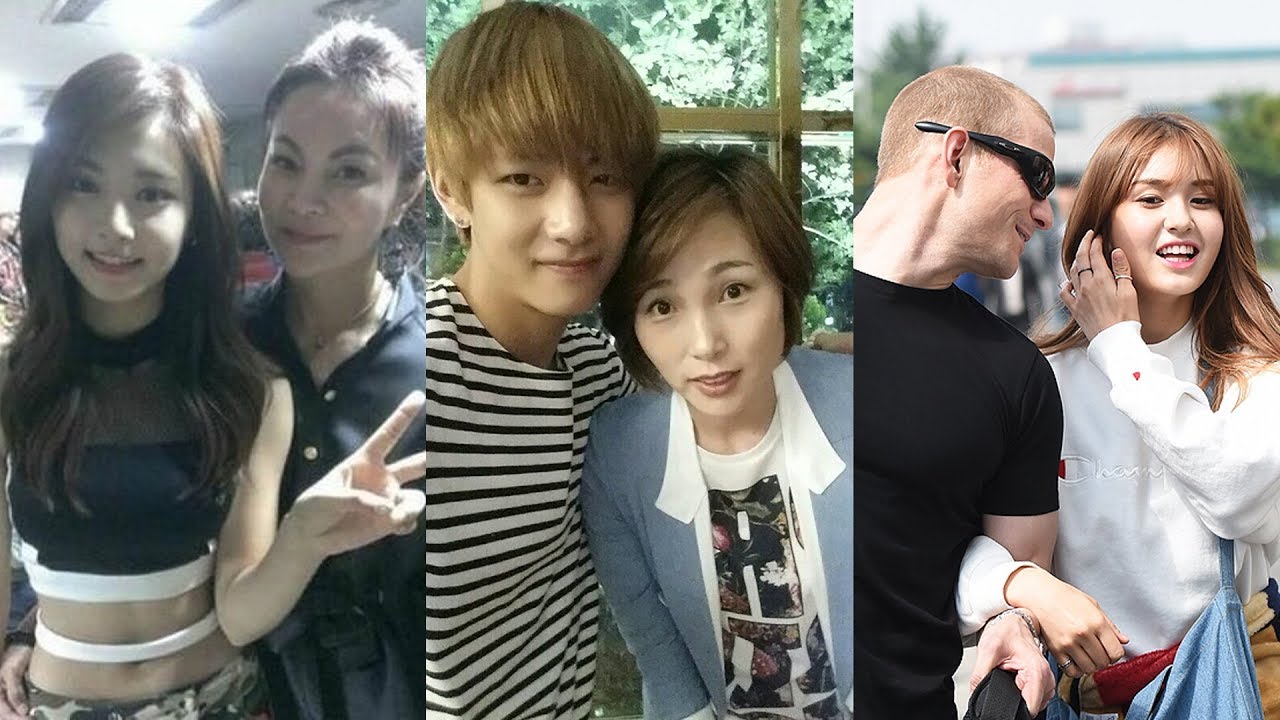
The digital ecosystem of K-Pop fandom is powered by countless moments: a perfectly executed high note, a groundbreaking music video, a heartfelt bubble message. But sometimes, the spark comes from a place far removed from the stage lights. Recently, that spark was a photograph—not of an idol, but of an idol's parents. During a fan signing event for the acclaimed boy group ONEUS, member Hwanwoong, renowned as a "5th-generation performance genius," shared a personal snapshot with a lucky fan. The image, however, wasn't of him. It was a cherished family photo featuring his mother and father. Within hours, the image had transcended the fan community, spreading across platforms like X (formerly Twitter) and Instagram with a single, breathless consensus: Hwanwoong's parents are stunningly attractive.
The initial reactions were playful and awe-struck. Comments flooded in declaring, "His parents look like they could debut as a celebrity couple!" and "Now I see where he gets his visuals from." But as the image continued to circulate, the conversation evolved from simple admiration into a more nuanced discussion. This wasn't just about good genes; it was a moment that illuminated the intimate, often unspoken connection fans seek with idols, the powerful branding of "visual" in K-Pop, and how an artist's origin story, even a familial one, can become part of their public narrative. This viral moment for Hwanwoong opens a fascinating window into the complex relationship between idol identity, fan perception, and the very human stories behind the performers we admire.
Hwanwoong & ONEUS: Forging a Legacy on Stage, Not on Lineage
To understand the weight of this moment, one must first understand the artist at its center. Yeon Hwan-woong, known mononymously as Hwanwoong, debuted in January 2019 under RBW Entertainment as the main dancer and lead vocalist of ONEUS. From the outset, the group carved a unique path with their concept-heavy, theatrically-inclined title tracks like "Valkyrie," "LIT," and "LUNA." While every member possesses distinct charms, Hwanwoong's reputation was built almost exclusively on his preternatural skill. He is frequently cited by industry peers and fans alike as one of the most technically proficient and captivating main dancers of his generation.
His stage presence is explosive and precise, a blend of powerful isolations, fluid movement, and intense facial expressions that tell a story. He is the group's "performance leader," a title earned through sheer dedication and talent. Unlike some idols whose pre-debackgrounds or families are lightly woven into their introductory lore, Hwanwoong's public identity has been firmly rooted in his work—his hours of training, his choreography contributions, and his unwavering stage ethic. His story, as publicly told, was one of self-made artistry. This context is crucial. The viral photo of his parents introduced a new, deeply personal chapter to his narrative that wasn't about practice rooms or performances, but about heritage.
A Group Defined by Artistry Over Archetype
ONEUS has consistently been praised for its balanced, all-rounder lineup. While members like Keonhee and Leedo receive significant attention for their vocal and visual appeal, the group's brand is not overly reliant on any single "type." They are storytellers first. Hwanwoong, in particular, has often been highlighted for his "duality"—the sweet, energetic personality off-stage transforming into a commanding, almost fearsome performer on-stage. This focus on transformative artistry makes the sudden spotlight on his innate, genetic visuals all the more intriguing. It’s a facet of his identity that, while always present, was previously overshadowed by his monumental skill. The fan-meet photo brought it to the forefront, asking the audience to see the idol not just as a creator, but as a creation—a product of a visually gifted lineage.
The Viral Moment: Deconstructing the "Visual Gene" Phenomenon
The photo itself, while private, was described by those who saw it as capturing a moment of elegant, timeless beauty. Hwanwoong's mother was noted for her delicate features, clear skin, and a gentle smile that radiated warmth, while his father was described as having a handsome, dignified bearing with sharp eyes and a strong jawline. The immediate and overwhelming reaction online was a mix of surprise and validation.
"It all makes sense now! Hwanwoong's sharp eyes and that smile… it's a perfect blend of his parents. They have such an aura," wrote one fan on an online forum.
This taps into a longstanding, almost mythical fascination in K-Pop culture: the "visual gene." Fans delight in spotting familial resemblances, often viewing attractive parents as the "source code" for an idol's beauty. It’s a form of authentication. The idol's visual isn't just a happy accident or a product of styling; it's presented as a heritable truth, a quality passed down and therefore inherently "real." For an idol like Hwanwoong, whose primary brand is performance, this viral moment added a new, foundational layer to his appeal. It provided a backstory for his visuals that felt organic and genuine.
Beyond the Photo: The Fan-Idol Intimacy Economy
This event also underscores the evolving economy of intimacy in K-Pop. Sharing a family photo at a fan sign is a profound gesture of trust. It moves the fan relationship beyond the commercial transaction of an album purchase and a signature into the realm of personal sharing. In an industry where carefully curated reality shows and social media posts are the norm, an un-staged, personal artifact like a family photo holds immense power. It's a raw piece of the idol's private world. Fans aren't just reacting to attractive people; they are reacting to being granted access. This moment of shared intimacy fuels deeper connection and loyalty, transforming casual listeners into invested supporters who feel they know a more complete version of the artist. For more on how idols are building these multifaceted connections beyond music, explore our analysis in Beyond The Stage: Hwasa & Young K's "Running Man" Alliance.

Fandom Abuzz: From Memes to Meaningful Conversations
The fan reaction to Hwanwoong's parents was swift, creative, and multifaceted. The community, particularly TO MOON (ONEUS's fandom), engaged with the news in several distinct ways:
- The Humor Wave: Lighthearted memes and tweets quickly emerged. Jokes about "visual genes being dominant," petitions for his parents to debut, and playful edits placing his parents' faces into classic K-Pop music videos flooded timelines. This humor served as a social bonding mechanism within the fandom.
- The Analytical Deep-Dive: More dedicated fans began analyzing facial features, comparing Hwanwoong's eyes to his mother's and his facial structure to his father's. This pseudo-scientific approach is common in fan circles and reinforces the narrative of "authentic" beauty.
- The Protective Shift: A significant portion of the conversation quickly turned to respect and privacy. Many fans urged others not to search for or disseminate the original photo further, emphasizing that it was a private moment shared in trust. Comments like, "Let's just admire through words and not invade their privacy," highlighted the fandom's maturity and protective instinct toward Hwanwoong and his family.
- Recontextualizing the Artist: Long-time fans began re-sharing older photos of Hwanwoong as a child, noting how he has always carried his parents' features. This created a wholesome narrative thread connecting his past, his family, and his present identity, enriching his overall story in the eyes of the fandom.
The reaction showcased a modern fandom's ability to simultaneously celebrate, analyze, and protect—all within the span of a few trending topics. It was a testament to how a single piece of non-musical content can strengthen community ties. For a look at how other fandoms engage with complex artist narratives, read our deep dive into Billlie Unleashes the 'EUNOIA'.
Industry Implications: When Family Becomes Part of the Brand
While a viral moment of this nature is organic, its repercussions are felt within the industry's strategic frameworks. The "family visual" phenomenon is not new—idols like EXO's Kai (whose sister is a model) and IVE's Wonyoung (whose sister's visuals are also praised) have seen similar public fascination. However, in the hyper-competitive 5th-generation landscape, every element of an idol's identity is a potential point of connection.
This event highlights several key industry trends:
- The Authenticity Premium: In an era where fans crave genuine connection, traits perceived as innate and family-oriented (like genetics) carry a premium. They are seen as "un-manufactured," which aligns with the growing desire for idols to be relatable and real beyond their stage personas.
- Narrative Expansion: Agencies are constantly looking for ways to build rich, multi-dimensional narratives for their artists. A compelling family background or striking parental visuals adds a relatable, human-interest layer to an idol's profile. It provides content for variety shows, fan community discussions, and media articles (such as this one).
- The "Visual" Category's Evolution: The classic "visual" position in a group is traditionally about standing beauty. However, stories like this expand the definition. It's no longer just about the idol's own face, but about the story of that face. A "visual with legendary visual parents" has a more captivating, story-driven appeal than a visual presented in a vacuum.
Furthermore, this ties into broader contractual and branding strategies. As idols build their careers, every aspect of their life, including family, can become part of their public brand equity. The careful management of this exposure is crucial, as explored in our report on The NCT Contract Chessboard. Ultimately, moments like these remind us that an idol's career is a mosaic of talent, marketing, and personal history.
Looking Forward: Hwanwoong's Path and a Lasting Legacy
So, what comes next after the viral wave subsides? For Hwanwoong and ONEUS, this moment is likely to be a memorable footnote rather than a shifting cornerstone. Hwanwoong's core identity—and the group's trajectory—will continue to be driven by their musical output and performances. The group is poised for continued growth, capitalizing on their reputation for cohesive albums and electrifying stages. Fans can expect Hwanwoong to keep pushing the boundaries of performance, perhaps with more choreography creation, as seen in his work for the group's B-sides.
However, the incident leaves a subtle, lasting impression. It has humanized Hwanwoong in a new way for many fans, anchoring his superstar persona in a relatable family context. It may also encourage other idols to selectively share more of their personal worlds, knowing the powerful connection it can forge. In the long term, the "visual genes" narrative will become a charming part of Hwanwoong's lore—a fun fact for new fans to discover and a warm memory for existing TO MOONs.
The journey of a K-Pop idol is endlessly documented, from trainee days to solo endeavors. As artists like Lee Chae Yeon demonstrate new chapters of artistic independence, the foundational elements of their identity, including family, remain a touchstone. For Hwanwoong, his parents' unexpected spotlight reaffirms that an idol's appeal is a tapestry woven from many threads: relentless hard work, undeniable talent, and yes, sometimes, the gift of a smile inherited from a mother or the determined gaze of a father. It’s a reminder that before the stage names and the spotlight, they are someone's son or daughter—a simple truth that, when revealed, can sometimes shine the brightest light of all.
Stay tuned to our News page for all updates on ONEUS and the latest trends shaping the K-Pop world, and discover more about the artists driving the industry on our Artists page.