
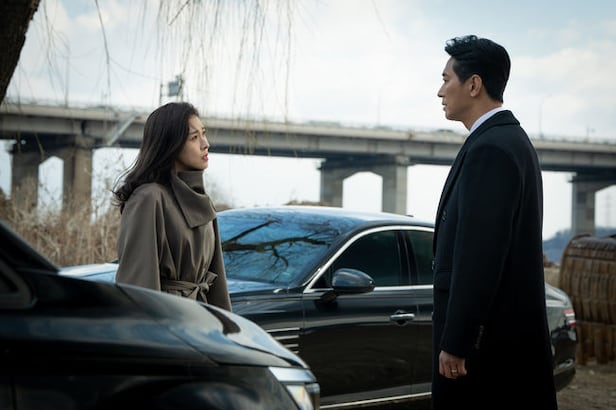

The world of K-Pop is no stranger to manufactured narratives, where every smile, every comeback, and every public appearance is meticulously curated. But what happens when the strings are pulled too tight, and the puppet decides to wield the scissors? This is the central, pulsating tension in the latest episodes of the critically acclaimed drama “Climax,” where the lines between on-screen fiction and off-screen reality blur into a compelling, often chilling, spectacle. At the heart of this maelstrom are the show's leads, Ju Ji Hoon and Ha Ji Won, whose characters are navigating a crisis that feels ripped from the darkest corners of a K-Pop agency's crisis management playbook.
Episodes 5 and 6 have shifted the drama from a simmer to a rolling boil, moving beyond personal ambition into a terrifying examination of institutional power. As Bang Tae Seop (Ju Ji Hoon) and Chu Sang Ah (Ha Ji Won) find themselves backed into corners, their desperate maneuvers are more than just gripping television. They are a masterclass in the brutal economics of fame, offering a fictional—yet deeply resonant—case study of the very systems that govern the idols who dominate our Charts page. This isn't just a story about a broadcast station; it's an allegory for the entire entertainment apparatus.
The Stage is Set: A Drama Within an Industry
To understand the gravity of “Climax’s” current narrative arc, one must first appreciate the pedigree of its stars and the show's deliberate setting. Both Ju Ji Hoon and Ha Ji Won are veterans who have, in their long careers, undoubtedly witnessed the inner workings of the industry they are now critiquing. Ha Ji Won, in particular, has starred in music-themed projects like “Secret” (which dealt with songwriting and plagiarism), giving her a foundational understanding of the creative and commercial pressures at play.
“Climax” itself is meticulously crafted to mirror the K-Pop ecosystem. The fictional broadcast station CBM is not just a network; it operates with the same hierarchical pressure, ruthless competition, and obsession with public perception as a major idol agency. The “artists” here are news anchors and producers, but their product—ratings and influence—is traded with the same fervor as album sales and streaming numbers. The drama primes its audience to see every corporate decision, every leaked video, and every strategic alliance through the lens of celebrity mechanics. It’s a world where, much like in K-Pop, a single scandal can be a career-ending “viral kill,” and a masterful PR move can resurrect a fallen star overnight.
Unraveling the Strings: Four Pivotal Power Plays
The latest episodes delivered a cascade of tension, but four moments stand out as definitive proof that Tae Seop and Sang Ah are no longer mere pawns. They are becoming dangerous players in a game they did not design, and their actions dissect the anatomy of a modern media scandal with surgical precision.
1. The Broadcast Bomb: When the Narrative is Weaponized
The inciting incident is a masterstroke of public sabotage. A rival station airs a devastating report accusing Chu Sang Ah of being the mysterious “C,” a corrupt insider who leaked examination questions. The scene is filmed and edited with the venomous precision of a malicious fan-edit or a tabloid exposé designed to trend. This isn't just news; it's a character assassination packaged for mass consumption. The drama expertly shows the immediate fallout: the social media frenzy, the swift condemnation from “netizens,” and the corporate panic. It mirrors the instantaneous, often irreversible, damage that a viral accusation can levy against an idol, where the court of public opinion renders a verdict long before any facts are settled. The parallel to sudden, career-threatening idol scandals is unmistakable.
“The truth is irrelevant once the broadcast signal goes out. You don’t fight the accusation; you fight the perception it leaves behind.”
This moment forces Sang Ah into a defensive posture familiar to any celebrity caught in a scandal. Her every move is now scrutinized, her past picked apart. The show highlights how in such crises, the individual’s reality is subsumed by the publicly constructed narrative—a harsh reality for many idols who have faced similar trial-by-media.
2. Tae Seop's Counter-Gambit: Leveraging Hidden Assets
While Sang Ah reels, Bang Tae Seop moves. In a cold, calculated scene, he confronts a key figure with evidence of their own malfeasance. Ju Ji Hoon plays this not with explosive anger, but with the quiet, terrifying assurance of a man holding a trump card. This is the drama’s equivalent of a strategic media leak or a behind-the-scenes settlement. Tae Seop isn’t appealing to morality; he’s engaging in hard-nosed transactional power politics. He understands that in this world, information is the ultimate currency, and blackmail—often dressed in the softer language of “mutual understanding” or “strategic partnership”—is a standard operating procedure.

This reflects the opaque dealings that fans often speculate about within agencies: secret contracts, hushed-up incidents, and the complex bartering of favors that occurs far from the spotlight of our News page. Tae Seop’s maneuver demonstrates that survival at the top sometimes requires getting your hands dirty, a somber nod to the rumors that sometimes swirl around the business dealings that protect or propel certain careers.
3. Sang Ah's Defiant Isolation: The Cost of Agency
Perhaps the most poignant power move comes from Sang Ah herself. Cornered and betrayed by the system she helped build, she makes a critical decision: she stops explaining. In a series of tense close-ups, Ha Ji Won conveys a seismic shift from desperate defense to weary, resolute defiance. She realizes that engaging with the fabricated narrative on its own terms is a losing battle. This mirrors the moment some idols or their agencies choose radio silence during a scandal, a strategy that can be read as guilt by the public but is often a legal or PR tactic to let the storm pass before mounting a counter-offensive.
Her isolation is her strength. By refusing to play the expected role of the weeping, apologetic figure (regardless of guilt), she reclaims a sliver of narrative control. It’s a high-risk strategy, akin to an idol disappearing from the public eye only to return with a meticulously planned “rehabilitation” project. It underscores a brutal truth: sometimes, you must let the system hang itself with its own ropes before you can cut yourself free.
4. The Unspoken Alliance: A New Axis of Power Forms
By the end of episode 6, a new, fragile understanding crystallizes between Tae Seop and Sang Ah. It’s not a romance, nor a pure friendship. It’s a mutual recognition of capability and a tactical alignment of interests. They share a glance that communicates more than any dialogue could: “I see your game. Let’s play together, for now.” This formation of a power duo, born not from affection but from necessity and respect, is a classic trope in corporate and political thrillers. In the context of K-Pop, it brings to mind the strategic partnerships formed between powerful producers and specific idols, or even between idols from different groups who align to boost their collective influence, moving from being managed assets to becoming managerial forces themselves.
This shift positions them not as victims of the system, but as its newest, most unpredictable architects. They are learning to pull the strings from within the tangled web, a journey that any veteran idol who has graduated to founding their own label or taking creative control will deeply understand.
Fanning the Flames: The Audience as Active Participant
The reaction to these episodes from the drama’s fans and the wider K-Pop community has been electric, primarily because the themes hit so close to home. On platforms like Twitter and TheQoo, discussions have less to do with traditional drama analysis and more with drawing direct parallels to real idol scandals.
“Watching Sang Ah get torn apart by a edited video feels like watching my bias get canceled over a misunderstanding taken out of context,” one fan tweeted, garnering thousands of likes. Another commented, “Tae Seop’s blackmail is just how agencies handle things. It’s all business, no emotions.” Forums are alight with speculation, not just about the plot, but about which real-life incidents the writer might be referencing. The drama has become a catalyst for fans to articulate their often-frustrating understanding of how the industry functions behind its glamorous facade.
This meta-commentary was amplified by the recent, very public industry shake-ups. Fans couldn’t help but see echoes of the strategic maneuvering in “Climax” in the swirling rumors and confirmed moves elsewhere. For instance, the delicate and highly strategic navigation of career paths post-agency, much like the scenario explored in Mark's Solo Dawn, reflects the same kind of calculated career recalibration Tae Seop is attempting. Similarly, the complex web of contracts and leverage is a central theme in The NCT Contract Chessboard, making the fictional power plays in “Climax” feel uncomfortably prescient.
Industry in the Mirror: Why This Narrative Resonates Now
The timing and depth of “Climax” are not accidental. The Korean entertainment industry is in a period of intense self-reflection and external scrutiny. From contract disputes and mental health discussions to the overwhelming pressure of social media and the ruthless efficiency of cancel culture, the mechanisms that create and destroy stars are more visible than ever.
The drama succeeds because it doesn’t caricature these systems; it operationalizes them. It shows the how and the why. The writer understands that the true villain is rarely a single, mustache-twirling executive, but rather the impersonal, self-perpetuating engine of profit, reputation, and survival. This aligns with a growing public awareness and critique of agency practices. When Tae Seop makes a cold deal, viewers see the reflection of a company protecting its investment. When Sang Ah is sacrificed for ratings, viewers see the expendability of even top talent in the face of a larger corporate agenda.
Furthermore, the series taps into the fascination with the architects of fame themselves. Just as fans pour over the family lineage of idols like ONEUS's Hwanwoong, there is a deep curiosity about the background and mentality of those who wield power behind the curtain. “Climax” satisfies that curiosity by making those power brokers the protagonists, allowing us to empathize with their dilemmas even as we critique their methods.
The Final Act: What "Climax" Foretells for Art and Reality
As “Climax” moves into its second half, the trajectory is clear: Bang Tae Seop and Chu Sang Ah are on a collision course with the very system that created them. The question is no longer if they will dismantle the machinery, but how, and at what personal cost. Will they become benevolent reformers, or simply new monarchs of the same cruel kingdom? This mirrors the real-world evolution of veteran idols who gain control—do they replicate the systems they knew, or forge a new, more humane path?
The drama’s enduring impact will be its unflinching framing of the entertainment industry as a high-stakes game of strategy, where talent is necessary but never sufficient. It reminds us that for every glowing idol on stage, there is a complex network of decisions, risks, and manipulations that placed them there. As both Tae Seop and Sang Ah continue to learn, pulling one string often entangles a dozen more.
For K-Pop fans, “Climax” has become essential viewing not just for its quality, but for its subtext. It provides a vocabulary and a visual framework to understand the often-opaque forces that shape the careers of the artists they support on our Artists page. In holding up a dark, polished mirror, Ju Ji Hoon and Ha Ji Won aren’t just delivering stellar performances; they are guiding us through the shadowy climax of fame itself, where the only thing more dangerous than being a puppet is discovering you hold the scissors.