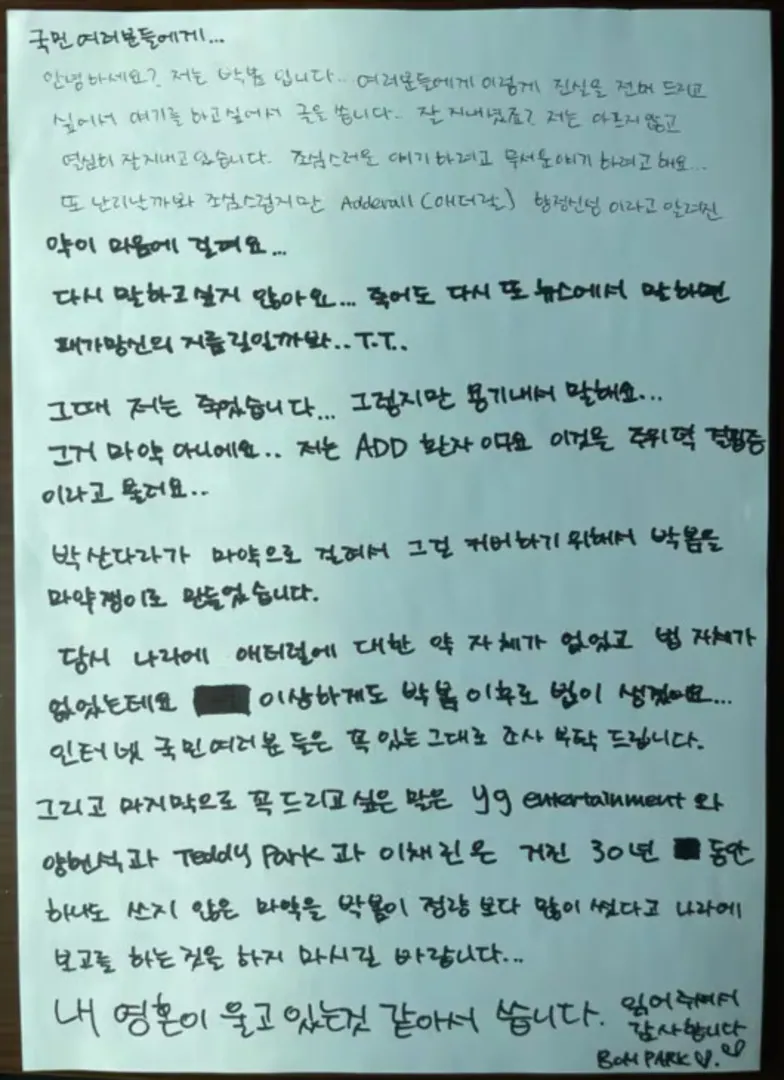

In a move that stunned the K-Pop community, Park Bom of legendary group 2NE1 has directly broken a decade of public silence on the 2014 drug allegation scandal that irrevocably altered her career and the group's trajectory. Through a lengthy, emotional handwritten letter posted to social media, Bom not only defended her fellow member Sandara Park against renewed rumors but offered a searingly honest reflection on her own trauma, the media's role, and the enduring bond of the 2NE1 members. This isn't just an idol statement; it's a watershed moment of accountability and healing.
- Why Address This Now? The Timing of Bom's Truth Bomb
- Between the Lines: A Forensic Breakdown of Bom's Letter
- 2014 Redux: How the Original Scandal Fractured a Dynasty
- A Changed Landscape: Comparing Then vs. Now on "Scandal" Management
- The Unbreakable Line: What Bom's Defense Reveals About 2NE1's Sisterhood
- Your Questions Answered: The Bom & Dara Allegations FAQ
Why Address This Now? The Timing of Bom's Truth Bomb
Park Bom's letter didn't emerge in a vacuum. Its publication is a strategic, deeply personal response to a specific confluence of events, marking a shift from passive endurance to active reclamation of narrative.
The Trigger: Resurfaced Rumors and Fan Fury
Recently, old, unverified rumors regarding Sandara Park's personal life, including vague drug-related insinuations, began recirculating on online communities. Unlike a decade ago, the 2NE1 fandom, BLACKJACKS, now armed with organized social media prowess, launched fierce defenses of Dara. This protective wave likely provided the supportive backdrop Bom needed to finally speak, defending her friend directly to the source of the chatter.
A Platform of Her Own Making
Unlike in 2014, when statements were filtered through a besieged YG Entertainment PR team, Bom now controls her primary channel: Instagram. This direct-to-fan access empowers artists to bypass traditional media, a tool she used with devastating effectiveness. The handwritten format itself is a deliberate choice, signaling authenticity and personal risk in a way a typed agency notice never could.
The Momentum of 2NE1's "Reunion" Era
The group's iconic surprise performance at Coachella 2024 with CL, and their ongoing supportive interactions, have reignited global interest and reframed their legacy in a powerful, celebratory light. Bom's letter can be seen as an effort to cleanse the final, painful stain on that legacy, ensuring the group's story isn't permanently overshadowed by past trauma. It's closure on their terms.
Between the Lines: A Forensic Breakdown of Bom's Letter
The letter's power lies in its specific rhetorical choices. Each paragraph serves a distinct purpose, moving from defense to vulnerability, and finally to a plea for a changed industry.
The Primary Mission: Shielding Sandara
Bom immediately centers Dara, stating her intent was solely to stop the "groundless rumors" about her "precious friend." She frames Dara as a victim of malicious fabrication, leveraging her own painful experience as credibility. This establishes her not just as a colleague, but as a protective shield, using her own scarred history to deflect fire from another.
The emotional core of the letter lies here: "I know better than anyone how much pain false rumors can cause." This isn't a generic show of support; it's testimony from a fellow survivor.
The Secondary Confession: Reliving Her Own Nightmare
In defending Dara, Bom is forced to reopen her own wounds. She details the enduring impact of 2014—the public shame, the career hiatus, the psychological toll. This serves two purposes: it validates the severity of such allegations for any idol, and it humanizes her beyond the tabloid headline. She transitions from a scandalized figure to a person who still bears the bruises.
The Final Plea: A Call for Media Sanity
Bom doesn't stop at personal story. She directly critiques the ecosystem that allows such rumors to thrive, urging media to "please write with a sense of responsibility." This elevates the letter from personal statement to a public critique, positioning Bom as an elder stateswoman calling for reform to protect younger artists, much like the evolution we analyzed in Taeyong & Anderson .Paak's "Rock Solid" represented a strategic global move.
2014 Redux: How the Original Scandal Fractured a Dynasty
To understand the magnitude of Bom's letter, one must revisit the cataclysm of 2014. The incident wasn't a minor setback; it was an earthquake that cracked the foundation of one of K-Pop's most powerful groups.
The Incident: Amphetamines and a Public Lynching
In 2014, it was revealed that Park Bom had attempted to ship ADHD medication containing amphetamines (deemed illegal without proper Korean prescription) from the US to South Korea years prior. The case was legally closed without indictment, but the court of public opinion was merciless. Media coverage was frenzied and often punitive, framing it through a "drug scandal" lens that ignored medical context.
The Aftermath: Hiatus, Exclusion, and Eventual Dissolution
The fallout was immediate and severe. Bom was removed from all group activities during the peak of 2NE1's "Crush" promotions. She became a ghost within her own career. The group entered a prolonged, awkward hiatus, ultimately contributing to their disbandment in 2016. Bom's career went dormant for years, while the other members carried the 2NE1 torch separately, a fracture line that remained until very recently.
The Lasting Stigma: The "Forbidden Idol" Label
For years, Bom was the industry's "what if?" case study. The scandal created a persistent, unfair label that overshadowed her legendary vocal talent. Her journey back to the stage has been a slow, arduous climb against this ingrained stigma, making her defense of Dara against similar labels all the more poignant and informed.
A Changed Landscape: Comparing Then vs. Now on "Scandal" Management
The K-Pop industry's playbook for handling personal crises has evolved, albeit unevenly. Bom's direct address highlights what has, and hasn't, changed in the decade since her ordeal.
Aspect Then (2014 Era) Now (2024 Era) Communication Channel Exclusively through formal, corporate agency statements. Often delayed, legalese. Increasingly direct via idol's personal SNS (like Bom's letter). Faster, more authentic tone. Public Narrative Control Largely ceded to traditional media and netizen boards. Idol is a passive subject. Artists and fandoms actively co-create the narrative. Hashtag campaigns, direct clarifications. Focus of Response Apology-centric, often accepting broad blame to quell fury. Defensive posture. Increasingly nuanced, with space for explanation, context, and even righteous defense (as seen here). Career Impact Often immediate, severe, and permanent hiatus or expulsion. "Cancellation" was typical. Still severe, but paths for redemption and return are more established (e.g., after military or mental health breaks). Fan Role Mostly reactive; limited power to change mainstream narrative. Proactive and organized; capable of mass-trending support and drowning out hate.This shift mirrors a broader trend in K-Pop towards artistic ownership, seen in the conceptual daring of groups like Xdinary Heroes and the deeply personal lyricism of soloists like Yves.
The Unbreakable Line: What Bom's Defense Reveals About 2NE1's Sisterhood
Beyond scandal management, the letter is the strongest evidence yet of 2NE1's genuine, enduring bond—a connection that has survived corporate disbandment, solo careers, and geographic distance.
Loyalty Over Career Calculus
From a cold, PR standpoint, wading into a fresh rumor mill about a former colleague carries risk for Bom, who is actively rebuilding her solo career. Her choice to prioritize Dara's well-being over potential "controversy" demonstrates a loyalty that supersedes industry calculus. It's the antithesis of the "cut ties to save yourself" strategy often seen.
A Shared History of Resilience
2NE1 was always marketed as rebellious and tough, but their off-stage trials forged a real, unbreakable resilience. Having endured public scrutiny over visuals, sound, and personal lives together, their bond is trauma-informed. Bom speaking for Dara is an extension of the "us against the world" mentality that CL has often referenced in her solo work, a final layer of their iconic artist personas.
The Coachella Effect: Solidified Unity
The triumphant Coachella stage wasn't just a performance; it was a re-consecration of their unit. The trust and synchronization required for that moment clearly reopened channels of profound support. Bom's letter is the emotional continuation of that stage—protecting the unit's integrity even when not physically together.
Your Questions Answered: The Bom & Dara Allegations FAQ
Q: What were the original 2014 allegations against Park Bom?
A: In 2014, it was revealed Bom had attempted to mail ADHD medication from the United States to South Korea years earlier. The medication contained amphetamine derivatives, which were illegal in Korea without a specific local prescription. The Korean legal case was dismissed due to lack of evidence of intent to distribute, but the media storm labeled it a "drug smuggling" scandal.
Q: What are the new rumors about Sandara Park?
A: The recent rumors are vague, unsubstantiated online posts insinuating past drug use, often linking them to her social circles. No credible evidence or specific allegations have been presented by any official source. They appear to be malicious revivals of old gossip.
Q: Has Sandara Park responded directly?
A: As of this writing, Sandara Park has not made a separate, direct public statement regarding these specific resurfaced rumors. Bom's letter serves as a primary, powerful defense on her behalf.
Q: Could this lead to legal action?
A> While not mentioned in Bom's letter, both artists would have strong grounds for defamation lawsuits against the originators of false rumors under Korea's strict defamation laws. Whether they pursue this route remains to be seen, as such cases are personally draining.
Q: How has the public reacted to Bom's letter?
A> The reaction has been overwhelmingly supportive from fans and the general public. The sentiment trends towards praise for her courage, anger at the recycled rumors, and respect for 2NE1's bond. It's seen as a cathartic moment, a stark contrast to the public shaming of 2014.
Q: What does this mean for 2NE1's future activities?
A> While it doesn't guarantee more group songs, it solidifies that the members' personal bond is rock-solid. This trust is the foundational requirement for any future collaborations, be they one-off stages or more. It certainly doesn't hurt the possibility.
Conclusion: More Than a Letter—A Line in the Sand
Park Bom's handwritten missive is a landmark document in K-Pop history. It functions as a personal catharsis, a fierce defense of a sister, a critique of irresponsible media, and a testament to a bond that outlasts companies and controversies. It marks the moment a veteran idol stopped being a subject of history and actively rewrote its most painful passage on her own terms.
This act of reclaiming narrative power signals a maturity in the industry, where artists are increasingly empowered to define their own truths. For fans, it's a lesson in the enduring power of loyalty. For the industry, it's a reminder that the human beings behind the idols have long memories and, eventually, a powerful voice.
To understand more about how idols are crafting their own narratives through music, explore our analysis of artistic evolution in "The Jennie Kim Dossier". For the latest on how current artists are pushing boundaries, stay tuned to our News page and check the latest trends on our Charts page. The story of K-Pop is being rewritten daily, not just by agencies, but by the artists themselves.