
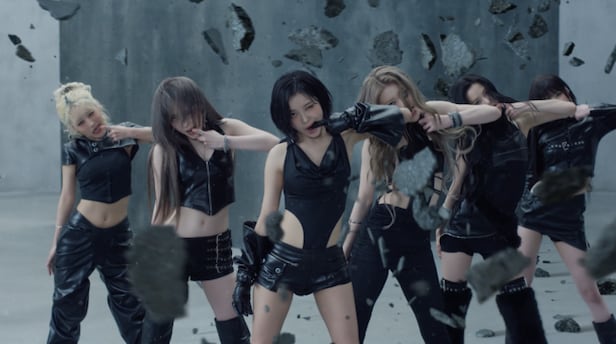

The final episode of a survival show is often framed as a definitive ending: the winners celebrate, the dream is realized, and a countdown clock silently begins ticking on a pre-determined contract. For the members of Kep1er, that clock officially ran out in July 2024. Yet, unlike many of their predecessors from series like Produce 101, the music did not stop. The group, now a unit of five members—Yujin, Xiaoting, Mashiro, Chaehyun, and Dayeon—has returned with a blistering new single, "Killa," a track that feels less like a continuation and more like a defiant reinvention. In doing so, they are not just releasing a song; they are actively writing a new, uncharted playbook for what comes after the survival show finale, proving that a group's identity and impact can evolve, and even intensify, beyond the confines of its initial corporate mandate.
A Foundation Built on Shifting Sands: The Kep1er Journey
To understand the significance of "Killa," one must first revisit the unique, often tumultuous, trajectory of Kep1er's career. Born from the global fan-vote frenzy of Mnet's Girls Planet 999 in 2021, the nine-member group debuted with immense pressure and immediate success. Hits like "WA DA DA" and "Up!" cemented their status as a powerhouse rookie group, but their path was never straightforward. As a project group with a fixed, and notoriously short, two-and-a-half-year contract under Swing Entertainment and WakeOne, every comeback was shadowed by the looming expiration date.
The "graduation" or disbandment model for survival show groups has long been a painful reality for fans, creating a paradoxical relationship where intense support is intertwined with anticipatory grief. Groups like IZ*ONE achieved legendary status, but their end was a foregone conclusion. Kep1er's story, however, took an unexpected turn. As their contract expiration approached, negotiations between the members' various agencies resulted not in a clean break, but in a new agreement for a subset of the original lineup to continue promotions. Members Hikaru, Huening Bahiyyih, Youngeun, and Yeseo pursued other ventures, while the remaining five chose to push forward as Kep1er.
"This isn't just an extension; it's a recalibration. The group that exists now is one born of pure, renewed choice, not a television contract. That energy is fundamentally different," commented industry insider Kang Ji-won in a recent podcast.
This partial continuation is a growing, yet still delicate, trend in the industry. It acknowledges both the commercial viability of the brand and the artistic desire of the members, but it also introduces complex questions about group identity and fan loyalty. As explored in our analysis of post-group dynamics in "The HYBE Hierarchy", how agencies manage the balance between group and individual futures is a constant source of scrutiny. For Kep1er, the decision to continue as five was a bold gamble, setting the stage for "Killa" to be their first true test.
Deconstructing "Killa": A Sonic and Thematic Rebellion
“Killa,” subtitled “Face The Other Me,” is not a subtle evolution. It is a deliberate, hard-left turn from the bright, high-energy, sometimes quirky, sound that characterized much of Kep1er's earlier title track discography. Gone are the chanted, sugary hooks; in their place is a brooding, synth-rock soundscape driven by gritty basslines, distorted guitar riffs, and a relentless, punchy rhythm section.
The Sound of a New Identity
The production immediately establishes a darker, more mature atmosphere. The song opens with a haunting, filtered vocal and a ticking synth that builds palpable tension before exploding into the first verse. The vocal processing is notably different—less pristine pop sheen, more raw texture and breathy delivery, particularly in the verses from Chaehyun and Xiaoting. The chorus is anthemic in a way Kep1er has never attempted before, relying on a powerful, layered vocal melody and driving instrumental rather than a repetitive point dance chant.
The lyrical theme of confronting a hidden self or a darker reflection aligns perfectly with the group's real-world circumstances. Lines like "I see the other me in the mirror / Don't be afraid, just face it now" and the defiant declaration of the title "Killa" resonate as metaphors for their own journey: facing the "other" version of Kep1er—the one that wasn't supposed to exist past July 2024—and embracing its potent, perhaps even dangerous, new potential. This thematic depth is a significant step forward, moving from broadly appealing concepts to a more personal, introspective narrative.
Performance and Visual Metamorphosis
This shift is mirrored in the performance. The choreography, while still precise, trades some of the formation-heavy, symmetrical "knife-like" moves of past titles for more powerful, expansive, and individualistic gestures. The music video utilizes stark lighting, industrial sets, and intense close-ups, framing the members not as uniformly bright idols but as individuals embodying a collective resolve. The visual storytelling supports the song's theme of internal duality, a concept that becomes incredibly poignant when considering the absent members. The "other me" could be seen as the ghost of the nine-member unit, a shadow the current five must acknowledge and integrate into their new identity.

This focus on individual presentation within the group framework brings to mind ongoing industry conversations about member positioning, much like those discussed in "Beyond the Formation". In "Killa," however, the focus seems less on hierarchy and more on showcasing how each remaining member's unique color contributes to a grittier, more cohesive whole.
The Fandom Fracture and Forge: KEP1ian Reactions
Unsurprisingly, the release of "Killa" and the new era it heralds has elicited a complex, emotionally charged response from the fandom, KEP1ian. The reaction spectrum is wide, highlighting the challenges and opportunities of a post-contract, partial-group continuation.
On one end, a significant portion of the fandom has embraced the new direction with euphoric relief and pride. Social media and fan communities are flooded with praise for the group's matured sound and visuals. "This is the sound I always knew they were capable of," one fan tweeted, garnering thousands of likes. "They're not just surviving without the others; they're thriving and defining their own path. 'Killa' feels authentic." For these fans, the track is a validation of their decision to support the continued unit, a reward for their faith during the uncertain negotiation period. Streaming goals are being smashed, and the song has performed strongly on real-time charts, indicating robust core fan support.
"We lost members, but we gained a whole new attitude. 'Killa' isn't a sequel; it's a reboot. And it's powerful," wrote a top fanbase account on a popular forum.
However, a palpable sense of melancholy and division persists. For fans of the departed members, "Killa" can be a bittersweet or even painful experience. Some express difficulty engaging with the content, feeling the absence of their biases too acutely. This has sparked nuanced debates within the fandom about the nature of support—is it for the specific members, for the "Kep1er" brand, or for the music itself? The situation mirrors, in a less dramatic fashion, the kind of passionate intra-fandom discussions sparked by events like "The Viral Guard" incident, where fan actions reveal deep, often unspoken, currents within a fan community.
Despite the divisions, there is a unifying thread: respect for the five members' courage. Even fans who are struggling to adapt acknowledge the pressure the group is under and commend their professional execution. This has created a fascinating dynamic where the fandom itself is in a state of evolution, mirroring the group's own transformation.
The Bigger Picture: Kep1er and the Evolving Survival Show Blueprint
Kep1er's ongoing journey with "Killa" is a case study with far-reaching implications for the K-Pop industry, particularly the survival show ecosystem. For years, the fixed-term project group was seen as a lucrative but ultimately finite venture—a way to capitalize on intense public interest with a clear expiration date. Kep1er, alongside other groups exploring similar paths, is challenging that model's inevitability.
Firstly, it demonstrates a growing pragmatism among agencies. The value of a well-established brand name and a dedicated fanbase is too significant to simply discard. If a subset of members and their agencies can find common ground, continuing the group becomes a viable, less risky commercial endeavor than launching a completely new act. This requires a delicate balance of interests, a topic we frequently monitor on our industry news desk.
Secondly, it shifts the narrative from one of passive countdown to active career building. Members are no longer merely "serving their time" in a project group; they are active participants shaping its potential longevity. This can lead to more invested performances and more personally resonant music, as "Killa" suggests. The concept becomes less of a temporary costume and more of a genuine artistic identity they have a stake in.
However, this model is not without its pitfalls. The risk of fan alienation is high, as seen in the divided reactions. The group must work doubly hard to prove its new incarnation's worth and justify its existence beyond nostalgia. Furthermore, the members who left face their own challenges in establishing post-Kep1er identities, a transition that can be fraught with public and commercial pressure, reminiscent of the intense scrutiny discussed in "Beyond the Spotlight" regarding industry expectations.
Ultimately, Kep1er is pioneering a "choose-your-own-adventure" ending for survival shows. They are proving that the post-contract phase can be a launchpad for a bold second act, rather than just a finale.
What Lies Beyond the Mirror: Kep1er's Future and Lasting Legacy
So, what does the future hold for Kep1er post-"Killa"? The immediate goal is clear: solidify this new identity. Promotions for "Killa" will be crucial in demonstrating that this iteration of the group has both the fan support and the critical appeal to sustain itself. Look for potential performance videos, special stages, and behind-the-scenes content that emphasizes their renewed teamwork and artistic vision.
Long-term, the path is more open-ended than it has ever been. Without the strict countdown of an original contract, their future depends on the commercial performance of this and subsequent releases, as well as the ongoing alignment of the members' individual schedules and agency strategies. They may operate in more distinct "seasons," with periods of group activity interspersed with individual pursuits—a model increasingly common in the industry.
Their legacy, however, is already being rewritten. No longer will Kep1er be remembered solely as the "Girls Planet 999 group with a short contract." They are now also the group that dared to continue, to transform, and to face their "other me" head-on. Whether this chapter lasts for one more single or several more years, "Killa" stands as a testament to their resilience. It is a declaration that the spirit of a group, especially one forged in the competitive crucible of a survival show, is not so easily bound by dates on a contract. It is a powerful signal to the industry that fan-built groups can have a life beyond the blueprint, and their most compelling story might just begin after the final episode was supposed to end. For a deeper look at the artists shaping this new era, explore our comprehensive artist profiles.