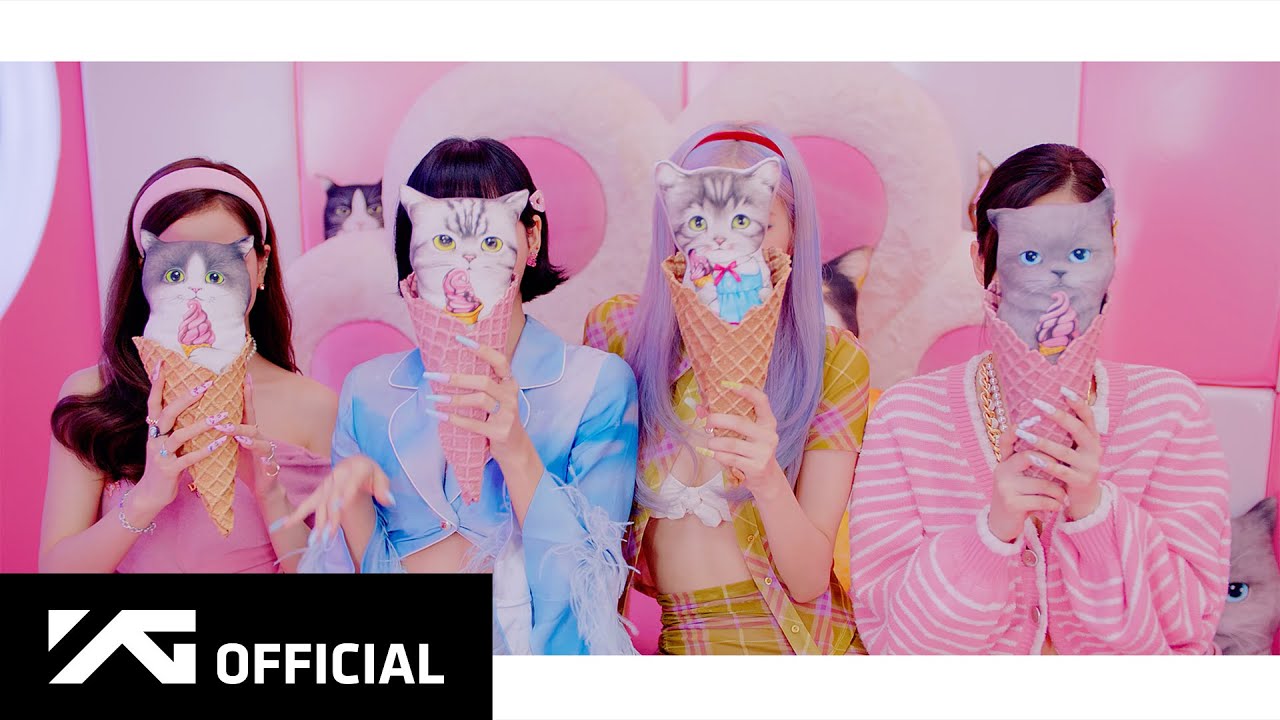

BLACKPINK's "Ice Cream" collaboration with Selena Gomez has officially surpassed one billion YouTube views, becoming the group's seventh music video to enter the elite club. This milestone cements their unparalleled dominance on the platform, yet the song remains one of their most debated releases. Our analysis dives beyond the numbers to unpack why this pastel-hued, polarizing track is a critical, if complex, chapter in the story of K-Pop's global takeover.
- What Does a 7th Billion-View MV Truly Mean for BLACKPINK's Legacy?
- Why Was "Ice Cream" So Divisive Among BLINKs and Critics?
- How Did the Selena Gomez Collaboration Strategically Expand Their Reach?
- Where Does "Ice Cream" Fit in BLACKPINK's Artistic Evolution?
- FAQ: Your Burning Questions About the "Ice Cream" Phenomenon
What Does a 7th Billion-View MV Truly Mean for BLACKPINK's Legacy?
Reaching one billion views is a monumental feat for any artist. Achieving it seven times, as a group, places BLACKPINK in a stratosphere of their own. This isn't just about popularity; it's a data-driven testament to their sustained global influence and the power of their visual-audio formula.
A League of Their Own: The YouTube Pantheon
No other K-Pop group comes close to BLACKPINK's tally of billion-view music videos. This achievement transforms their YouTube channel from a content hub into a historical archive of record-breaking moments. Each billion-view video acts as a permanent marker of a cultural eruption, from "DDU-DU DDU-DU" to "Kill This Love."
The consistency is key. It proves their appeal isn't tied to a single viral hit but is a repeatable phenomenon. It demonstrates a fanbase (BLINKs) and algorithm that reliably delivers unprecedented engagement, years after a song's initial release.
Beyond the Group: The Solo and Collaboration Factor
This group-specific milestone becomes even more staggering when considering the members' solo successes. Lisa's "LALISA," Rosé's "On The Ground," and Jennie's "SOLO" have all achieved or are approaching similar viewership benchmarks. This creates a synergistic ecosystem where the group's brand elevates the solos, and the solos' successes feed back into the group's overarching legend.
It underscores a business model where every release is a potential global event. For a deeper look at how solo projects shape group dynamics, check out our analysis on CLOSE YOUR EYES - OVEREXPOSED: What Just Landed.
Why Was "Ice Cream" So Divisive Among BLINKs and Critics?
Unlike the unanimous acclaim for tracks like "DDU-DU DDU-DU," "Ice Cream" sparked immediate debate. Its arrival in August 2020, as a pre-release single for "THE ALBUM," presented a starkly different flavor that not all fans were prepared to taste.
The Sound & Style Pivot: Cute vs. Crush
BLACKPINK's core identity was built on a powerful "girl crush" concept—bold, fierce, and sonically aggressive. "Ice Cream," with its bubblegum pop production, sing-song melodies, and playful, pastel aesthetics, felt like a deliberate left turn. For some, it was a refreshing showcase of versatility and vocal tone. For others, it diluted the very intensity that made them stan.

The lyrical content, more explicitly flirtatious and less metaphorically complex than their typical work, also drew mixed reactions. It raised questions about artistic direction versus strategic market appeal.
The Line Distribution and Composition Debate
The song's structure, heavily featuring Selena Gomez and specific BLACKPINK members, led to familiar but intensified debates about line distribution. Critics argued it felt more like a Selena Gomez track featuring BLACKPINK, rather than a true collaboration of equals.
This tension highlighted a recurring challenge in major Western collaborations: balancing the guest star's presence with the integrity of the group's identity. The division wasn't just about taste; it was about ownership and representation within a flagship release.
How Did the Selena Gomez Collaboration Strategically Expand Their Reach?
Beneath the fan debates lies a masterclass in strategic audience expansion. The collaboration with Selena Gomez was a calculated move with multifaceted benefits, perfectly timed within BLACKPINK's global rollout.
Tapping a Ready-Made Western Audience
Selena Gomez, at the time, was one of the most-followed individuals on Instagram and a staple of Western pop. This partnership wasn't just about two artists singing together; it was a direct bridge between BLINKs and Selena's massive, predominantly Western fanbase. It guaranteed immediate visibility on American pop charts, radio play consideration, and features on major Western media platforms that were still cautiously covering K-Pop.
It functioned as a low-barrier entry point for pop listeners unfamiliar with K-Pop's conventions, using a familiar voice (Selena's) to guide them into BLACKPINK's world. For more on strategic cross-genre collaborations, see our take on Lil Moshpit - Annyeonghaseyo (Sik-K Remix): What Just Landed.
Algorithmic Symbiosis and Platform Domination
The collaboration created a perfect storm for YouTube's algorithm. It merged search terms: "BLACKPINK" and "Selena Gomez." Fans of both artists were driven to the video, driving up initial views, engagement, and watch time at an accelerated rate. This algorithmic boost provided long-term momentum, keeping the video in recommended sections for a vast array of users.
This strategy of leveraging collaborative star power to fuel platform metrics has since become a blueprint, but BLACKPINK and YG Entertainment were among the first to execute it at this scale. You can track how such strategies impact broader trends on our Charts page.
Where Does "Ice Cream" Fit in BLACKPINK's Artistic Evolution?
With hindsight, "Ice Cream" is not an outlier but a crucial waypoint. It represents a period of experimentation and global market testing that informed their subsequent, more synthesized direction.
The Bridge Between Eras
Released after the heavier "How You Like That," "Ice Cream" served as the playful, lighter contrast before the album's title track, "Lovesick Girls." This sequencing showed a deliberate attempt to display range within a single album cycle. It proved they could occupy the pure pop space, even if they later chose not to dwell there.
The song can be seen as the final, maximalist test of a certain pop sensibility before the group began weaving those elements more subtly into their established sound, rather than making them the centerpiece.
A Data Point in a Grander Strategy
Every billion-view video offers YG and BLACKPINK invaluable data. "Ice Cream's" performance—strong in broad streaming and views, but divisive in core fan reception—likely provided clear lessons. It demonstrated the sheer power of collaborative marketing while also highlighting the importance of maintaining a recognizable sonic core.
Subsequent releases have integrated pop melodies without sacrificing the group's signature swagger, suggesting a refinement of approach informed by the "Ice Cream" experiment. To explore how other groups navigate evolution, read our feature on Apink - 15th Season: What Just Landed.
BLACKPINK Billion-View MV Time to 1 Billion (Approx.) Key Significance "Ice Cream" in Context "DDU-DU DDU-DU" ~6 months The breakout global smash; defined their signature sound. The established benchmark for a classic BLACKPINK hit. "Kill This Love" ~10 months Proved replicability of the formula on a grander scale. The immediate predecessor; a contrast in tone and intensity. "Boombayah" ~4 years Debut power with enduring, long-tail appeal. Shows how far their musical range had expanded from debut. "Ice Cream" (with Selena Gomez) ~3.5 years Strategic pop crossover; divisive but algorithmically potent. The subject: A strategic outlier that became a numeric pillar. "How You Like That" ~2 years Record-breaking 2020 comeback; pandemic-era dominance. Released just before "Ice Cream," highlighting a stark thematic shift.FAQ: Your Burning Questions About the "Ice Cream" Phenomenon
Q: Did "Ice Cream" perform well on charts compared to other BLACKPINK hits?
A: Its performance was strong but distinct. It achieved a high debut on the Billboard Hot 100 (#13), leveraging Selena Gomez's radio influence, but often had less longevity on global streaming charts than their title tracks. Its strength was in immediate, broad-based virality and view accumulation, making it a "views powerhouse" with a different consumption pattern than, say, "Lovesick Girls."
Q: Do BLACKPINK members ever perform "Ice Cream" without Selena Gomez's parts?
A: Rarely, if ever, in full. The song is so structurally built around the collaboration that it doesn't easily translate to a standalone group performance. It's primarily remained in their repertoire for special collaborative stages or is referenced in medleys, cementing its status as a unique artifact of that specific partnership.
Q: Has the fan perception of "Ice Cream" warmed over time?
A: Interestingly, yes. While still not considered their quintessential work, its achievement of one billion views has reframed it for many fans. It's now often viewed through a lens of nostalgic success—a "love it or hate it" moment that nonetheless contributed massively to the group's historic metrics. The debate has softened into accepted legacy.
Q: What did this collaboration mean for Selena Gomez's relationship with K-Pop?
A: It positioned her as a early and willing gateway for major Western pop stars into high-profile K-Pop collaborations. It showed a respect for the genre's production and visual style, rather than a forced appropriation. The success likely paved the way for more normalized, large-scale collaborations across the industry.
Conclusion: A Sweet & Sour Legacy
The journey of "Ice Cream" to one billion views is a compelling case study in modern pop. It underscores that in the metric-driven landscape of global music, success is multifaceted. A song can be artistically divisive yet strategically brilliant. It can deviate from a group's core identity while simultaneously reinforcing their platform dominance.
For BLACKPINK, this seventh billion-view crown is less about vindicating "Ice Cream's" sound and more about confirming the unstoppable force of their brand. It proves their ability to convert any major release—whether a fierce anthem or a playful pop confection—into historic numbers. It reminds us that their legacy is built not on unanimous approval, but on an unprecedented capacity to command global attention, in all its forms.
What's Next? The billion-view club will only get more crowded. Watch to see if Jisoo's solo work or the group's next collective release joins this elite list. For continuous updates on all milestone moments, keep your eyes locked on our News page, and to explore the full spectrum of artists making waves, visit our Artists page.