
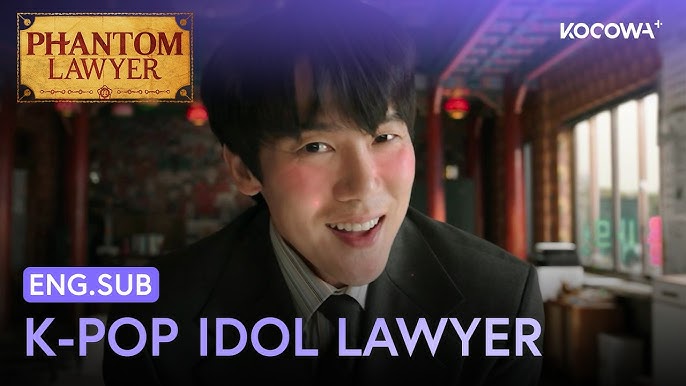

Opening: When the Supernatural Meets the Spotlight
In the high-stakes, meticulously crafted world of Korean entertainment, the line between perceived reality and hidden truth is often the most compelling narrative. This is a theme Yoo Yeon-seok knows well, not just from his decade-spanning acting career, but as a public figure constantly observed. His latest vehicle, the tvN drama "Phantom Lawyer", on the surface, is a quirky procedural about a rookie attorney who gains the ability to see ghosts. But for the keen observer—particularly the K-Pop fan accustomed to decoding layers of performance—episodes 3 and 4 have unfolded something richer: a poignant exploration of duality, emotional labor, and the masks worn to navigate a demanding world. The series, through a blend of genuinely funny character moments and heart-wrenching emotional beats, is inadvertently holding up a mirror to the very industry that spawned its stars.
The drama's premise finds Shin I-rang (Yoo Yeon-seok) reluctantly teaming up with the ghost of a legendary lawyer, Kang Seok-kyu (Kang Ki-young), to solve cases. Yet, the latest episodes moved beyond simple case-solving. They delved into the personal costs of justice and the emotional baggage everyone carries, visible or not. In a culture where idols are trained to present a flawless, ever-energetic "stage self" while managing immense private pressures, the spectacle of I-rang juggling his chaotic internal reality (conversations with a ghost no one else sees) with a composed professional exterior feels strikingly familiar. It’s this subtext, wrapped in superb comedic timing and sudden emotional gut-punches, that has captivated viewers and sparked discussions far beyond typical drama reviews.
Background: From "Reply 1994" to Rookie Lawyer – The Actors' Journey
To understand the weight Yoo Yeon-seok brings to the role, one must look at his trajectory. Debuting in 2003, Yoo steadily built a reputation as a versatile actor, often playing charming, reliable second leads. His breakout as the beloved "Chilbong" in Reply 1994 cemented his status as a national heartthrob, a role that came with its own set of public expectations and an intensely devoted fanbase—a experience not unlike an idol's. Since then, he has consciously chosen diverse projects, from the medical drama Hospital Playlist to the gritty film Vanishing Time. "Phantom Lawyer" represents a deliberate step into a lead role that combines broad comedy with deep pathos, a challenge he is navigating with remarkable nuance.
He is not alone in this endeavor. The drama also stars Lee Joo-myung as the pragmatic, by-the-book lawyer Han Seo-jin. Lee, a former member of the girl group I.B.I, brings a unique insider's perspective. Having transitioned from the idol life to acting, she embodies the very career shift many pursue and understands the scrutiny of public life intimately. Her character's initial skepticism of I-rang's unorthodox methods mirrors the industry's often rigid structures that both idols and actors must navigate. The casting itself creates a meta-narrative: a seasoned actor portraying a rookie alongside a former idol portraying a rigid professional. This dynamic subtly enriches every scene, adding layers for those familiar with the players' real-life histories. For more on artists navigating public image, our analysis of Jennie's approach to personal and public life offers a parallel exploration.
The News: Deconstructing the Laughter and Tears of Episodes 3 & 4
The latest episodes, "The Case of the Unfulfilled Promise," centered on the ghost of a kind-hearted food truck owner, Park Soon-tae. This storyline served as the perfect vehicle to balance the show's tonal spectrum, delivering moments that had audiences laughing one minute and reaching for tissues the next.
The Two Funny Moments: Comedy as a Defense Mechanism
First, the comedy. The humor in "Phantom Lawyer" often stems from the absurdity of I-rang's situation and his dynamic with the ghost Kang.
- The "Possession" Panic: In a desperate bid to present Kang's legal genius in court, I-rang allows the ghost to briefly "possess" him. What follows is a masterclass in physical comedy from Yoo Yeon-seok. His posture shifts, his expression becomes arrogantly confident, and he launches into a flawless legal argument—only for the possession to waver at a critical moment. The rapid switch back to I-rang's panicked, out-of-his-depth persona, coupled with Kang's frustrated ghostly yelling only he can hear, created a hilariously chaotic courtroom scene. It highlighted the constant performance I-rang must maintain, a metaphor for the idol who must instantly switch on a perfect "stage mode" regardless of internal state.
- The Ghostly Miscommunication: A running gag involves I-rang reacting to Kang's ghostly advice in public, leading to him seemingly arguing with thin air or making sudden strange expressions. In episode 4, this culminated in a scene at a police station where I-rang, trying to relay Kang's instructions to Seo-jin, ended up performing an elaborate and utterly confusing series of charades. The bewildered stares from officers and Seo-jin's deadpanned "Have you finally lost your mind?" were perfectly timed. This ongoing joke underscores the isolation of carrying a hidden burden, much like an idol hiding stress or personal strife behind a cheerful façade.
The Three Emotional Moments: Unveiling the Hidden Pain
Where the show truly shines, however, is in its emotional pivot. The comedy seamlessly gives way to moments of raw feeling.
- Soon-tae's Flashback: The revelation of Soon-tae's past was handled with delicate grace. We saw him not as a ghost, but as a vibrant, generous man who tirelessly supported his community and dreamed of a simple life with his daughter. The contrast between his lively past and his present, wistful ghostly form was devastating. It spoke to unfinished dreams and silent sacrifices—themes that echo the stories of many trainees and idols who sacrifice their youth for a chance on the charts.
- The Daughter's Regret: The true heartbreak came when I-rang and Seo-jin confronted Soon-tae's estranged daughter. Her emotional breakdown, revealing not anger but profound guilt over their strained relationship, shifted the entire case. It was no longer about legal culpability but about emotional closure.
"I was just so tired from my own life, I didn't see he was tired too,"
she wept, a line that resonates with anyone who has failed to see the struggle behind a strong front. - I-rang's Empathetic Breakthrough: The most significant character moment came not for the ghost, but for I-rang. After solving the case and witnessing the reconciliation, I-rang sits alone, visibly drained. For the first time, we see the emotional toll his new ability takes. He doesn't just see ghosts; he feels their unresolved pain, carries their stories. Kang quietly observes, "This is the weight of seeing the truth others ignore." This moment reframed I-rang's gift as a curse of empathy, directly paralleling the emotional labor inherent in entertainment, where artists must constantly absorb and reflect the emotions of their fans and their work.
Fan & Community Reaction: A Resonant Chord on Social Media
The response online has been intense and insightful. On platforms like Twitter and Naver TV, the discourse has moved past simple praise into analytical territory.

Fans of Yoo Yeon-seok have flooded communities with GIFs of his comedic moments, dubbing him a "comedy genius," but the deeper comments focus on his portrayal of quiet exhaustion. One fan on a forum wrote, "The way Yeon-seok's eyes go from lively when interacting with Kang to utterly hollow in that final scene... it's a masterclass. It's how I imagine my bias feels after a long fansign, happy but completely spent." This comparison to idol "emotional labor" is a recurring theme.
Meanwhile, supporters of Lee Joo-myung are celebrating her nuanced performance as Seo-jin, whose icy exterior begins to thaw. "Seeing Seo-jin subtly comfort the daughter without a word, just by making her tea... it shows a warmth she hides to be taken seriously in a male-dominated field," noted one commenter, drawing parallels to female idols often forced into tougher personas. The case's focus on family reconciliation has also sparked wider conversations about mental health and the pressures of Korean society, topics increasingly embraced by K-Pop artists in their music. This mirrors the kind of public discourse seen in more serious scandals, such as those examined in our piece on the shadows cast by bullying controversies.
Industry Analysis: "Phantom Lawyer" and the Evolving Idol-Actor Paradigm
The success and thematic depth of "Phantom Lawyer" signal several key trends in the industry. First, it reinforces the viability of the "idol-actor" when the casting is thoughtful. Lee Joo-myung's performance is being taken seriously because it is substantive; she is not merely a ratings draw but an integral part of the narrative. This helps dismantle the lingering stigma around idol-actors and paves the way for more such transitions based on merit.
Second, the drama's blend of genres—fantasy, comedy, legal, melodrama—reflects a hybrid appetite in audiences. K-Pop itself is the ultimate hybrid, blending music, performance, fashion, and storytelling. Fans trained on complex K-Pop universes and multi-concept comebacks are naturally drawn to narratives that offer a similar mix of tones and layered meanings. The show doesn't talk down to its audience; it trusts them to follow the emotional whiplash, much like a good K-Pop album takes listeners on a journey from upbeat title tracks to emotional B-sides.
Finally, the core theme of seeing the unseen is profoundly relevant. In an era where idols are more accessible than ever via social media, the paradox of knowing more but understanding less deepens. Fans project, agencies curate, and the true self becomes a phantom. "Phantom Lawyer" taps into this cultural anxiety and longing. It asks: What truths are hidden behind the public persona? What pain is being masked by a smile? These are questions at the heart of many fan discussions, from dating rumors like those often dissected on social media to concerns about artist well-being. The drama, in its fantastical way, provides a framework to empathize with that hidden reality.
What's Next: Hauntings on the Horizon and Career Crossroads
As "Phantom Lawyer" continues, the stakes for I-rang will undoubtedly escalate. The brief glimpses of a larger conspiracy involving Kang Seok-kyu's death suggest the personal and professional will collide. For I-rang, each case is not just a legal challenge but an emotional excavation, a process that will inevitably change him. How long can he sustain this double life before it fractures? This narrative arc promises to further explore the limits of resilience—a topic of endless fascination in an industry known for its punishing schedules.
For the actors, this drama serves as a significant career marker. Yoo Yeon-seok is solidifying his claim as a leading man capable of carrying a primetime drama with both humor and heart. Lee Joo-myung is successfully redefining herself, moving away from her idol roots toward a respected acting career, a path that will inspire many at our Artists page who aspire to similar versatility.
Ultimately, "Phantom Lawyer" is more than its logline. Episodes 3 and 4 proved it is a sophisticated story about carrying unseen burdens and seeking connection—the very essence of the human, and indeed, the celebrity experience. As it dances between the hilarious and the heartbreaking, it reminds us that behind every performance, whether in a courtroom or on a concert stage, there is a complex reality waiting to be seen, understood, and perhaps, finally, laid to rest. The drama’s journey, much like the careers it subtly mirrors, is one to watch closely. For the latest on how such narratives unfold in the real world of K-entertainment, keep an eye on our News page.